Ganz Julia, Kroehne Volker, Freudenreich Dorian, Machate Anja, Geffarth Michaela, Braasch Ingo, Kaslin Jan, Brand Michael
Biotechnology Center, and DFG-Research Center for Regenerative Therapies Dresden, Technische Universität Dresden, Dresden, 01307, Germany ; Institute of Neuroscience, University of Oregon, Eugene, OR 97403, USA.
Biotechnology Center, and DFG-Research Center for Regenerative Therapies Dresden, Technische Universität Dresden, Dresden, 01307, Germany.
F1000Res. 2014 Dec 17;3:308. doi: 10.12688/f1000research.5595.2. eCollection 2014.
The telencephalon shows a remarkable structural diversity among vertebrates. In particular, the everted telencephalon of ray-finned fishes has a markedly different morphology compared to the evaginated telencephalon of all other vertebrates. This difference in development has hampered the comparison between different areas of the pallium of ray-finned fishes and the pallial nuclei of all other vertebrates. Various models of homology between pallial subdivisions in ray-finned fishes and the pallial nuclei in tetrapods have been proposed based on connectional, neurochemical, gene expression and functional data. However, no consensus has been reached so far. In recent years, the analysis of conserved developmental marker genes has assisted the identification of homologies for different parts of the telencephalon among several tetrapod species.
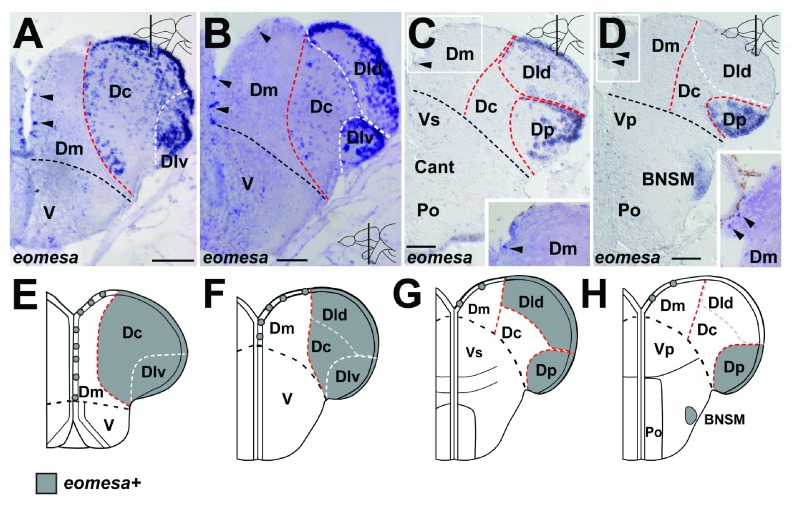
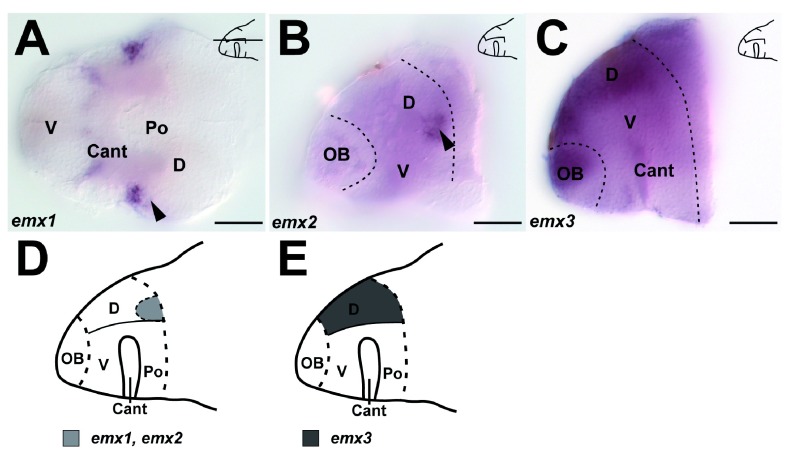
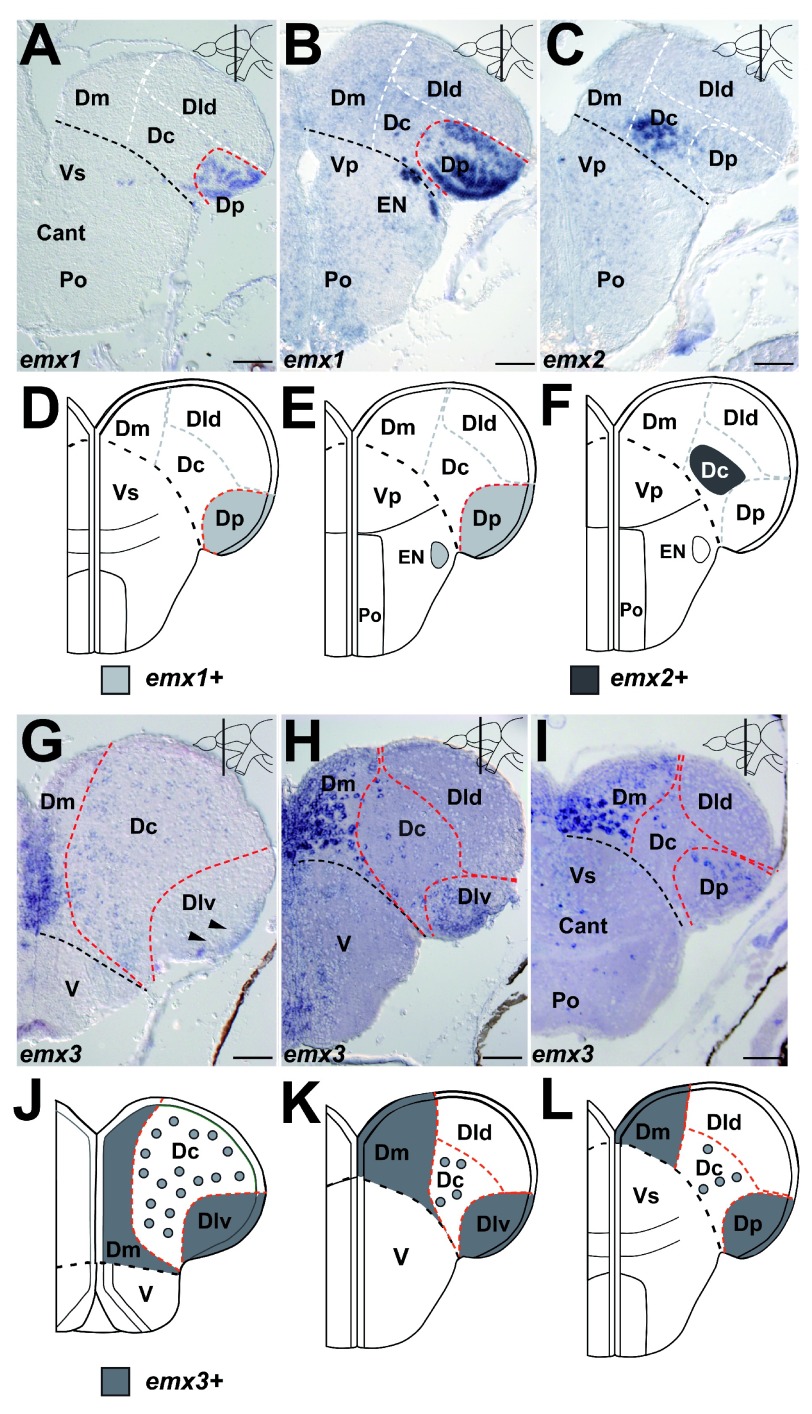
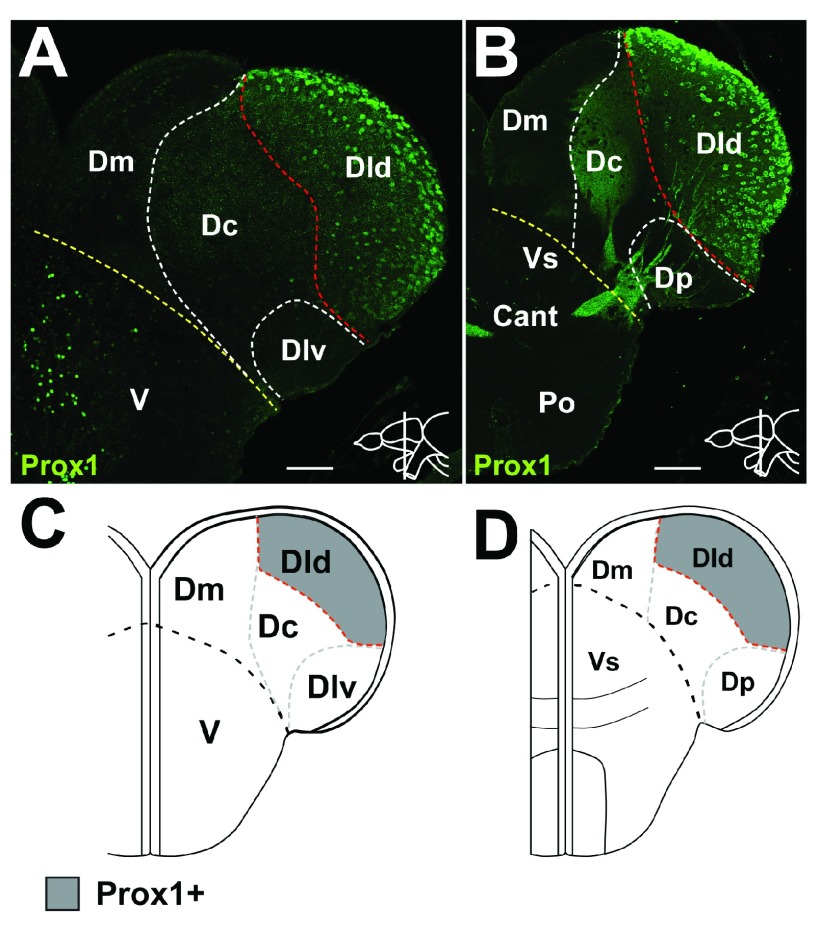
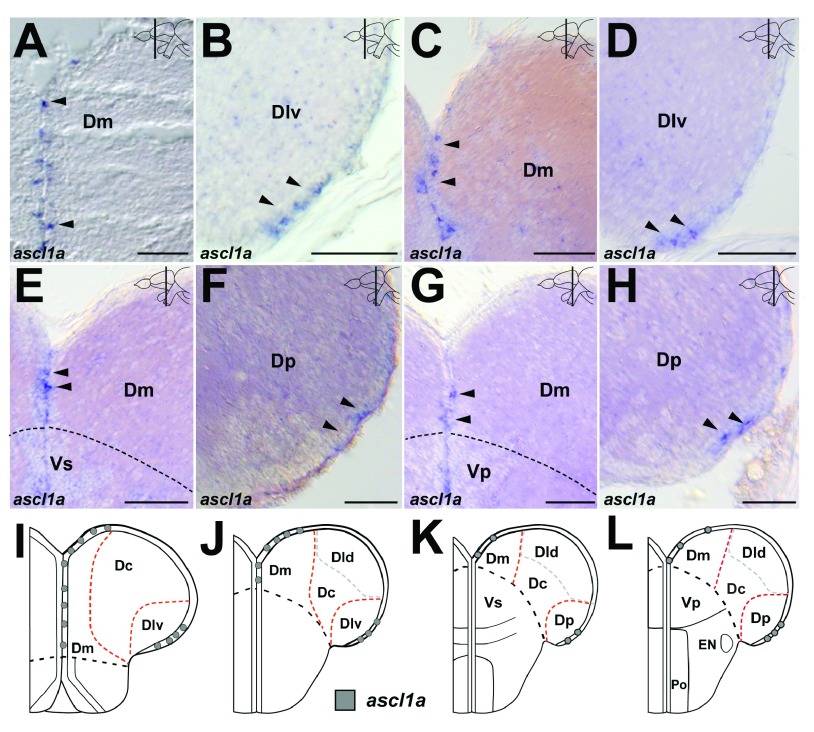
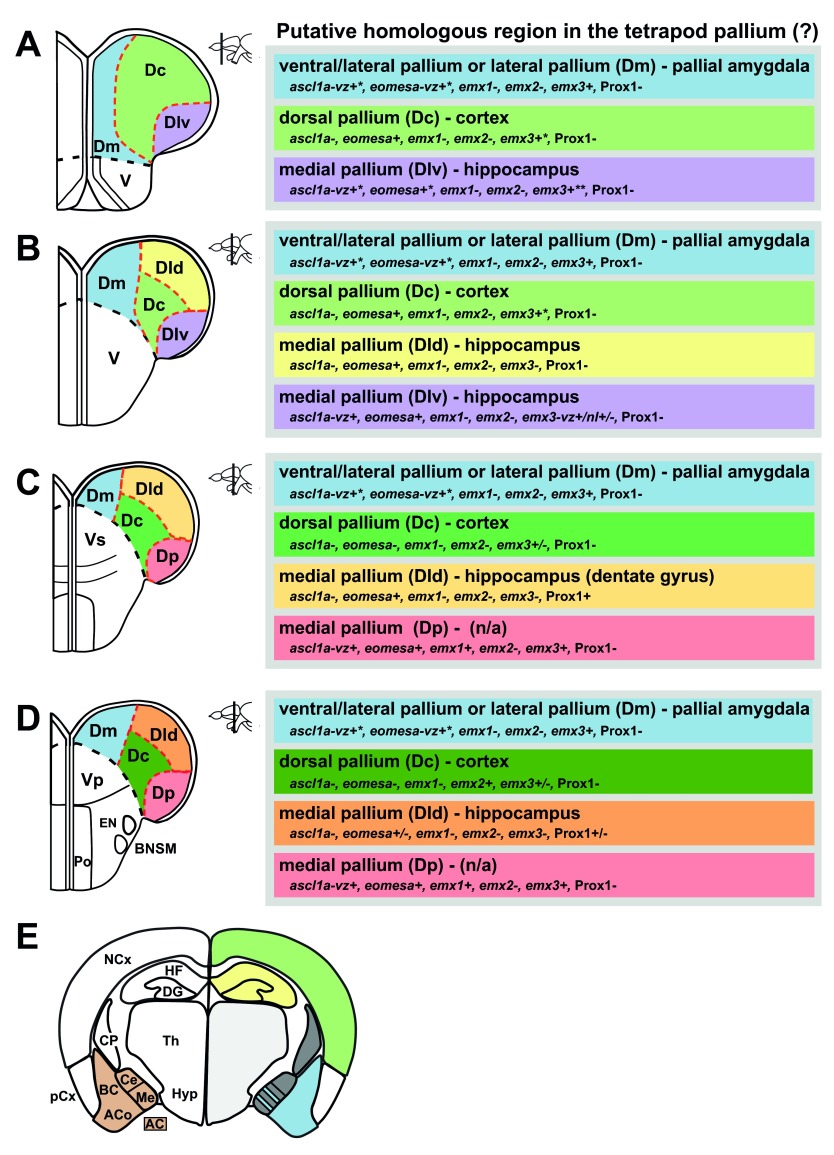
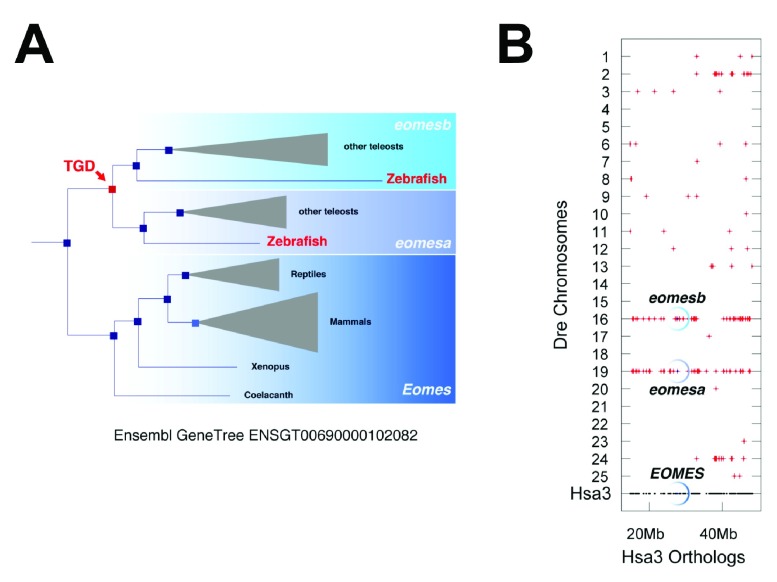
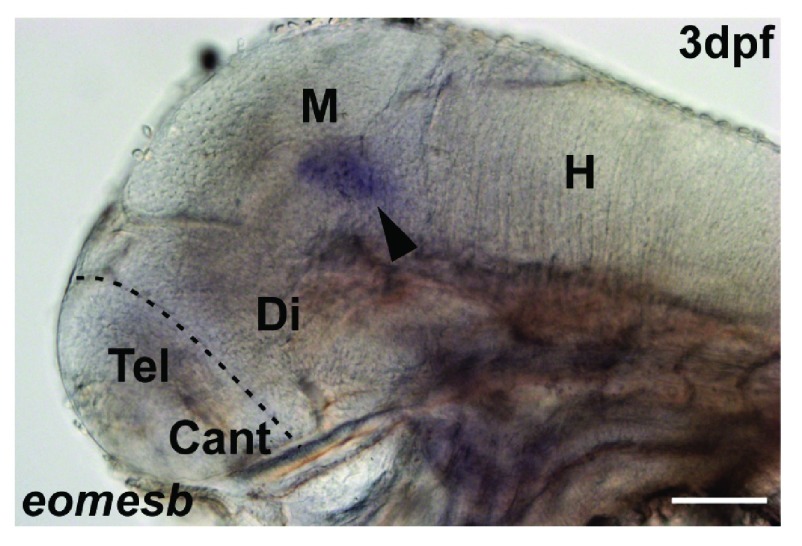
We have investigated the gene expression pattern of conserved marker genes in the adult zebrafish ( Danio rerio) pallium to identify pallial subdivisions and their homology to pallial nuclei in tetrapods. Combinatorial expression analysis of ascl1a, eomesa, emx1, emx2, emx3, and Prox1 identifies four main divisions in the adult zebrafish pallium. Within these subdivisions, we propose that Dm is homologous to the pallial amygdala in tetrapods and that the dorsal subdivision of Dl is homologous to part of the hippocampal formation in mouse. We have complemented this analysis be examining the gene expression of emx1, emx2 and emx3 in the zebrafish larval brain.
Based on our gene expression data, we propose a new model of subdivisions in the adult zebrafish pallium and their putative homologies to pallial nuclei in tetrapods. Pallial nuclei control sensory, motor, and cognitive functions, like memory, learning and emotion. The identification of pallial subdivisions in the adult zebrafish and their homologies to pallial nuclei in tetrapods will contribute to the use of the zebrafish system as a model for neurobiological research and human neurodegenerative diseases.
端脑在脊椎动物中呈现出显著的结构多样性。特别是,硬骨鱼外翻的端脑与所有其他脊椎动物内翻的端脑形态明显不同。这种发育上的差异阻碍了硬骨鱼大脑皮层不同区域与所有其他脊椎动物脑皮层核之间的比较。基于连接、神经化学、基因表达和功能数据,已经提出了硬骨鱼脑皮层亚区与四足动物脑皮层核之间的各种同源性模型。然而,迄今为止尚未达成共识。近年来,对保守发育标记基因的分析有助于确定几种四足动物物种中端脑不同部分的同源性。
我们研究了成年斑马鱼(Danio rerio)大脑皮层中保守标记基因的表达模式,以确定大脑皮层亚区及其与四足动物脑皮层核的同源性。对ascl1a、eomesa、emx1、emx2、emx3和Prox1的组合表达分析确定了成年斑马鱼大脑皮层的四个主要分区。在这些亚区内,我们提出Dm与四足动物的脑皮层杏仁核同源,Dl的背侧亚区与小鼠海马结构的一部分同源。我们通过检测斑马鱼幼体大脑中emx1、emx2和emx3的基因表达对这一分析进行了补充。
基于我们的基因表达数据,我们提出了成年斑马鱼大脑皮层亚区及其与四足动物脑皮层核假定同源性的新模型。脑皮层核控制感觉、运动和认知功能,如记忆、学习和情感。确定成年斑马鱼大脑皮层亚区及其与四足动物脑皮层核的同源性将有助于将斑马鱼系统用作神经生物学研究和人类神经退行性疾病的模型。