Lee Jong Suk, Shukla Shruti, Kim Jung-Ae, Kim Myunghee
Department of Food Science and Technology, Yeungnam University, Gyeongsan, Gyeongbuk, 712-749, Republic of Korea.
College of Pharmacy, Yeungnam University, Gyeongsan, Gyeongbuk, 712-749, Republic of Korea.
PLoS One. 2015 Feb 25;10(2):e0118552. doi: 10.1371/journal.pone.0118552. eCollection 2015.
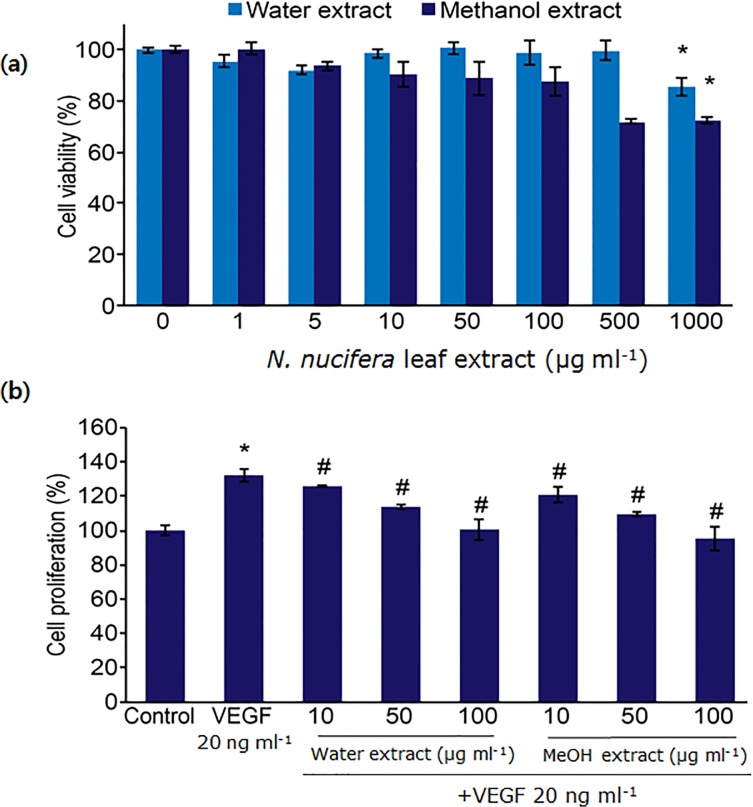
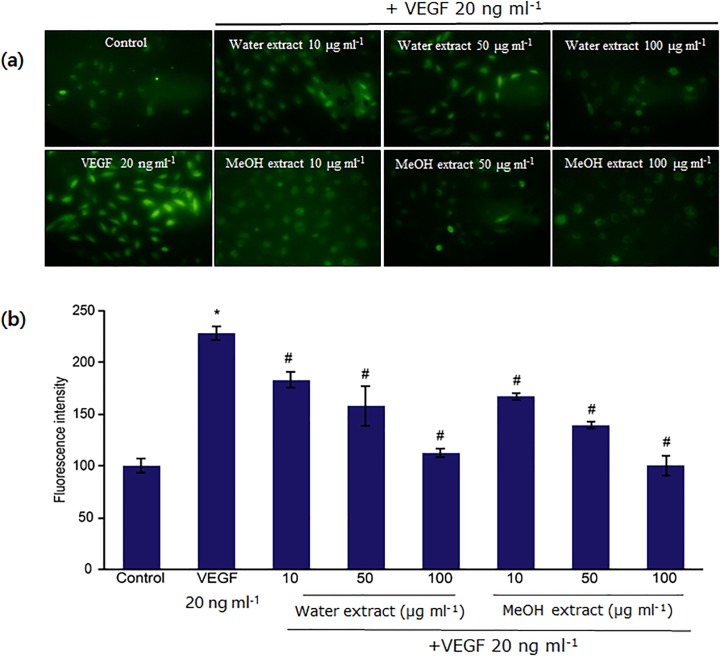
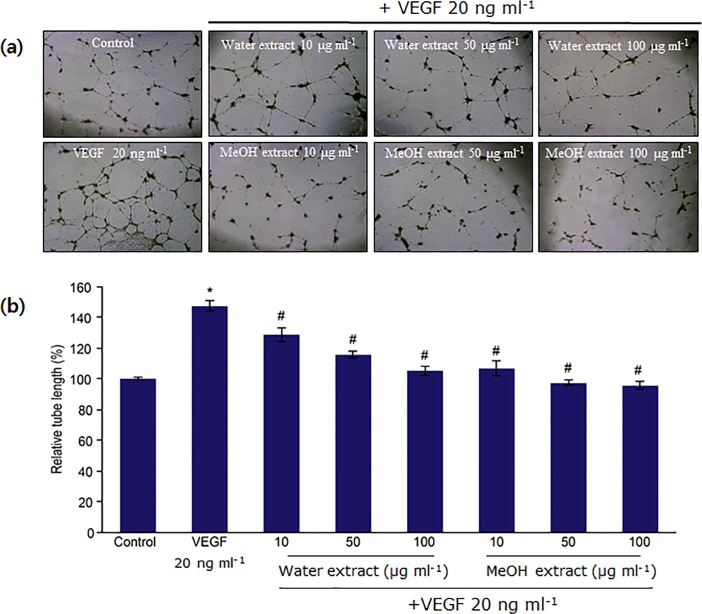
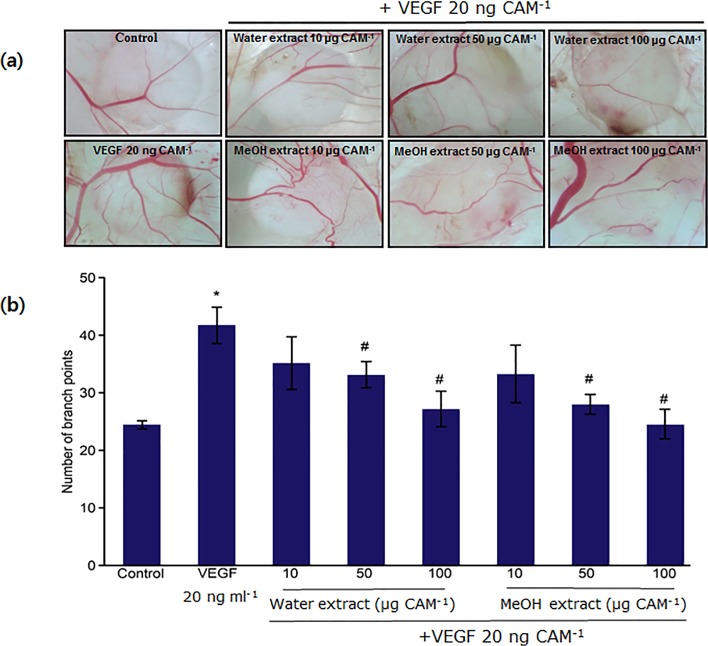
Nelumbo nucifera Gaertn (Nymphaeaceae) has long been used as a traditional herb in Chinese, Japanese, Indian, and Korean medicinal practices since prehistoric times and flourishes today as the primary form of medicine. This study reports for the first time the potent ability of N. nucifera leaf extracts to inhibit vascular endothelial growth factor (VEGF)-induced angiogenesis in vitro and in vivo, as well as their antioxidant efficacy in various scavenging models and an analysis of their chemical composition. In vivo anti-angiogenic activity was evaluated in a chick chorioallantoic membrane (CAM) model using fertilized chicken eggs, in human umbilical vein endothelial cells (HUVECs) by using cell viability, cell proliferation and tube formation assays, and by determining intracellular reactive oxygen species (ROS) in vitro. The antioxidant efficacy of N. nucifera leaf extracts was determined in various scavenging models, including total phenolic and flavonoid content. The chemical composition of N. nucifera leaf extracts was determined by GC-MS analysis, which revealed the presence of different phytochemicals. The IC50 values for the DPPH radical scavenging activities of water and methanol extracts were found to be 1699.47 and 514.36 μg ml(-1), and their total phenolic and flavonoid contents were 85.01 ± 2.32 and 147.63 ± 2.23 mg GAE g dry mass(-1) and 35.38 ± 1.32 and 41.86 ± 1.07 mg QA g dry mass(-1), respectively. N. nucifera leaf extracts (10-100 μg ml(-1)) exhibited significant dose-dependent inhibition of VEGF-induced angiogenesis, as well as VEGF-induced proliferation and tube formation in HUVECs. In this study, N. nucifera leaf extracts displayed potent antioxidant and inhibitory effects on VEGF-induced angiogenesis. N. nucifera exerted an inhibitory effect on VEGF-induced proliferation and tube formation, as well as CAM angiogenesis in vivo. Moreover, N. nucifera leaf extracts significantly blocked VEGF-induced ROS production in HUVECs, confirming their possible anti-angiogenic mechanism.
自史前时代起,莲(睡莲科)就在中国、日本、印度和韩国的医学实践中被长期用作传统草药,如今作为主要的药物形式依然盛行。本研究首次报道了莲叶片提取物在体外和体内抑制血管内皮生长因子(VEGF)诱导的血管生成的强大能力,以及它们在各种清除模型中的抗氧化功效,并对其化学成分进行了分析。在体内抗血管生成活性方面,使用受精鸡蛋在鸡胚绒毛尿囊膜(CAM)模型中进行评估,在体外通过人脐静脉内皮细胞(HUVECs)的细胞活力、细胞增殖和管形成试验以及测定细胞内活性氧(ROS)来评估。莲叶片提取物的抗氧化功效在各种清除模型中进行测定,包括总酚和黄酮含量。莲叶片提取物的化学成分通过气相色谱 - 质谱(GC - MS)分析确定,结果显示存在不同的植物化学物质。水提取物和甲醇提取物对DPPH自由基清除活性的IC50值分别为1699.47和514.36 μg ml(-1),它们的总酚和黄酮含量分别为85.01 ± 2.32和147.63 ± 2.23 mg GAE g干质量(-1)以及35.38 ± 1.32和41.86 ± 1.07 mg QA g干质量(-1)。莲叶片提取物(10 - 100 μg ml(-1))对VEGF诱导的血管生成以及HUVECs中VEGF诱导 的增殖和管形成表现出显著的剂量依赖性抑制作用。在本研究中,莲叶片提取物对VEGF诱导的血管生成显示出强大的抗氧化和抑制作用。莲对VEGF诱导的增殖和管形成以及体内CAM血管生成均有抑制作用。此外,莲叶片提取物显著阻断了HUVECs中VEGF诱导的ROS产生,证实了其可能的抗血管生成机制。