Zakkar Mustafa, Guida Gustavo, Suleiman M-Saadeh, Angelini Gianni D
Bristol Royal Infirmary, Level 7, Upper Maudlin Street, Bristol BS2 8HW, UK.
Oxid Med Cell Longev. 2015;2015:189863. doi: 10.1155/2015/189863. Epub 2015 Feb 4.
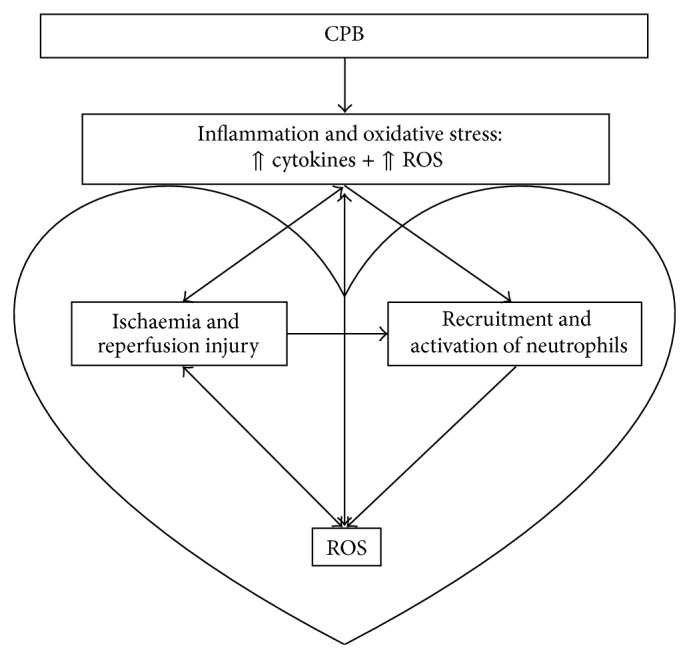
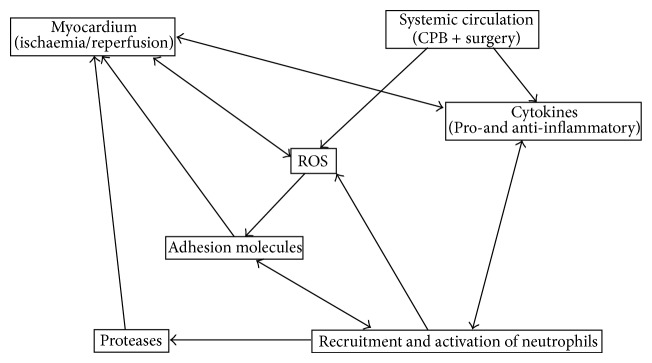
The development of the cardiopulmonary bypass (CPB) revolutionized cardiac surgery and contributed immensely to improved patients outcomes. CPB is associated with the activation of different coagulation, proinflammatory, survival cascades and altered redox state. Haemolysis, ischaemia, and perfusion injury and neutrophils activation during CPB play a pivotal role in oxidative stress and the associated activation of proinflammatory and proapoptotic signalling pathways which can affect the function and recovery of multiple organs such as the myocardium, lungs, and kidneys and influence clinical outcomes. The administration of agents with antioxidant properties during surgery either intravenously or in the cardioplegia solution may reduce ROS burst and oxidative stress during CPB. Alternatively, the use of modified circuits such as minibypass can modify both proinflammatory responses and oxidative stress.
体外循环(CPB)的发展彻底改变了心脏手术,并极大地改善了患者的预后。CPB与不同凝血、促炎、生存级联反应的激活以及氧化还原状态的改变有关。CPB期间的溶血、缺血、灌注损伤和中性粒细胞激活在氧化应激以及促炎和促凋亡信号通路的相关激活中起关键作用,这会影响多个器官(如心肌、肺和肾脏)的功能和恢复,并影响临床结果。手术期间静脉内或心脏停搏液中给予具有抗氧化特性的药物可能会减少CPB期间的活性氧爆发和氧化应激。另外,使用改良回路(如微型旁路)可以改变促炎反应和氧化应激。