Paungfoo-Lonhienne Chanyarat, Yeoh Yun Kit, Kasinadhuni Naga Rup Pinaki, Lonhienne Thierry G A, Robinson Nicole, Hugenholtz Philip, Ragan Mark A, Schmidt Susanne
1] School of Agriculture and Food Sciences, The University of Queensland, St. Lucia QLD, 4072, Australia [2] Institute for Molecular Bioscience, The University of Queensland, St. Lucia QLD, 4072, Australia.
1] Institute for Molecular Bioscience, The University of Queensland, St. Lucia QLD, 4072, Australia [2] Australian Centre for Ecogenomics, School of Chemistry and Molecular Biosciences, The University of Queensland, St. Lucia QLD, 4072, Australia.
Sci Rep. 2015 Mar 2;5:8678. doi: 10.1038/srep08678.
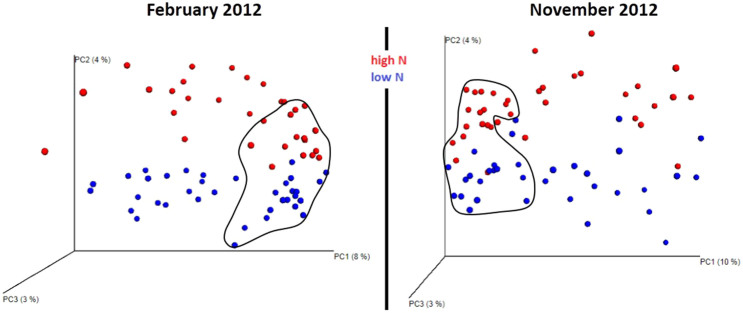
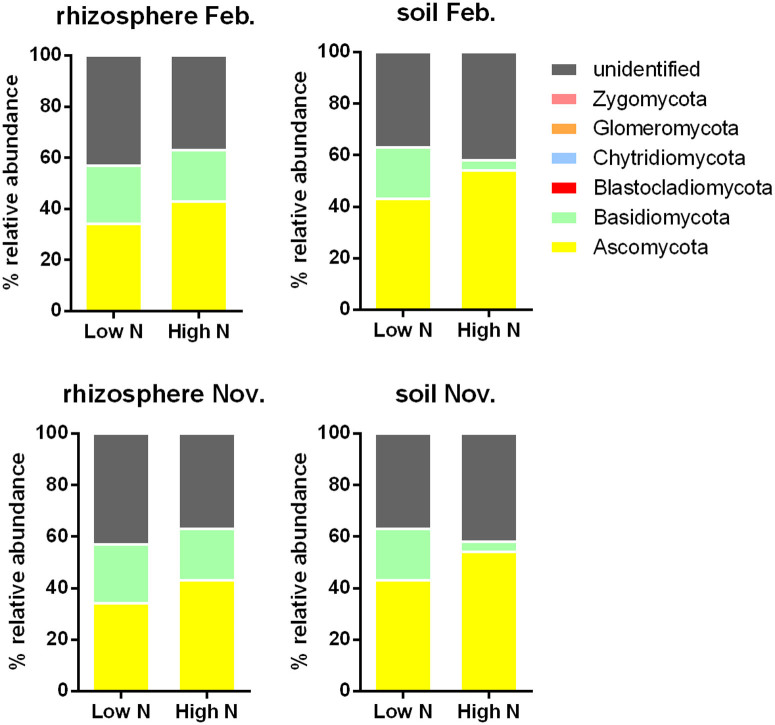
Fungi play important roles as decomposers, plant symbionts and pathogens in soils. The structure of fungal communities in the rhizosphere is the result of complex interactions among selection factors that may favour beneficial or detrimental relationships. Using culture-independent fungal community profiling, we have investigated the effects of nitrogen fertilizer dosage on fungal communities in soil and rhizosphere of field-grown sugarcane. The results show that the concentration of nitrogen fertilizer strongly modifies the composition but not the taxon richness of fungal communities in soil and rhizosphere. Increased nitrogen fertilizer dosage has a potential negative impact on carbon cycling in soil and promotes fungal genera with known pathogenic traits, uncovering a negative effect of intensive fertilization.
真菌在土壤中作为分解者、植物共生体和病原体发挥着重要作用。根际真菌群落的结构是可能有利于有益或有害关系的选择因素之间复杂相互作用的结果。利用非培养真菌群落分析方法,我们研究了氮肥用量对田间种植甘蔗土壤和根际真菌群落的影响。结果表明,氮肥浓度强烈改变了土壤和根际真菌群落的组成,但没有改变其分类丰富度。增加氮肥用量对土壤碳循环有潜在的负面影响,并促进具有已知致病特征的真菌属的生长,揭示了集约施肥的负面影响。