ASN Neuro. 2015 Jan-Feb;7(1). doi: 10.1177/1759091415569911.
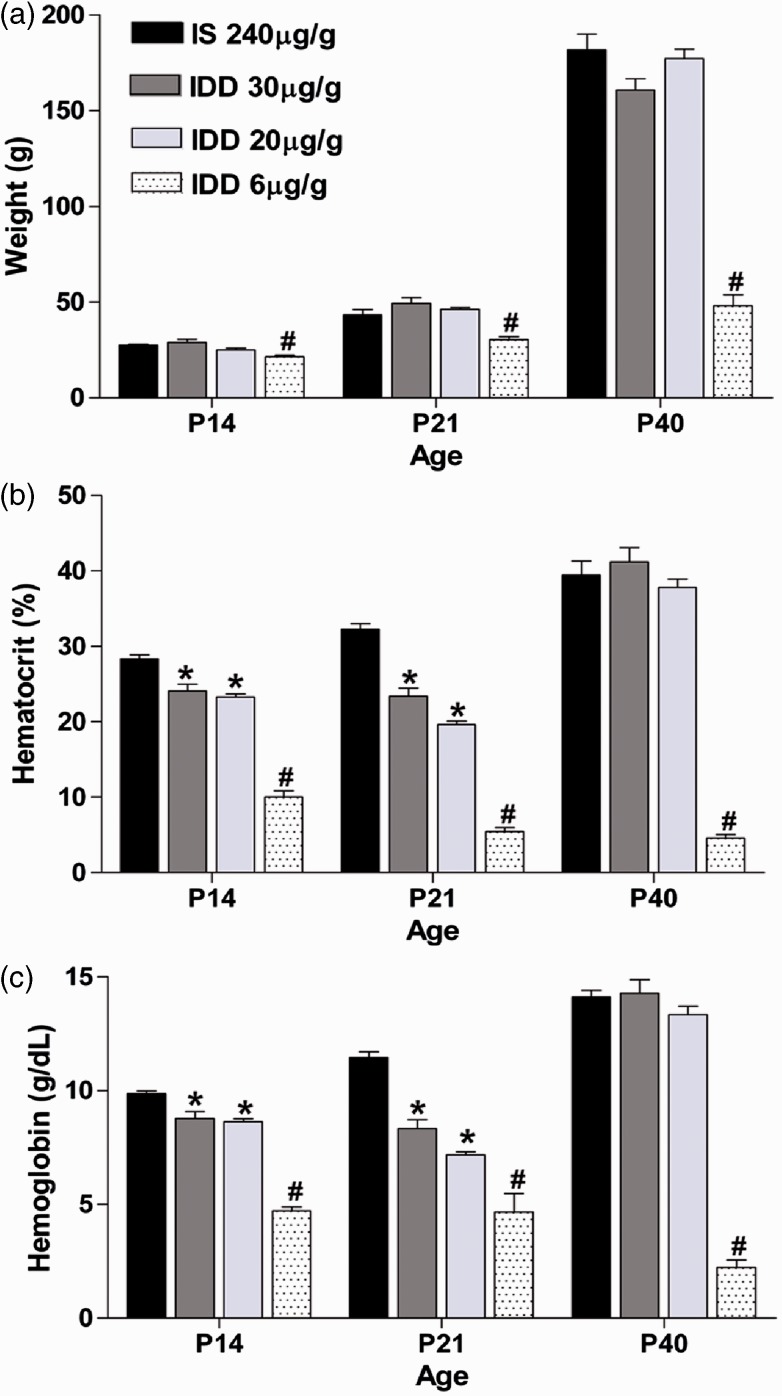
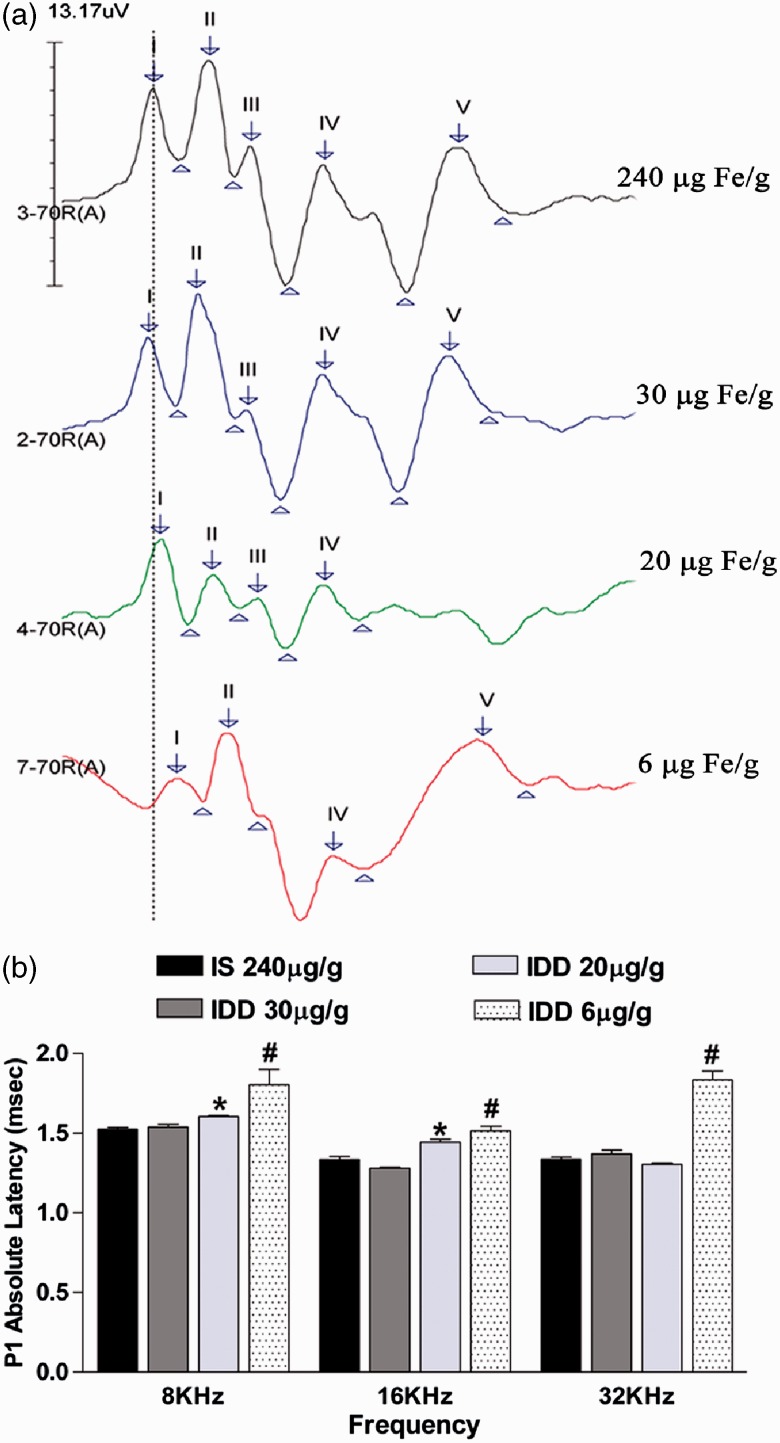
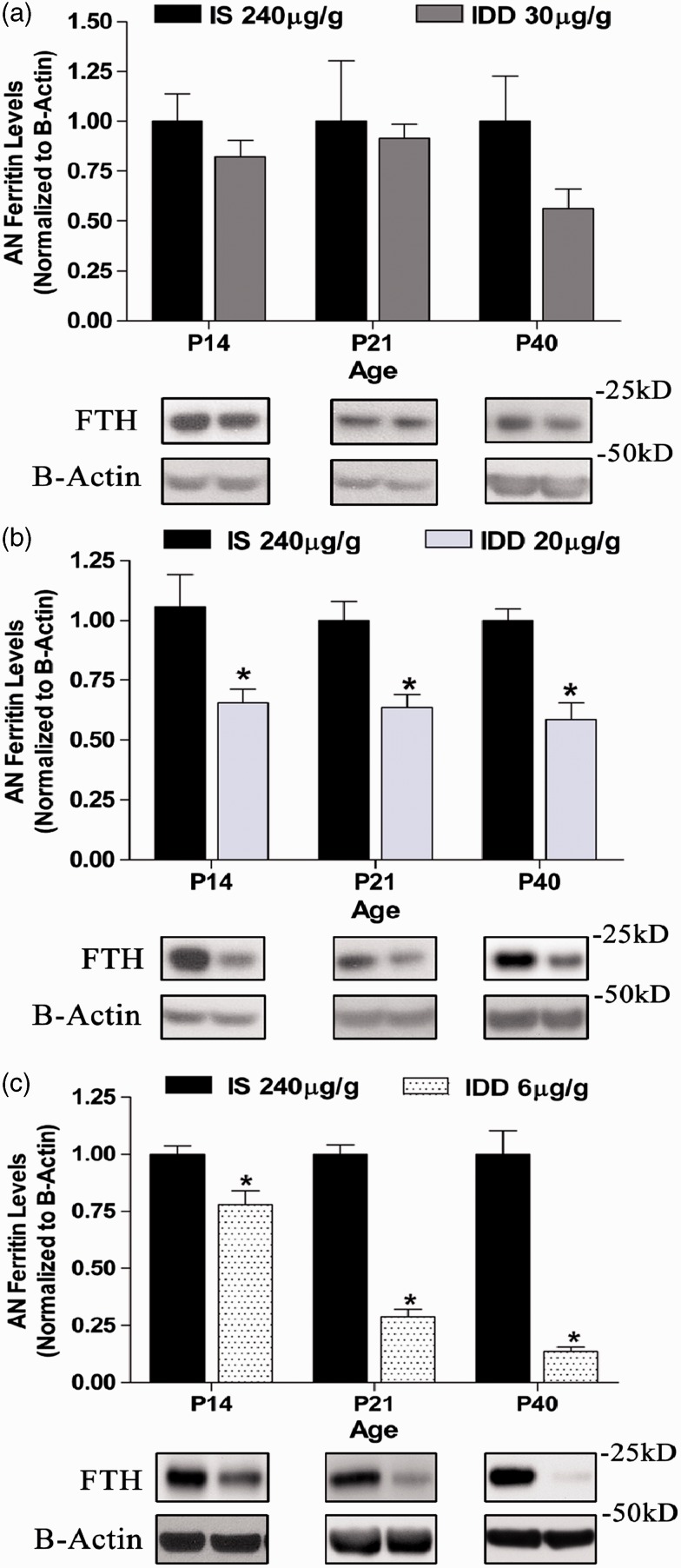
The deleterious effects of anemia on auditory nerve (AN) development have been well investigated; however, we have previously reported that significant functional consequences in the auditory brainstem response (ABR) can also occur as a consequence of marginal iron deficiency (ID). As the ABR has widespread clinical use, we evaluated the ability of this electrophysiological method to characterize the threshold of tissue ID in rats by examining the relationship between markers of tissue ID and severity of ABR latency defects. To generate various levels of ID, female Long-Evans rats were exposed to diets containing sufficient, borderline, or deficient iron (Fe) concentrations throughout gestation and offspring lifetime. We measured hematological indices of whole body iron stores in dams and offspring to assess the degree of ID. Progression of AN ID in the offspring was measured as ferritin protein levels at different times during postnatal development to complement ABR functional measurements. The severity of ABR deficits correlated with the level of Fe restriction in each diet. The sufficient Fe diet did not induce AN ID and consequently did not show an impaired ABR latency response. The borderline Fe diet, which depleted AN Fe stores but did not cause systemic anemia resulted in significantly increased ABR latency isolated to Peak I.The low Fe diet, which induced anemia and growth retardation, significantly increased ABR latencies of Peaks I to IV. Our findings indicate that changes in the ABR could be related to various degrees of ID experienced throughout development.
贫血对听神经(AN)发育的有害影响已经得到了充分的研究;然而,我们之前曾报道过,边缘性铁缺乏症(ID)也会导致听觉脑干反应(ABR)出现显著的功能后果。由于 ABR 在临床上广泛应用,我们通过检查组织 ID 标志物与 ABR 潜伏期缺陷严重程度之间的关系,评估了这种电生理方法在评估大鼠组织 ID 阈值中的能力。为了产生不同程度的 ID,雌性 Long-Evans 大鼠在整个妊娠期和后代生命期内暴露于含有足够、边缘或缺乏铁(Fe)浓度的饮食中。我们测量了母体和后代的全身体内铁储存的血液学指标,以评估 ID 的程度。通过在产后发育的不同时间测量铁蛋白水平来测量后代 AN ID 的进展,以补充 ABR 功能测量。ABR 缺陷的严重程度与每种饮食中的 Fe 限制水平相关。充足的 Fe 饮食不会引起 AN ID,因此不会导致 ABR 潜伏期反应受损。边缘性 Fe 饮食会耗尽 AN 的铁储存,但不会导致全身性贫血,导致 I 峰的 ABR 潜伏期显著增加。低 Fe 饮食会导致贫血和生长迟缓,显著增加了 I 至 IV 峰的 ABR 潜伏期。我们的研究结果表明,ABR 的变化可能与整个发育过程中经历的不同程度的 ID 有关。