Buick Julie K, Moffat Ivy, Williams Andrew, Swartz Carol D, Recio Leslie, Hyduke Daniel R, Li Heng-Hong, Fornace Albert J, Aubrecht Jiri, Yauk Carole L
Environmental Health Science and Research Bureau, Health Canada, Ottawa, Ontario, Canada.
Water and Air Quality Bureau, Health Canada, Ottawa, Ontario, Canada.
Environ Mol Mutagen. 2015 Jul;56(6):520-34. doi: 10.1002/em.21940. Epub 2015 Mar 2.
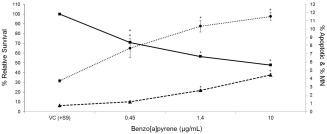
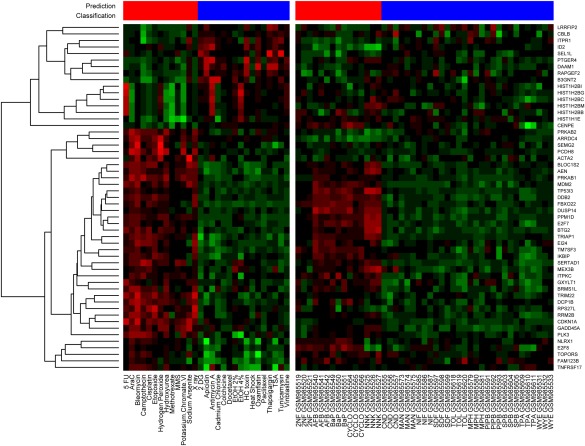
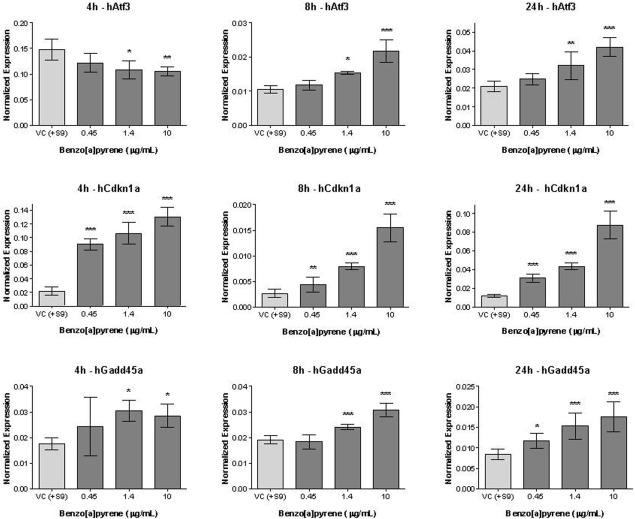
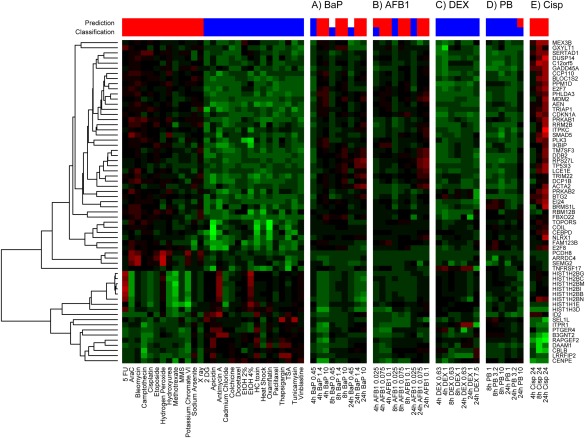
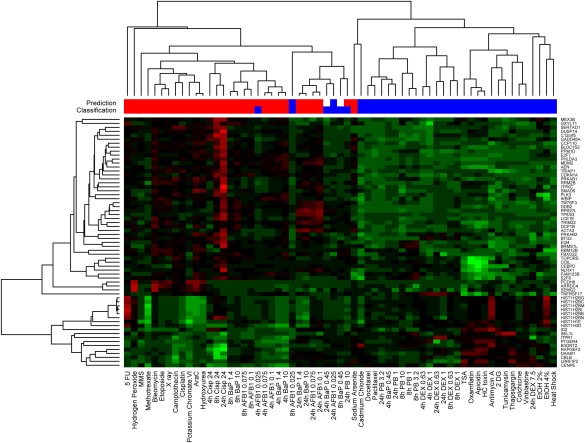
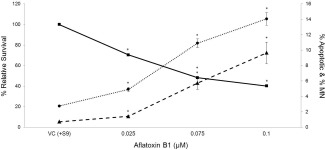
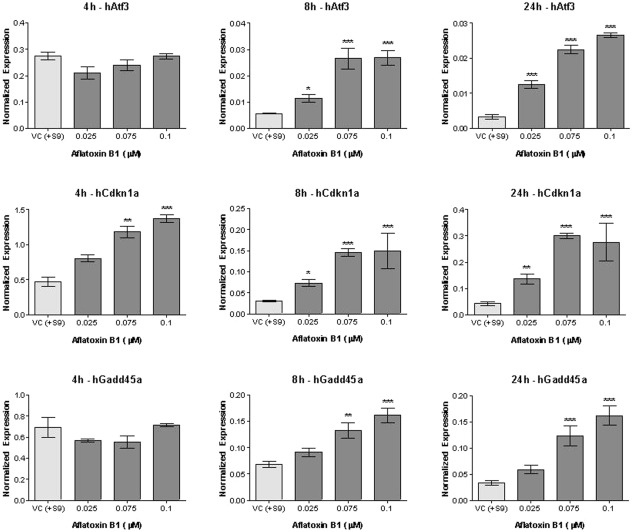
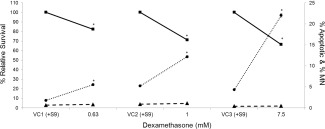
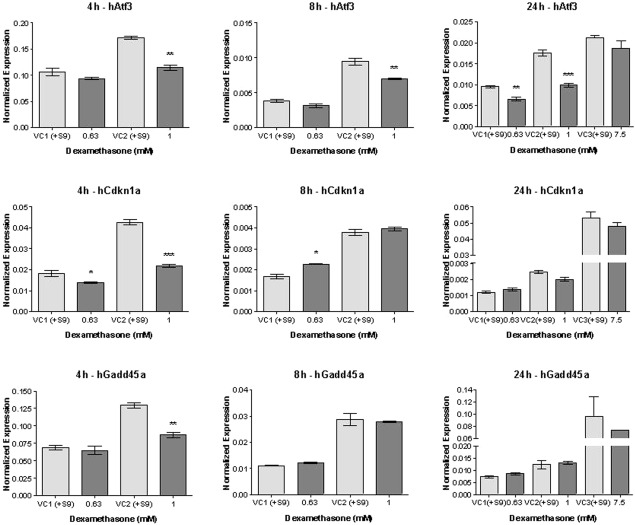
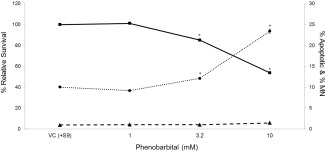
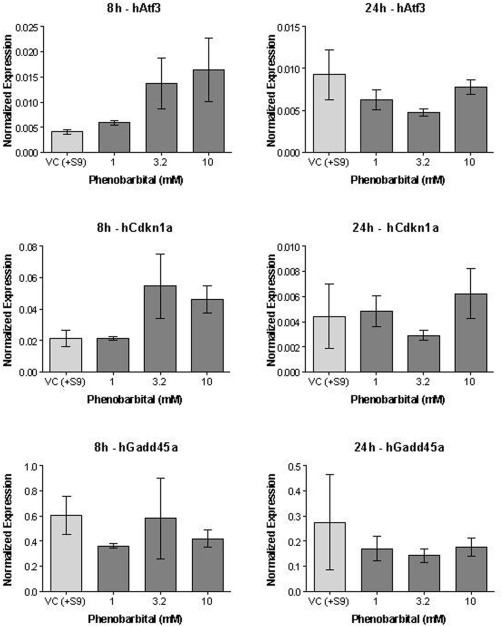
The use of integrated approaches in genetic toxicology, including the incorporation of gene expression data to determine the molecular pathways involved in the response, is becoming more common. In a companion article, a genomic biomarker was developed in human TK6 cells to classify chemicals as genotoxic or nongenotoxic. Because TK6 cells are not metabolically competent, we set out to broaden the utility of the biomarker for use with chemicals requiring metabolic activation. Specifically, chemical exposures were conducted in the presence of rat liver S9. The ability of the biomarker to classify genotoxic (benzo[a]pyrene, BaP; aflatoxin B1, AFB1) and nongenotoxic (dexamethasone, DEX; phenobarbital, PB) agents correctly was evaluated. Cells were exposed to increasing chemical concentrations for 4 hr and collected 0 hr, 4 hr, and 20 hr postexposure. Relative survival, apoptosis, and micronucleus frequency were measured at 24 hr. Transcriptome profiles were measured with Agilent microarrays. Statistical modeling and bioinformatics tools were applied to classify each chemical using the genomic biomarker. BaP and AFB1 were correctly classified as genotoxic at the mid- and high concentrations at all three time points, whereas DEX was correctly classified as nongenotoxic at all concentrations and time points. The high concentration of PB was misclassified at 24 hr, suggesting that cytotoxicity at later time points may cause misclassification. The data suggest that the use of S9 does not impair the ability of the biomarker to classify genotoxicity in TK6 cells. Finally, we demonstrate that the biomarker is also able to accurately classify genotoxicity using a publicly available dataset derived from human HepaRG cells.
在遗传毒理学中使用综合方法,包括纳入基因表达数据以确定参与反应的分子途径,正变得越来越普遍。在一篇配套文章中,在人TK6细胞中开发了一种基因组生物标志物,用于将化学物质分类为遗传毒性或非遗传毒性。由于TK6细胞没有代谢能力,我们着手扩大该生物标志物的应用范围,使其适用于需要代谢激活的化学物质。具体而言,在大鼠肝脏S9存在的情况下进行化学物质暴露。评估了该生物标志物正确分类遗传毒性(苯并[a]芘,BaP;黄曲霉毒素B1,AFB1)和非遗传毒性(地塞米松,DEX;苯巴比妥,PB)试剂的能力。将细胞暴露于递增的化学物质浓度下4小时,并在暴露后0小时、4小时和20小时收集细胞。在24小时测量相对存活率、凋亡率和微核频率。用安捷伦微阵列测量转录组谱。应用统计建模和生物信息学工具,使用基因组生物标志物对每种化学物质进行分类。在所有三个时间点,BaP和AFB1在中高浓度下均被正确分类为遗传毒性,而DEX在所有浓度和时间点均被正确分类为非遗传毒性。高浓度的PB在24小时被错误分类,这表明后期时间点的细胞毒性可能导致错误分类。数据表明,使用S9不会损害该生物标志物在TK6细胞中分类遗传毒性的能力。最后,我们证明该生物标志物还能够使用来自人HepaRG细胞的公开可用数据集准确分类遗传毒性。