Department of Molecular Biomedicine, CINVESTAV-IPN, México DF, México.
Microbiology Research Laboratory and Paediatric Emergency Department, Hospital General O'Horán, Mérida, Yucatán, México; Infectious Diseases Research Unit, Hospital Regional de Alta Especialidad de La Península de Yucatán, Mérida, Yucatán, México.
PLoS Negl Trop Dis. 2015 Mar 4;9(3):e0003510. doi: 10.1371/journal.pntd.0003510. eCollection 2015 Mar.
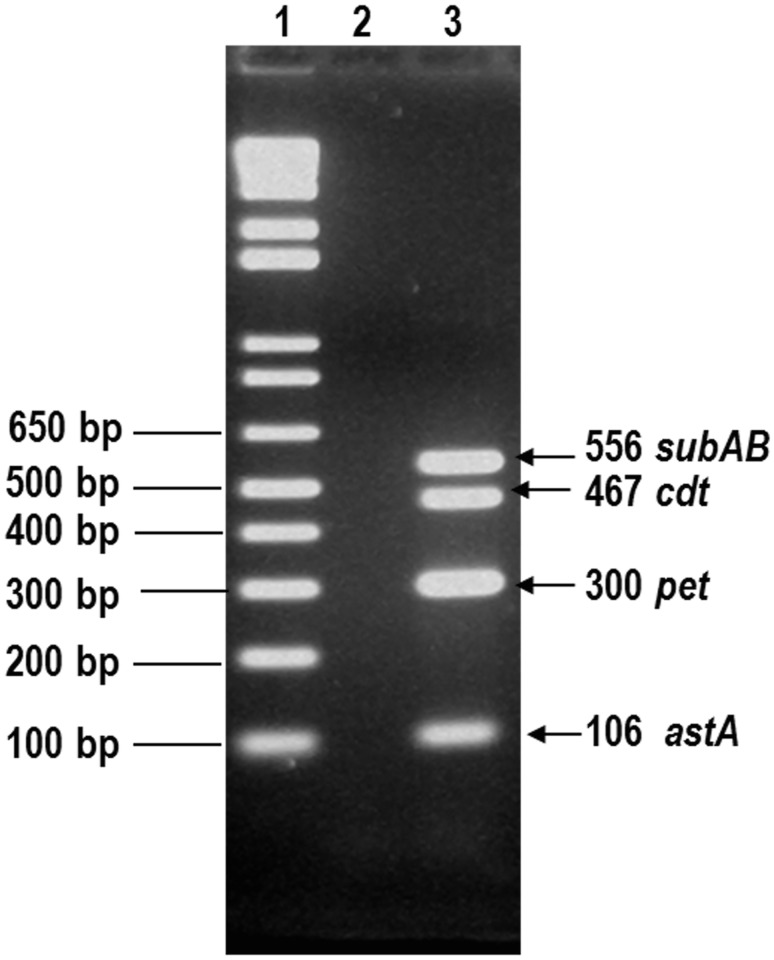
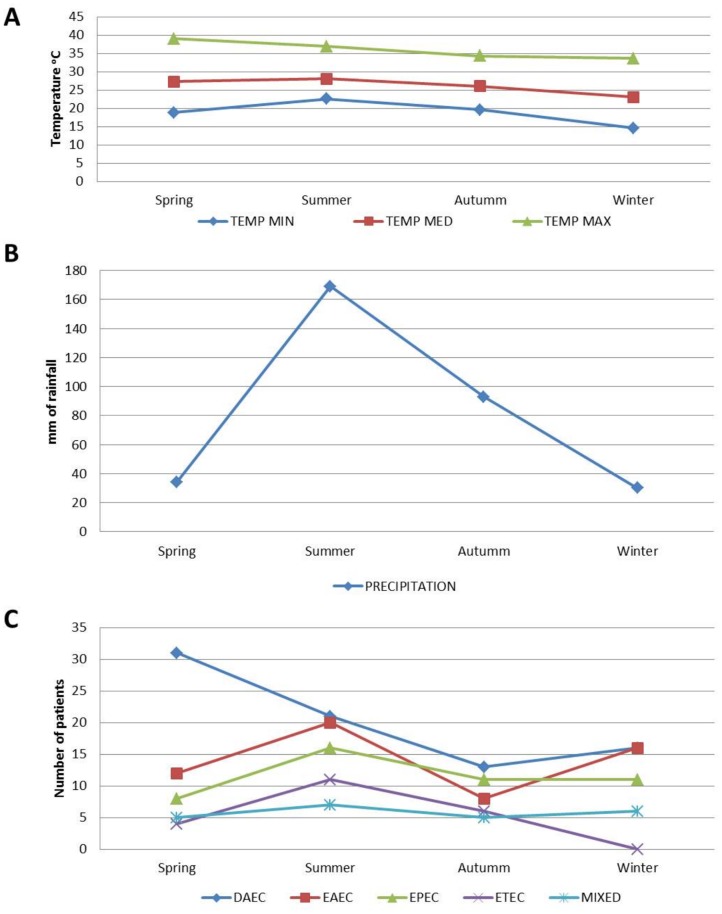
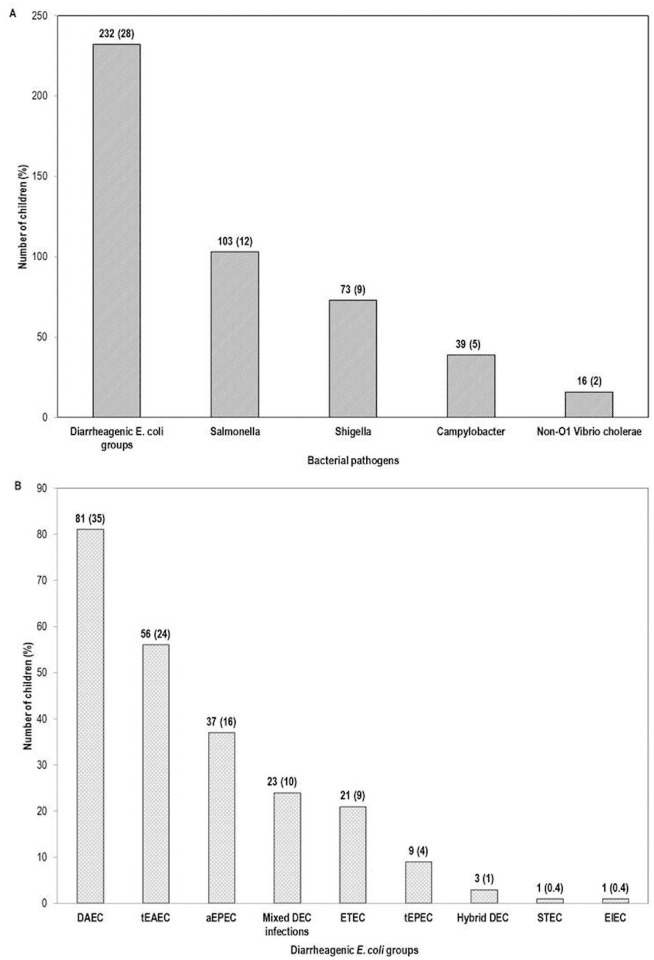
Diarrheagenic Escherichia coli (DEC) cause acute and persistent diarrhoea worldwide, but little is known about their epidemiology in Mexico. We determined the prevalence of bacterial enteropathogens in 831 children with acute diarrhoea over a four-year period in Yucatan, Mexico. Six DEC supplementary virulence genes (SVG), mainly associated with enteroaggregative E. coli (EAEC), were sought in 3100 E. coli isolates. DEC was the most common bacterial enteropathogen (28%), surpassing Salmonella (12%) and Shigella (9%). Predominant DEC groups were diffusely adherent E. coli (DAEC) (35%), EAEC (24%), and enteropathogenic E. coli (EPEC) (19%). Among children with DEC infections, 14% had severe illness mainly caused by EPEC (26%) and DAEC (18%); 30% had moderate diarrhoea mainly caused by DAEC (36%), mixed DEC infections (33%) and EAEC (32%). DAEC was most prevalent during spring, while ETEC, EAEC and EPEC predominated in summer. EAEC was more frequent in children 6-24 months old than in those younger than 6 months of age (P = 0.008, OR = 4.2, 95% CI, 1.3-13.9). The presence of SVG dispersin, (aatA), dispersin-translocator (aatA), enteroaggregative heat-stable toxin 1 (astA), plasmid encoded toxin (pet), cytolethal distending toxin (cdt) was higher in DEC than non-DEC strains, (36% vs 26%, P <0.0001, OR = 1.5, 95% CI, 1.3-1.8). 98% of EAEC-infected children harboured strains with SVG; 85% carried the aap-aatA gene combination, and 33% of these also carried astA. 28% of both EPEC and ETEC, and 6% of DAEC patients had strains with SVG. 54% of EPEC patients carried pet-positive strains alone or in combination with astA; only this DEC group harboured cdt-positive isolates. All ETEC patients carried astA- or astA-aap-positive strains. astA and aap were the most common SVG in DAEC (3% and 2%) and non-DEC strains (21% and 13%). DEC carrying SVG are an important cause of moderate to severe bacterial diarrhoea in Mexican children.
肠致病性大肠杆菌(DEC)在全球范围内引起急性和持续性腹泻,但对其在墨西哥的流行病学情况知之甚少。我们在四年的时间里,对来自墨西哥尤卡坦州 831 名患有急性腹泻的儿童进行了细菌病原体检测。在 3100 株大肠杆菌分离株中,我们寻找了 6 种主要与聚集性肠致病性大肠杆菌(EAEC)相关的 DEC 补充毒力基因(SVG)。DEC 是最常见的细菌性肠道病原体(28%),超过了沙门氏菌(12%)和志贺氏菌(9%)。主要的 DEC 组是弥漫粘附性大肠杆菌(DAEC)(35%)、EAEC(24%)和肠致病性大肠杆菌(EPEC)(19%)。在 DEC 感染的儿童中,14%患有严重疾病,主要由 EPEC(26%)和 DAEC(18%)引起;30%患有中度腹泻,主要由 DAEC(36%)、混合 DEC 感染(33%)和 EAEC(32%)引起。DAEC 在春季最为普遍,而肠产毒性大肠杆菌(ETEC)、EAEC 和 EPEC 在夏季更为常见。6-24 个月大的儿童中 EAEC 的发病率高于 6 个月以下的儿童(P = 0.008,OR = 4.2,95%CI,1.3-13.9)。与非 DEC 株相比,DEC 株中存在 SVG 分散素(aatA)、分散素转运蛋白(aatA)、肠聚集性热稳定毒素 1(astA)、质粒编码毒素(pet)、细胞毒性扩张毒素(cdt)的比例更高(36%比 26%,P <0.0001,OR = 1.5,95%CI,1.3-1.8)。98%的 EAEC 感染儿童携带 SVG 株;85%携带 aap-aatA 基因组合,其中 33%还携带 astA。EPEC 和 ETEC 各有 28%,DAEC 有 6%的患者有 SVG 株。EPEC 患者中有 54%单独或与 astA 一起携带 pet 阳性株;只有这个 DEC 组携带 cdt 阳性分离株。所有 ETEC 患者均携带 astA 或 astA-aap 阳性株。astA 和 aap 是 DAEC(3%和 2%)和非 DEC 株(21%和 13%)中最常见的 SVG。携带 SVG 的 DEC 是墨西哥儿童中中度至重度细菌性腹泻的重要原因。