Biomedical Research Center, Qatar University, P.O. Box 2713, Doha, Qatar.
College of Health Sciences, Qatar University, QU Health, Doha, Qatar.
BMC Microbiol. 2020 Mar 6;20(1):54. doi: 10.1186/s12866-020-01732-8.
The treatment of Enterobacteriaceae family including diarrheagenic E. coli (DEC) has been increasingly complicated due to the emergence of resistant strains. Here we report on the phenotypic resistance profiles and ESBL genotype and virulence profiles of Enteroaggregative E. coli (EAEC) and Enteropathogenic E. coli (EPEC) isolated from children hospitalized with acute gastroenteritis in Qatar (AGE).
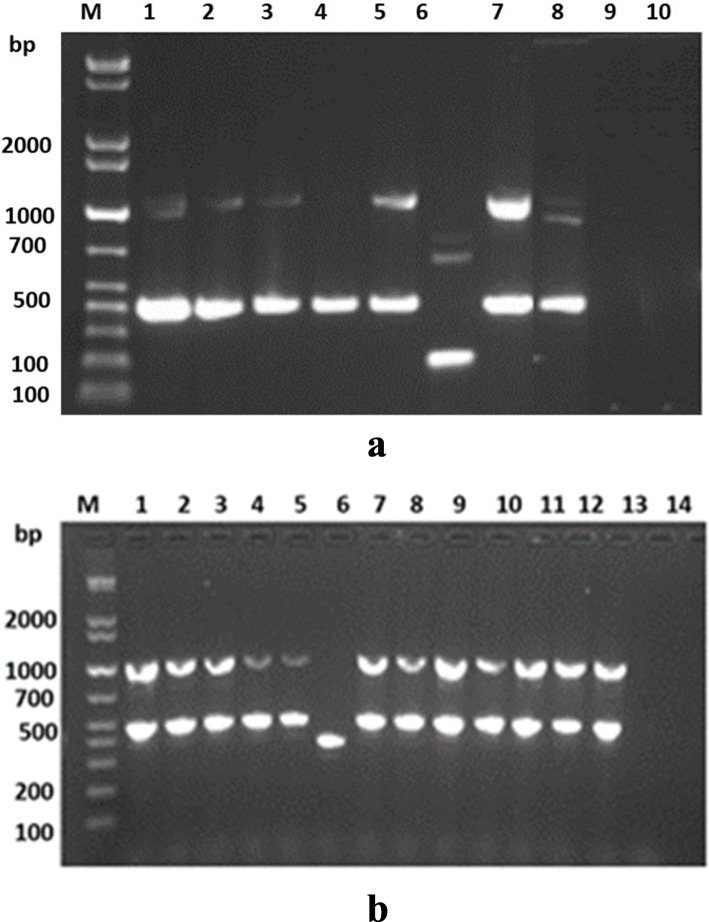
E. coli were isolated and characterized from 76 diarrheagenic stool positive samples, collected from hospitalized children less than 10 years old. Isolates were tested for antibiotic susceptibility against eighteen clinically relevant antibiotics using E-test method. Conventional PCR was performed to detect genes encoding ESBL and virulence factors. Chi-square test was performed to compare the individual antibiotic resistance between EPEC and EAEC. A significant percentage (73.7%) of isolates were resistant to at least one antibiotic. Overall, high resistance (70%) was reported to the first-line antibiotics such as ampicillin, tetracycline (46.4%), and sulfamethoxazole-trimethoprim (42.9%). Further, 39.5% of the isolates were multidrug resistant (MDR), with 22.4% being ESBL producers. On the other hand, all isolates were susceptible to carbapenem, fosfomycin, amikacin and colistin. The incidences of resistance to the 18 antibiotics between EPEC and EAEC were not significantly different by Pearson chi -square test (P > 0.05). Genetic analysis revealed that 88.23% of ESBL production was bla (bla, bla) - encoded. Several different combinations of virulence markers were observed, however, there was no specific trend among the isolates apart from absence of the bundle-forming pilus (bfpA) gene, which encodes the type IV fimbriae in EPEC adherence factor (EAF) plasmid (pEAF), among all EPEC (atypical). 15% of the EAEC strains were positive for a combination of astA, aap & capU, while 10% were positive for three different combinations. The aap, aatA, capU and aggR virulence genes showed the highest frequency of 65, 60, 55 and 55% respectively. Others genes, east, astA, and aai, showed frequencies of 35, 30 and 20% respectively.
Atypical EPEC and EAEC were the primary etiological agents of diarrhea in children among DEC pathotypes. Our results indicated high rate of antimicrobial resistance pattern of DEC strains, which necessities the development of regulatory programs and reporting systems of antimicrobial resistance in DEC and other AGE-associated bacteria to insure effective control of diarrheal diseases. Results from this study demand a further research on identifying the phenotypic and genotypic profiles of more DEC pathotypes in various clinical samples.
由于耐药菌株的出现,肠杆菌科(包括腹泻性大肠杆菌(DEC))的治疗变得越来越复杂。在这里,我们报告了从卡塔尔(AGE)住院的急性胃肠炎儿童粪便中分离出的聚集性大肠杆菌(EAEC)和肠致病性大肠杆菌(EPEC)的表型耐药谱、ESBL 基因型和毒力谱。
从 76 份来自小于 10 岁住院儿童的腹泻性粪便阳性样本中分离并鉴定出大肠杆菌。使用 E 试验法对 18 种临床相关抗生素的抗生素敏感性进行了检测。采用常规 PCR 检测编码 ESBL 和毒力因子的基因。采用卡方检验比较 EPEC 和 EAEC 之间的个体抗生素耐药性。有相当大比例(73.7%)的分离株对至少一种抗生素具有耐药性。总体而言,一线抗生素(如氨苄西林、四环素(46.4%)和磺胺甲恶唑-甲氧苄啶(42.9%))的耐药率较高。此外,39.5%的分离株为多药耐药(MDR),其中 22.4%为 ESBL 生产者。另一方面,所有分离株均对碳青霉烯类、磷霉素、阿米卡星和粘菌素敏感。Pearson 卡方检验(P>0.05)显示 EPEC 和 EAEC 之间 18 种抗生素的耐药率无显著差异。基因分析显示,88.23%的 ESBL 产生由 bla(bla,bla)编码。观察到几种不同组合的毒力标记,但除了所有 EPEC(非典型)中不存在编码 EPEC 粘附因子(EAF)质粒(pEAF)中 IV 型菌毛(bfpA)基因的束形成菌毛(bfpA)基因外,分离株之间没有特定趋势。15%的 EAEC 菌株阳性组合为 astA、aap 和 capU,10%的菌株阳性组合为三种不同的组合。aap、aatA、capU 和 aggR 毒力基因的频率最高,分别为 65%、60%、55%和 55%。其他基因 east、astA 和 aai 的频率分别为 35%、30%和 20%。
非典型性 EPEC 和 EAEC 是 DEC 病原体引起儿童腹泻的主要病原体。我们的结果表明,DEC 菌株的抗菌药物耐药模式率很高,需要制定 DEC 和其他 AGE 相关细菌的抗菌药物耐药性管理计划和报告系统,以确保有效控制腹泻病。本研究结果需要进一步研究,以确定各种临床样本中更多 DEC 病原体的表型和基因型谱。