Ogawa Tetsuya, Sato Takahiko, Ogata Toru, Yamamoto Shin-Ichiro, Nakazawa Kimitaka, Kawashima Noritaka
Faculty of Sport Sciences, Waseda University, Tokorozawa, Saitama, Japan Japan Society for the Promotion of Science, Chiyoda Tokyo, Japan Department of Rehabilitation for the Movement Functions, Research Institute, National Rehabilitation Center for Persons with Disabilities, Tokorozawa, Japan.
College of Systems Engineering and Science, Shibaura Institute of Technology, Minuma Saitama, Japan.
Physiol Rep. 2015 Mar;3(3). doi: 10.14814/phy2.12317.
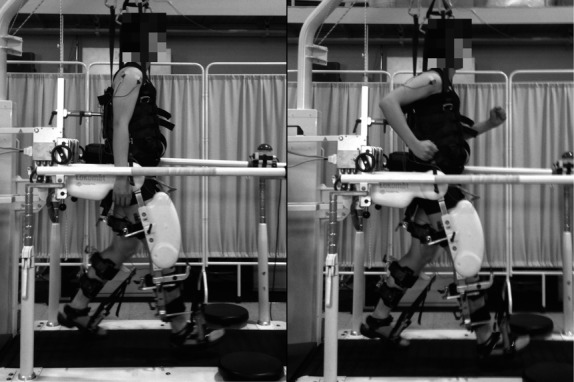
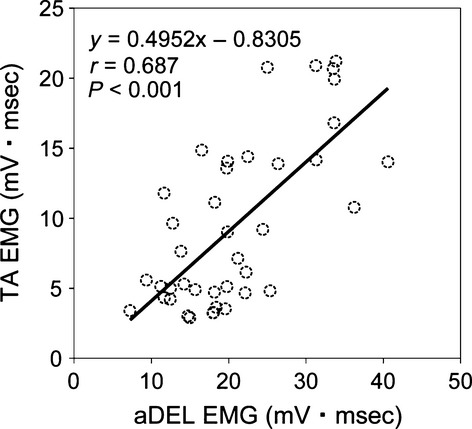
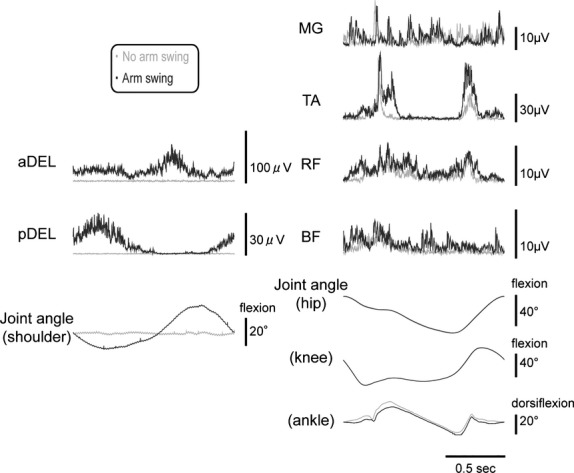
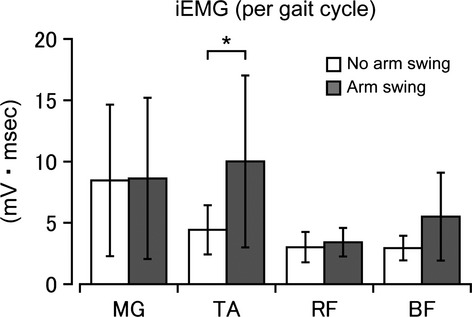
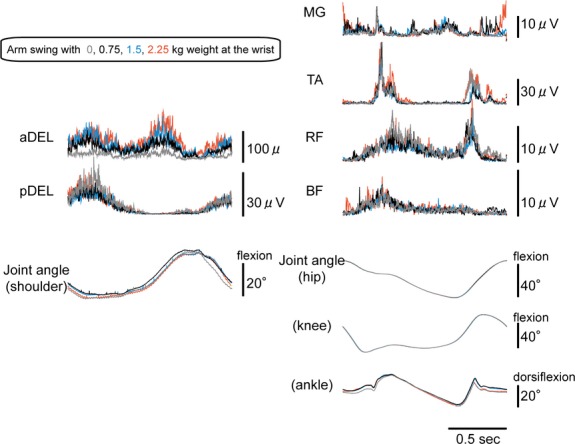
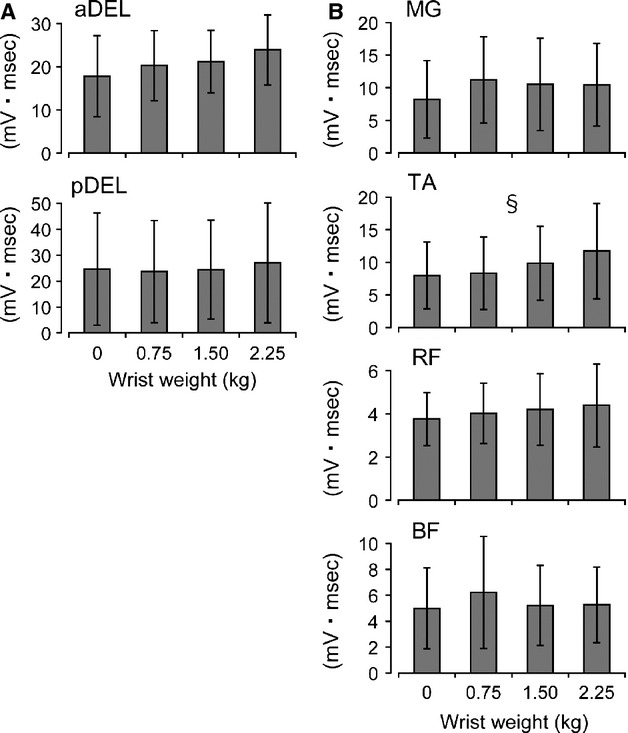
The use of driven gait orthosis (DGO) has drawn attention in gait rehabilitation for patients after central nervous system (CNS) lesions. By imposing a passive locomotor-like kinematic pattern, the neural mechanisms responsible for locomotion can be activated as in a normal gait. To further enhance this activity, discussions on possible intervention are necessary. Given the possible functional linkages between the upper and lower limbs, we investigated in healthy subjects the degree of modification in the lower limb muscles during DGO-induced passive gait by the addition of swing movement in the upper extremity. The results clearly showed that muscle activity in the ankle dorsiflexor TA muscle was significantly enhanced when the passive locomotor-like movement was accompanied by arm swing movement. The modifications in the TA activity were not a general increase through the stride cycles, but were observed under particular phases as in normal gaits. Voluntary effort to swing the arms may have certain effects on the modification of the muscle activity. The results provide clinical implications regarding the usefulness of voluntary arm swing movement as a possible intervention in passive gait training using DGO, since ordinary gait training using DGO does not induce spontaneous arm swing movement despite its known influence on the lower limb movement.
驱动式步态矫形器(DGO)在中枢神经系统(CNS)损伤患者的步态康复中受到了关注。通过施加类似被动运动的运动学模式,负责运动的神经机制可以像在正常步态中一样被激活。为了进一步增强这种活动,有必要讨论可能的干预措施。鉴于上肢和下肢之间可能存在的功能联系,我们在健康受试者中研究了在DGO诱导的被动步态期间,通过在上肢添加摆动运动,下肢肌肉的改变程度。结果清楚地表明,当被动运动样运动伴有手臂摆动运动时,踝背屈肌TA肌肉的肌肉活动显著增强。TA活动的改变并非在整个步幅周期中普遍增加,而是在特定阶段观察到,如同在正常步态中一样。主动摆动手臂的努力可能对肌肉活动的改变有一定影响。这些结果为主动手臂摆动运动作为使用DGO进行被动步态训练的一种可能干预措施的实用性提供了临床启示,因为尽管已知使用DGO的常规步态训练对下肢运动有影响,但它不会诱导自发的手臂摆动运动。