Dzieciatkowska Monika, D'Alessandro Angelo, Hill Ryan C, Hansen Kirk C
University of Colorado Denver School of Medicine, Biochemistry and Molecular Genetics, School of Medicine University of Colorado Denver, Anschutz Medical Campus, Aurora, CO, USA.
University of Colorado Denver School of Medicine, Biochemistry and Molecular Genetics, School of Medicine University of Colorado Denver, Anschutz Medical Campus, Aurora, CO, USA.
J Proteomics. 2015 Apr 29;120:1-6. doi: 10.1016/j.jprot.2015.02.010. Epub 2015 Mar 2.
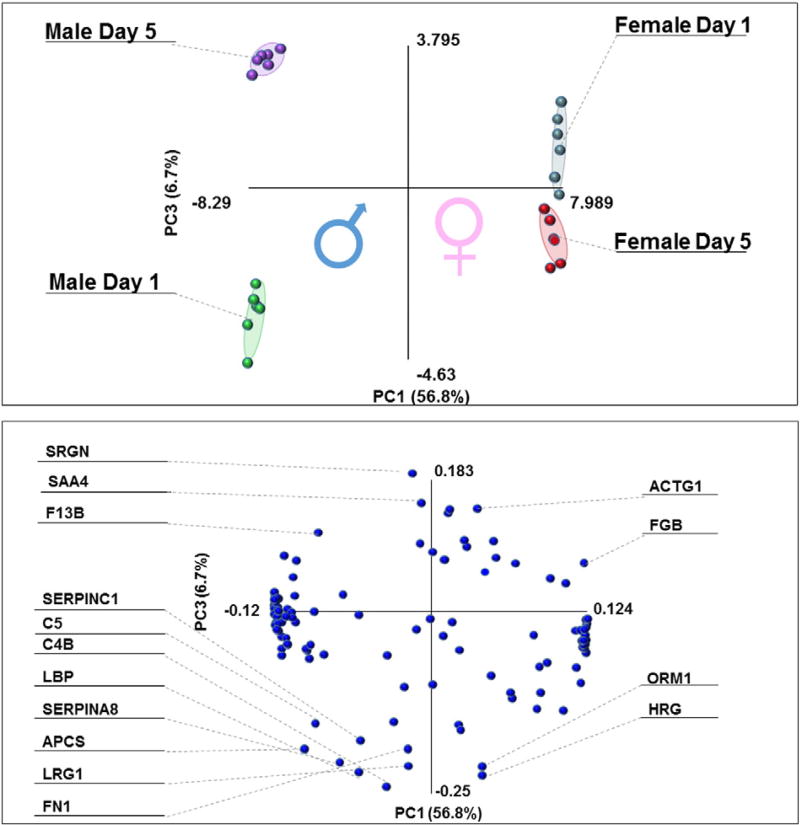
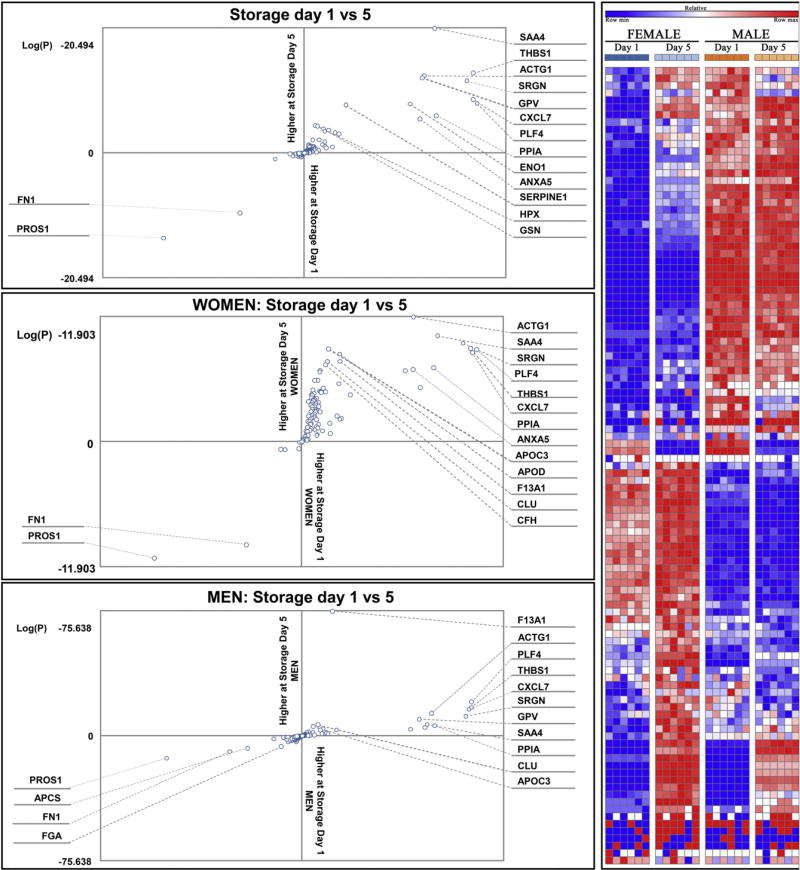
Clinical translation of proteomic technologies is often hampered by technical limitations, including inter-laboratory inconsistencies of label-free derived relative quantification, time-consuming analytical approaches and the subsequent challenge of performing proteomic analyses on large cohorts of subjects. Here we introduce plasma QconCAT-based targeted proteomics, an approach that allows the simultaneous absolute quantitation down to the picogram level of hundreds of proteins in a single liquid chromatography-selected reaction monitoring mass spectrometry run. We demonstrate the robustness of the approach by analyzing apheresis platelet concentrate supernatants at storage day 1 and the end of the shelf life for this blood-derived therapeutic, day 5. The targeted approach was repeatable and robust revealing potential gender-specific signatures across a set of three male and female donors. This technical note represents a proof-of-principle of the application of QconCAT-based MRM strategies to transfusion-medicine relevant issues, such as storage and gender-dependent proteomic signatures in blood-derived therapeutics.
Gender differences in the proteome composition of apheresis platelet supernatants have always been postulated, and might underlie a higher risk of adverse reactions when transfusing apheresis products from female donors. Preliminary proteomic studies provided an overview of gender-dependent relative compositional differences in the proteome of apheresis platelet supernatants during routine storage in the blood bank. Here we apply a proteomics approach for absolute quantitation of approximately 100 proteins in apheresis platelet supernatants from male and female donors at storage days 1 and 5. Absolute quantitative proteomic analyses allowed us to confirm and expand on previous observations about gender and storage-dependency of platelet supernatant protein profiles.
蛋白质组学技术的临床转化常常受到技术限制的阻碍,包括基于无标记的相对定量在实验室间的不一致性、耗时的分析方法以及随后在大量受试者队列中进行蛋白质组分析的挑战。在此,我们介绍基于血浆QconCAT的靶向蛋白质组学,该方法能够在一次液相色谱 - 选择反应监测质谱运行中,同时对数百种蛋白质进行低至皮克水平的绝对定量。我们通过分析单采血小板浓缩物上清液在储存第1天和该血液制品保质期结束时(第5天)的情况,证明了该方法的稳健性。这种靶向方法具有可重复性且稳健,揭示了一组三名男性和女性供体之间潜在的性别特异性特征。本技术说明代表了基于QconCAT的MRM策略在输血医学相关问题(如血液制品中的储存和性别依赖性蛋白质组特征)应用的原理证明。
单采血小板上清液蛋白质组组成中的性别差异一直被推测,并且可能是输注女性供体单采产品时不良反应风险较高的原因。初步蛋白质组学研究概述了血库常规储存期间单采血小板上清液蛋白质组中性别依赖性相对组成差异。在此,我们应用蛋白质组学方法对储存第1天和第5天来自男性和女性供体的单采血小板上清液中约100种蛋白质进行绝对定量。绝对定量蛋白质组分析使我们能够证实并扩展先前关于血小板上清液蛋白质谱的性别和储存依赖性的观察结果。