Port Russell G, Anwar Ayesha R, Ku Matthew, Carlson Gregory C, Siegel Steven J, Roberts Timothy P L
Department of Psychiatry, Perelman School of Medicine, University of Pennsylvania, Philadelphia, Pennsylvania ; Lurie Family Foundations MEG Imaging Center, Department of Radiology, The Children's Hospital of Philadelphia, Philadelphia, Pennsylvania ; Neurosciences Graduate Group, University of Pennsylvania, Philadelphia, Pennsylvania.
Lurie Family Foundations MEG Imaging Center, Department of Radiology, The Children's Hospital of Philadelphia, Philadelphia, Pennsylvania.
Yale J Biol Med. 2015 Mar 4;88(1):25-36. eCollection 2015 Mar.
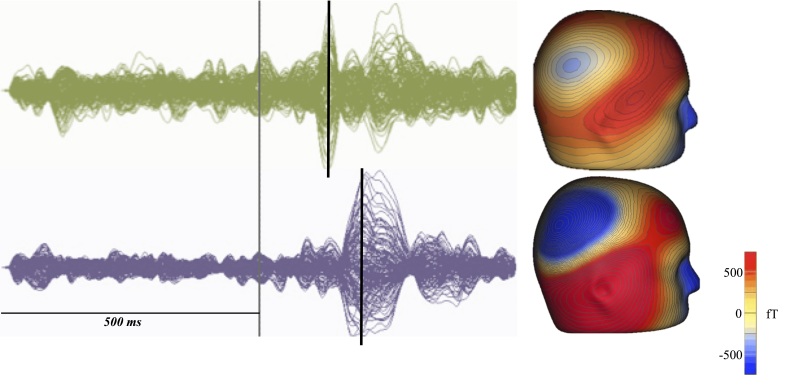
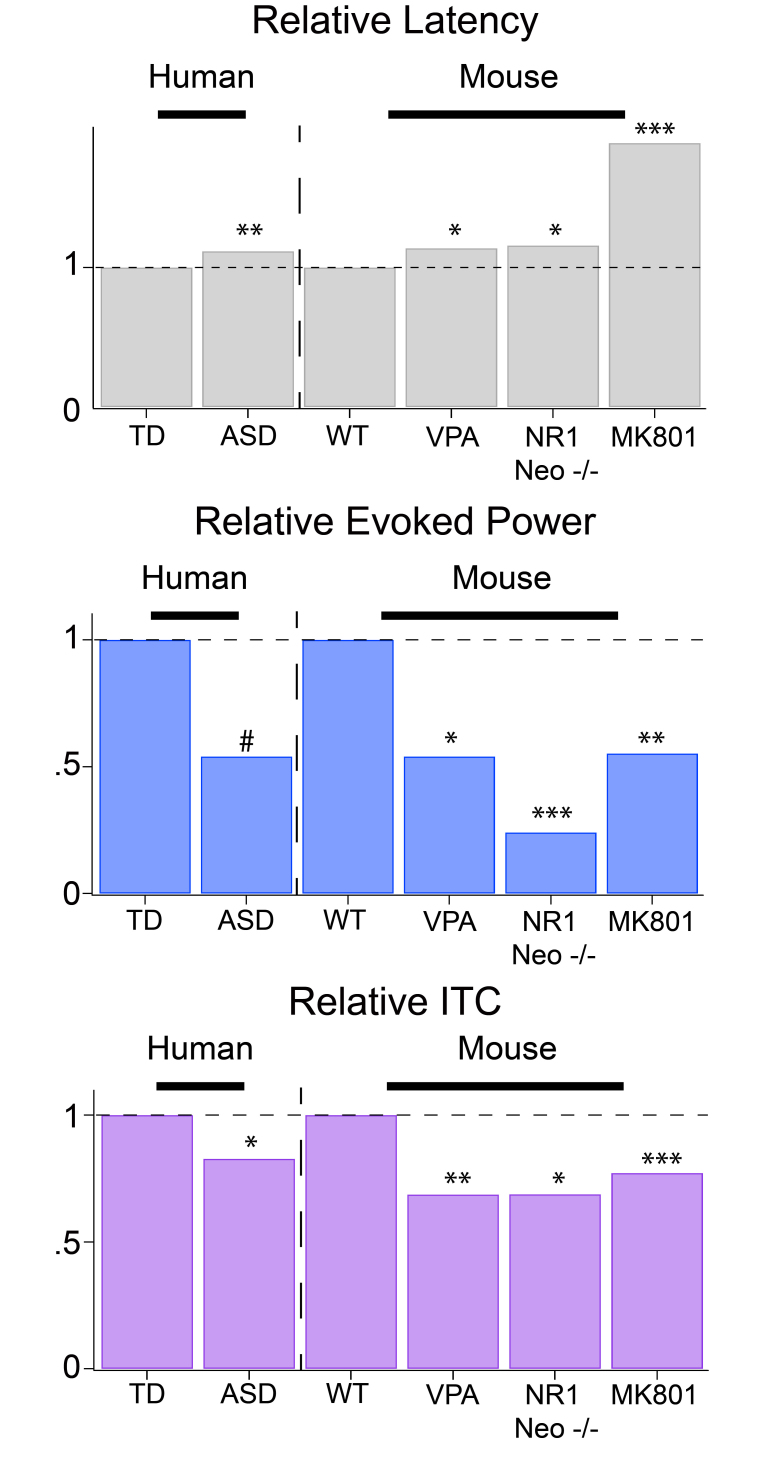
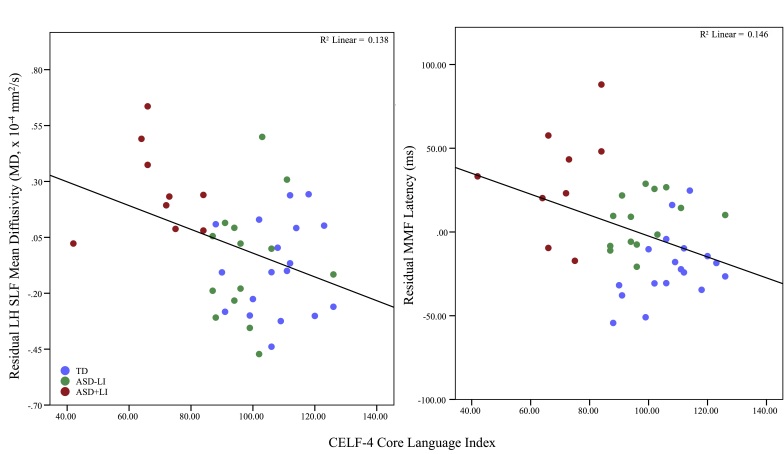
Autism spectrum disorders (ASD) are characterized by social impairments and restricted/stereotyped behaviors and currently affect an estimated 1 in 68 children aged 8 years old. While there has been substantial recent focus on ASD in research, both the biological pathology and, perhaps consequently, a fully effective treatment have yet to be realized. What has remained throughout is the hypothesis that ASD has neurobiological underpinnings and the observation that both the phenotypic expression and likely the underlying etiology is highly heterogeneous. Given the neurodevelopmental basis of ASD, a biologically based marker (biomarker) could prove useful not only for diagnostic and prognostic purposes, but also for stratification and response indices for pharmaceutical development. In this review, we examine the current state of the field for MEG-related biomarkers in ASD. We describe several potential biomarkers (middle latency delays [M50/M100], mismatch negativity latency, gamma-band oscillatory activity), and investigate their relation to symptomology, core domains of dysfunction (e.g., language impairment), and putative biological underpinnings.
自闭症谱系障碍(ASD)的特征是社交障碍以及受限/刻板行为,目前估计每68名8岁儿童中就有1人受其影响。尽管近期研究对ASD给予了大量关注,但生物学病理学以及或许随之而来的完全有效的治疗方法尚未实现。一直以来存在的假设是ASD具有神经生物学基础,并且观察到其表型表达以及潜在病因都具有高度异质性。鉴于ASD的神经发育基础,基于生物学的标志物(生物标志物)不仅可能对诊断和预后有用,而且对药物开发的分层和反应指标也可能有用。在本综述中,我们研究了ASD中与脑磁图(MEG)相关的生物标志物领域的当前状况。我们描述了几种潜在的生物标志物(中潜伏期延迟[M50/M100]、失配负波潜伏期、伽马波段振荡活动),并研究它们与症状学、功能障碍的核心领域(例如语言障碍)以及假定的生物学基础之间的关系。