Department of Preventive Medicine and Primary Care, College of Medicine, University of Ibadan , Ibadan , Nigeria.
Department of Health Policy and Management, College of Medicine, University of Ibadan , Ibadan , Nigeria.
PeerJ. 2015 Feb 24;3:e792. doi: 10.7717/peerj.792. eCollection 2015.
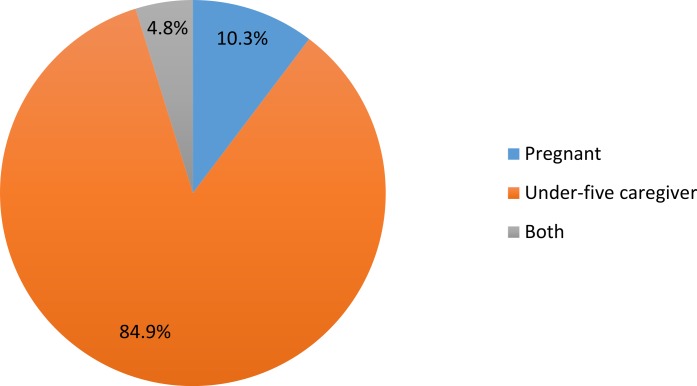
Introduction. The morbidity and mortality from malaria are still unacceptably high in the developing countries, especially among the vulnerable groups like pregnant women and under-five children, despite all control efforts. The knowledge about the preventive measures of malaria is an important preceding factor for the acceptance and use of malaria preventive measures like Insecticide Treated Nets (ITN) by community members. Therefore, this study assessed the knowledge of malaria prevention among caregivers of under-five children and pregnant women in a rural community in Southwest Nigeria. Methodology. This is part of a larger malaria prevention study in rural Southwest Nigeria. A descriptive cross-sectional survey was conducted among pregnant women and caregivers of under-five children in Igbo-Ora, a rural town in Southwest Nigeria using a semi-structured, interviewer-administered questionnaire. Information was obtained on knowledge of malaria prevention, and overall composite scores were computed for knowledge of malaria prevention and ITN use. Data were analyzed using SPSS version 16. Associations between variables were tested using a Chi-square with the level of statistical significance set at 5%. Results. Of the 631 respondents, 84.9% were caregivers of under-five children and 67.7% were married. Mean age was 27.7 ± 6.3 years with 53.4% aged between 20 and 29 years. Majority (91.1%) had at least primary school education and 60.2% were traders. Overall, 57.7% had poor knowledge of malaria prevention. A good proportion (83.5%) were aware of the use of ITN for malaria prevention while 30.6% had poor knowledge of its use. Respondents who were younger (<30 years), had at least primary education and earn <10,000/per month had significantly poor knowledge of ITN use in malaria prevention. Majority (60.0%) respondents had poor attitude regarding use of ITNs. Conclusion. This study showed that the knowledge of malaria prevention is still low among under-five caregivers and pregnant women in rural Southwest Nigeria despite current control measures. There is a need for concerted health education intervention to improve the knowledge of rural dwellers regarding malaria prevention, including the use of ITN. This will go a long way to improving the reported low level of ownership and utilization of ITN in the rural areas.
简介。尽管采取了所有控制措施,但疟疾的发病率和死亡率在发展中国家仍然高得令人无法接受,尤其是在孕妇和五岁以下儿童等弱势群体中。关于疟疾预防措施的知识是社区成员接受和使用疟疾预防措施(如杀虫剂处理过的蚊帐(ITN))的重要先行因素。因此,本研究评估了尼日利亚西南部一个农村社区中五岁以下儿童和孕妇的看护人对疟疾预防的认识。
方法。这是在尼日利亚西南部农村进行的一项更大的疟疾预防研究的一部分。使用半结构式访谈式问卷,在尼日利亚西南部伊格博-奥拉的一个农村城镇,对孕妇和五岁以下儿童的看护人进行了描述性横断面调查。获得了关于疟疾预防知识的信息,并计算了疟疾预防知识和 ITN 使用的综合得分。使用 SPSS 版本 16 分析数据。使用卡方检验测试变量之间的关联,统计显著性水平设置为 5%。
结果。在 631 名受访者中,84.9%是五岁以下儿童的看护人,67.7%已婚。平均年龄为 27.7 ± 6.3 岁,其中 53.4%年龄在 20 至 29 岁之间。大多数(91.1%)至少接受过小学教育,60.2%是商人。总体而言,57.7%的人对疟疾预防的知识了解甚少。相当一部分(83.5%)人知道使用 ITN 预防疟疾,而 30.6%的人对其使用了解甚少。年龄较小(<30 岁)、至少受过小学教育且月收入<10,000 奈拉的受访者在预防疟疾方面对 ITN 的使用知识明显较差。大多数(60.0%)受访者对使用 ITN 的态度较差。
结论。本研究表明,尽管采取了当前的控制措施,但在尼日利亚西南部农村地区,五岁以下儿童的看护人和孕妇对疟疾预防的知识仍然很低。需要开展协调一致的健康教育干预措施,以提高农村居民对疟疾预防的知识,包括使用 ITN。这将大大提高农村地区报告的 ITN 拥有率和利用率低的问题。