Laboratory of Experimental Anesthesiology and Intensive Care, Department of Anesthesiology, Academic Medical Centre, Meibergdreef 9, 1100 DD Amsterdam, Netherlands.
Laboratory of Experimental Anesthesiology and Intensive Care, Department of Intensive Care, Academic Medical Centre, Meibergdreef 9, 1100 DD Amsterdam, Netherlands.
J Immunol Res. 2015;2015:216798. doi: 10.1155/2015/216798. Epub 2015 Jan 27.
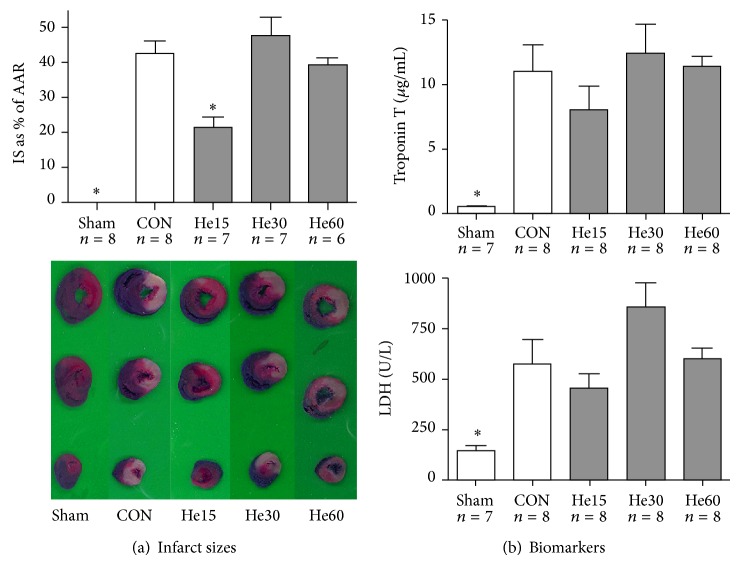
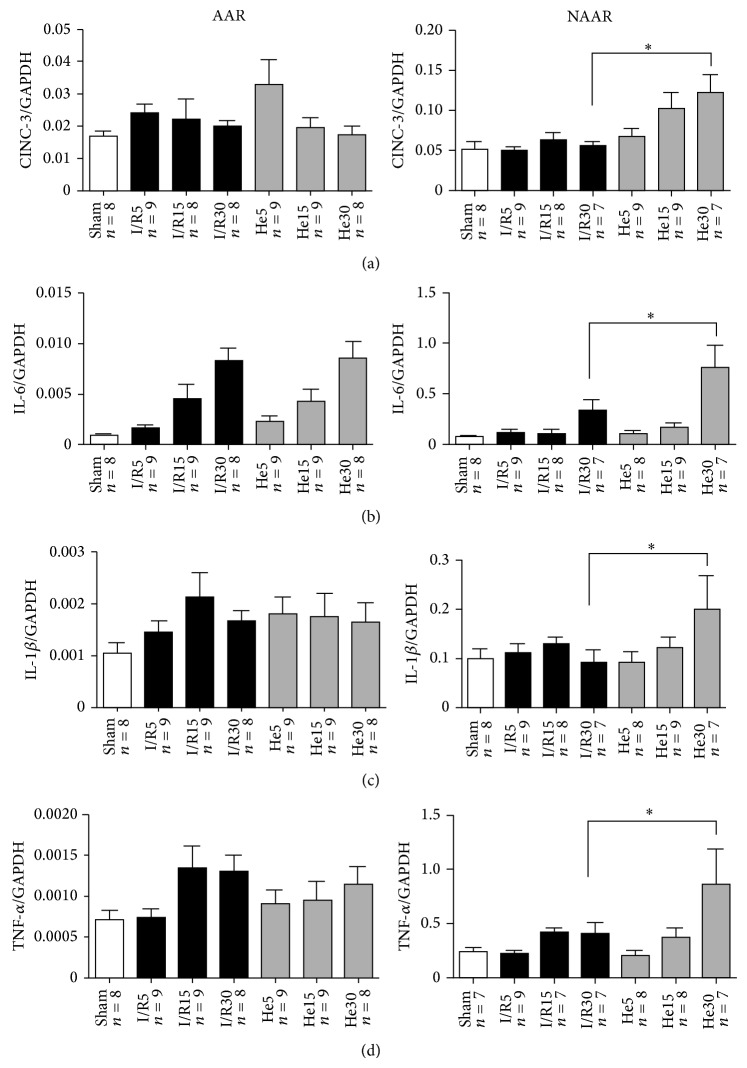
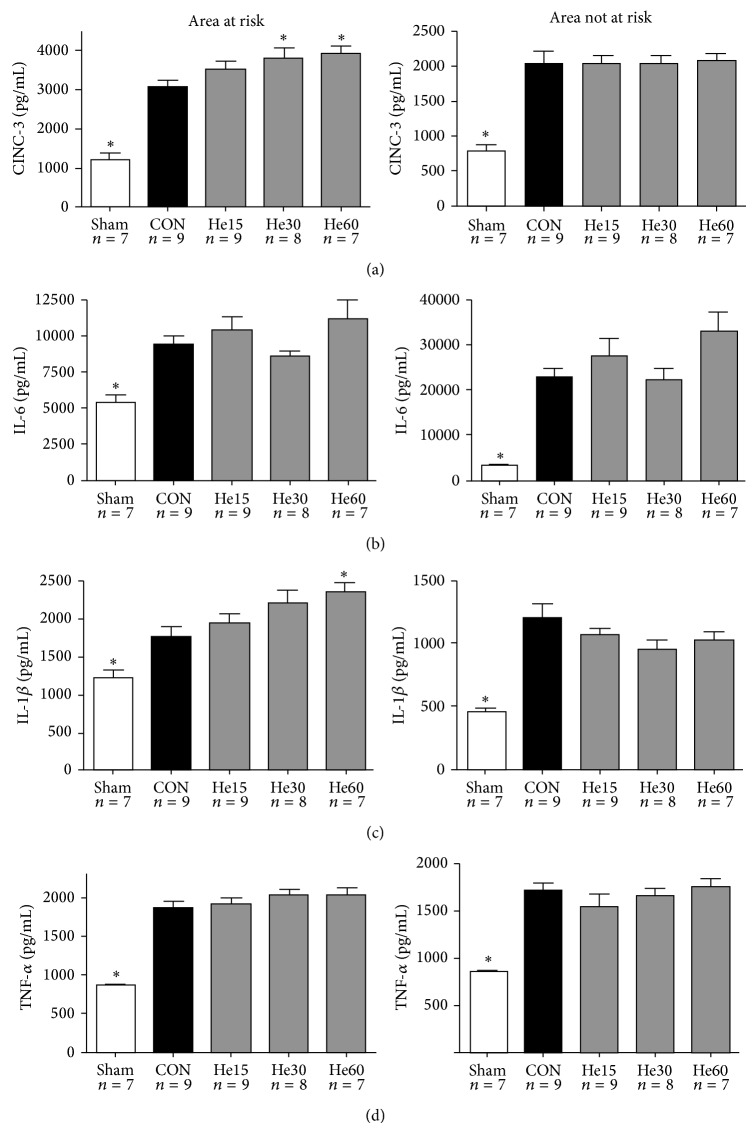
Postconditioning of myocardial tissue employs short cycles of ischemia or pharmacologic agents during early reperfusion. Effects of helium postconditioning protocols on infarct size and the ischemia/reperfusion-induced immune response were investigated by measurement of protein and mRNA levels of proinflammatory cytokines. Rats were anesthetized with S-ketamine (150 mg/kg) and diazepam (1.5 mg/kg). Regional myocardial ischemia/reperfusion was induced; additional groups inhaled 15, 30, or 60 min of 70% helium during reperfusion. Fifteen minutes of helium reduced infarct size from 43% in control to 21%, whereas 30 and 60 minutes of helium inhalation led to an infarct size of 47% and 39%, respectively. Increased protein levels of cytokine-induced neutrophil chemoattractant (CINC-3) and interleukin-1 beta (IL-1β) were found after 30 or 60 min of helium inhalation, in comparison to control. 30 min of helium increased mRNA levels of CINC-3, IL-1β, interleukin 6 (IL-6), and tumor necrosis factor alpha (TNF-α) in myocardial tissue not directly subjected to ischemia/reperfusion. These results suggest that the effectiveness of the helium postconditioning protocol is very sensitive to duration of noble gas application. Additionally, helium was associated with higher levels of inflammatory cytokines; however, it is not clear whether this is causative of nature or part of an epiphenomenon.
心肌组织的后处理采用早期再灌注期间的短暂缺血或药物制剂循环。通过测量促炎细胞因子的蛋白和 mRNA 水平,研究了氦气后处理方案对梗死面积和缺血/再灌注诱导的免疫反应的影响。用 S-氯胺酮(150mg/kg)和地西泮(1.5mg/kg)麻醉大鼠。诱导区域性心肌缺血/再灌注;另外的组在再灌注期间吸入 15、30 或 60 分钟的 70%氦气。15 分钟的氦气可将对照中的梗死面积从 43%减少至 21%,而 30 分钟和 60 分钟的氦气吸入分别导致梗死面积为 47%和 39%。与对照相比,在吸入氦气 30 或 60 分钟后,细胞因子诱导的中性粒细胞趋化因子(CINC-3)和白细胞介素 1β(IL-1β)的蛋白水平增加。30 分钟的氦气增加了心肌组织中未直接受到缺血/再灌注影响的 CINC-3、IL-1β、白细胞介素 6(IL-6)和肿瘤坏死因子 α(TNF-α)的 mRNA 水平。这些结果表明,氦气后处理方案的有效性对惰性气体应用的持续时间非常敏感。此外,氦气与更高水平的炎症细胞因子相关;然而,尚不清楚这是否是因果关系还是偶发现象的一部分。