Neumann Barbara, Vafeidis Athanasios T, Zimmermann Juliane, Nicholls Robert J
Institute of Geography, Kiel University, Kiel, Germany.
Faculty of Engineering and the Environment and Tyndall Centre for Climate Change Research, University of Southampton, Southampton, United Kingdom.
PLoS One. 2015 Mar 11;10(3):e0118571. doi: 10.1371/journal.pone.0118571. eCollection 2015.
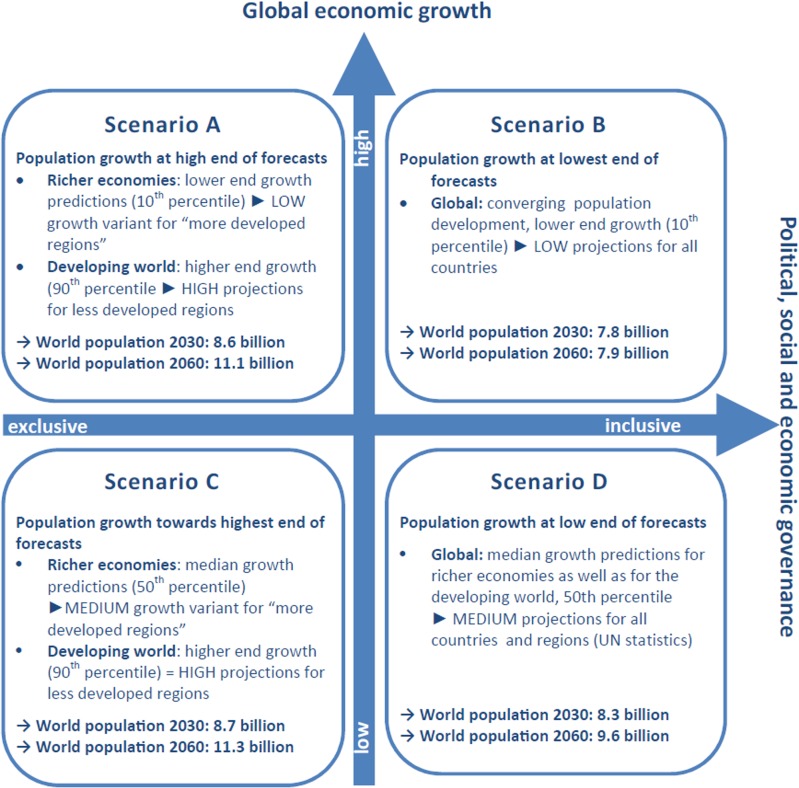
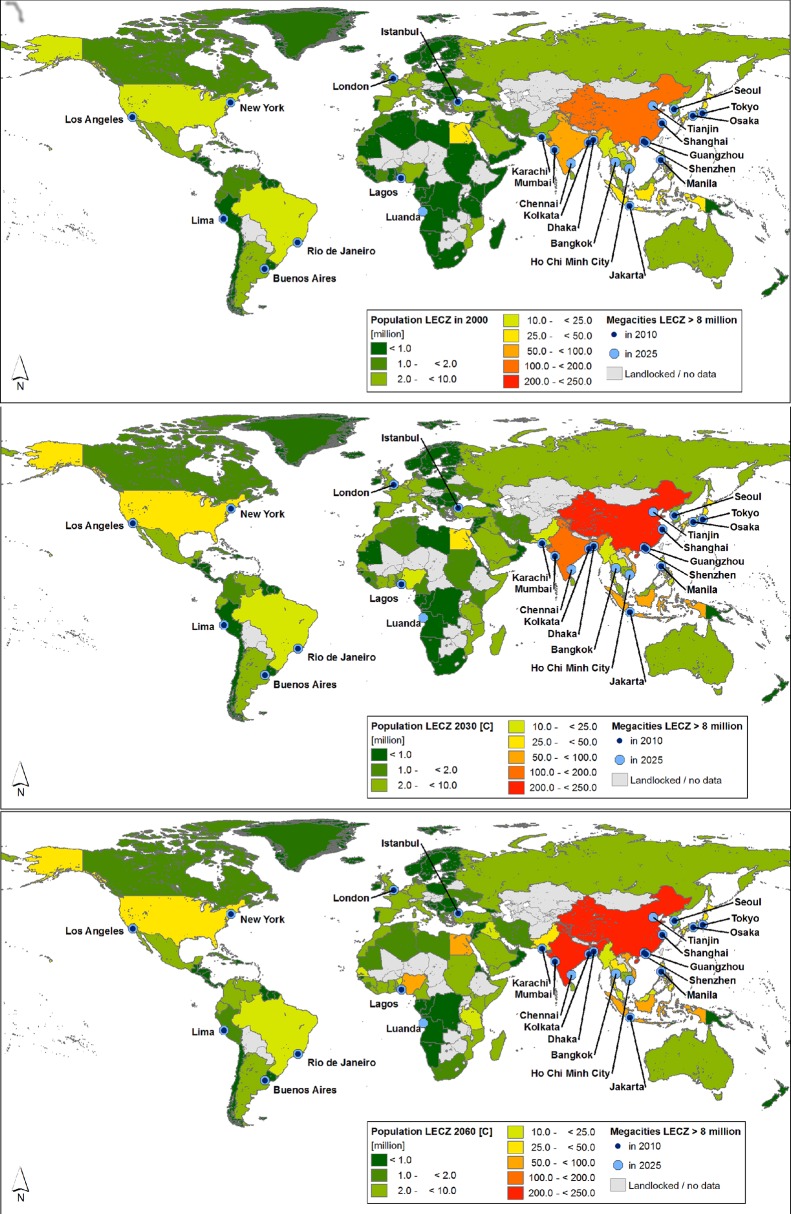
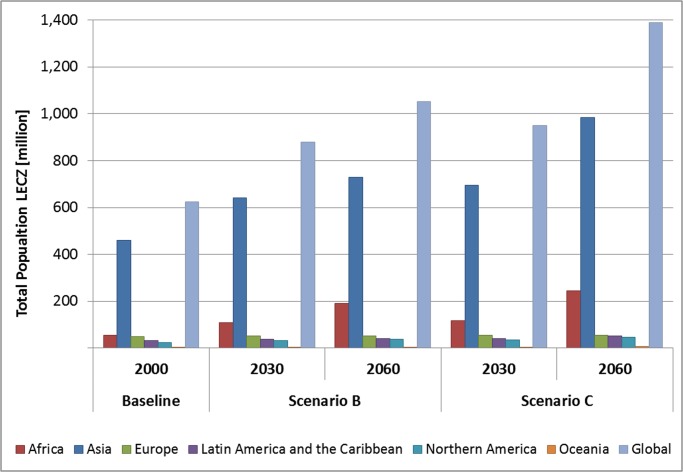
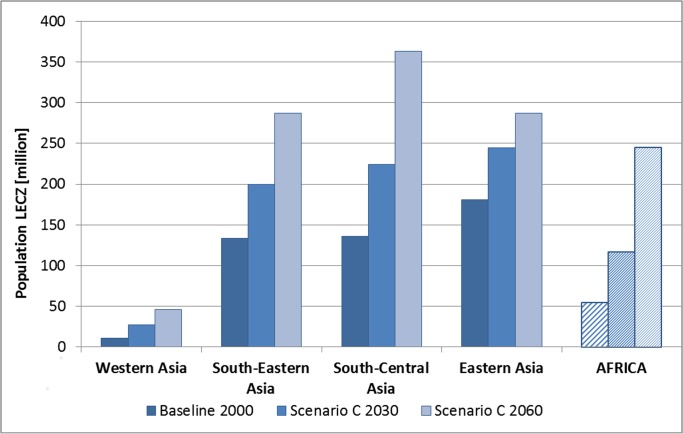
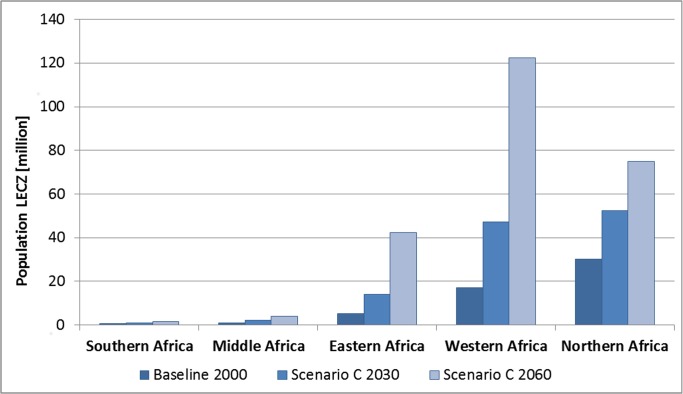
Coastal zones are exposed to a range of coastal hazards including sea-level rise with its related effects. At the same time, they are more densely populated than the hinterland and exhibit higher rates of population growth and urbanisation. As this trend is expected to continue into the future, we investigate how coastal populations will be affected by such impacts at global and regional scales by the years 2030 and 2060. Starting from baseline population estimates for the year 2000, we assess future population change in the low-elevation coastal zone and trends in exposure to 100-year coastal floods based on four different sea-level and socio-economic scenarios. Our method accounts for differential growth of coastal areas against the land-locked hinterland and for trends of urbanisation and expansive urban growth, as currently observed, but does not explicitly consider possible displacement or out-migration due to factors such as sea-level rise. We combine spatially explicit estimates of the baseline population with demographic data in order to derive scenario-driven projections of coastal population development. Our scenarios show that the number of people living in the low-elevation coastal zone, as well as the number of people exposed to flooding from 1-in-100 year storm surge events, is highest in Asia. China, India, Bangladesh, Indonesia and Viet Nam are estimated to have the highest total coastal population exposure in the baseline year and this ranking is expected to remain largely unchanged in the future. However, Africa is expected to experience the highest rates of population growth and urbanisation in the coastal zone, particularly in Egypt and sub-Saharan countries in Western and Eastern Africa. The results highlight countries and regions with a high degree of exposure to coastal flooding and help identifying regions where policies and adaptive planning for building resilient coastal communities are not only desirable but essential. Furthermore, we identify needs for further research and scope for improvement in this kind of scenario-based exposure analysis.
沿海地区面临一系列海岸灾害,包括海平面上升及其相关影响。与此同时,沿海地区的人口密度高于内陆地区,且人口增长率和城市化率更高。由于预计这一趋势将持续到未来,我们研究了到2030年和2060年全球和区域尺度上沿海人口将如何受到此类影响。从2000年的基线人口估计数出发,我们基于四种不同的海平面和社会经济情景,评估低海拔沿海地区未来的人口变化以及遭受百年一遇沿海洪水的趋势。我们的方法考虑了沿海地区相对于内陆腹地的差异增长以及城市化趋势和城市扩张增长,正如目前所观察到的,但没有明确考虑海平面上升等因素可能导致的人口迁移或外迁。我们将基线人口的空间明确估计数与人口数据相结合,以得出情景驱动的沿海人口发展预测。我们的情景显示,生活在低海拔沿海地区的人口数量,以及遭受百年一遇风暴潮事件洪水影响的人口数量,在亚洲最高。据估计,中国、印度、孟加拉国、印度尼西亚和越南在基年的沿海人口总暴露量最高,预计这一排名在未来将基本保持不变。然而,预计非洲沿海地区的人口增长率和城市化率将最高,特别是在埃及以及西非和东非的撒哈拉以南国家。研究结果突出了那些高度暴露于沿海洪水的国家和地区,并有助于确定那些不仅需要而且必须制定政策和进行适应性规划以建设有复原力的沿海社区的地区。此外,我们还确定了此类基于情景的暴露分析在进一步研究方面的需求和改进空间。