Zhanfeng Niu, Yanhui Li, Zhou Fei, Shaocai Hao, Guangxing Li, Hechun Xia
Department of Neurosurgery, The General Hospital of Ningxia Medical University, Yinchuan, China.
Department of Neurosurgery, The Xijing Hospital of The Fourth Miltary Medical University, Xi'an, China.
Oncotarget. 2015 Apr 30;6(12):9951-8. doi: 10.18632/oncotarget.3179.
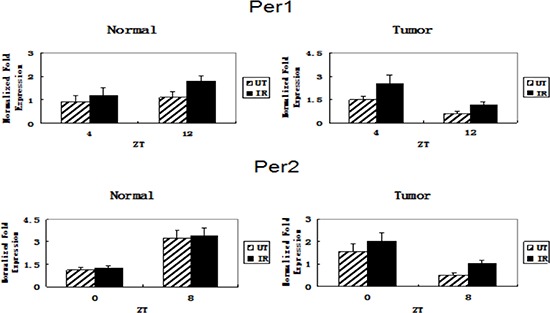
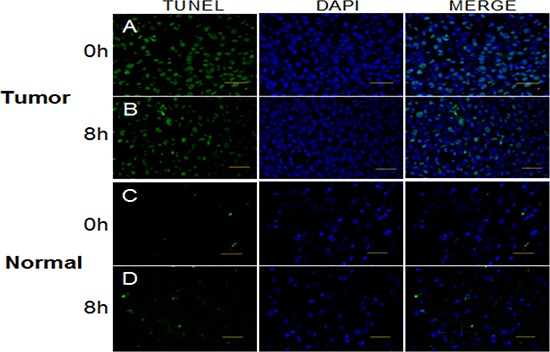
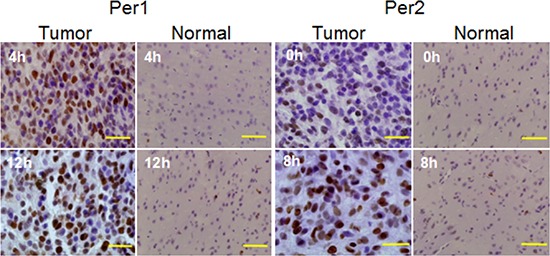
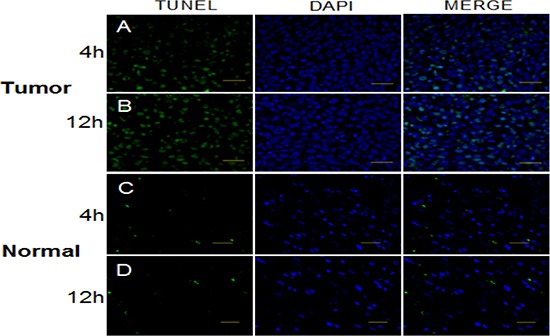
Per1 and Per2 play a key role in regulating the circadian rhythm in mammals. We report here that although both genes were expressed with a circadian rhythm in glioma and normal brain tissue in rats, their expression profiles differed in the two types of tissue. In addition, high expression of Per1 and Per2 in glioma tissue was associated with increased sensitivity to x-irradiation. No such sensitizing effect was observed in normal tissue. Our results suggest that Per1 and Per2 expression may increase the efficacy of radiotherapy against glioma by promoting apoptosis.
Per1和Per2在调节哺乳动物的昼夜节律中起关键作用。我们在此报告,尽管这两个基因在大鼠的胶质瘤和正常脑组织中均以昼夜节律表达,但其在这两种组织中的表达谱有所不同。此外,胶质瘤组织中Per1和Per2的高表达与对X射线照射的敏感性增加相关。在正常组织中未观察到这种致敏作用。我们的结果表明,Per1和Per2的表达可能通过促进细胞凋亡来提高对胶质瘤放疗的疗效。