Di Bonito Paola, Ridolfi Barbara, Columba-Cabezas Sandra, Giovannelli Andrea, Chiozzini Chiara, Manfredi Francesco, Anticoli Simona, Arenaccio Claudia, Federico Maurizio
Department of Infectious, Parasitic and Immunomediated Diseases, Istituto Superiore di Sanità, 00161 Rome, Italy.
Department of Therapeutic Research and Medicine Evaluation, Istituto Superiore di Sanità, 00161 Rome, Italy.
Viruses. 2015 Mar 9;7(3):1079-99. doi: 10.3390/v7031079.
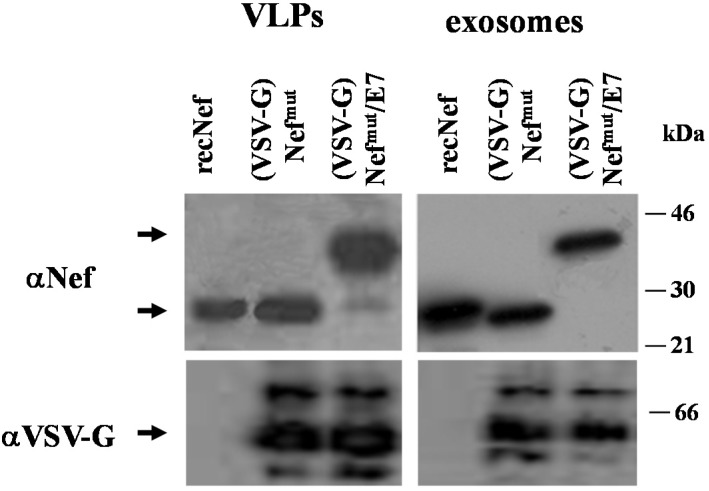
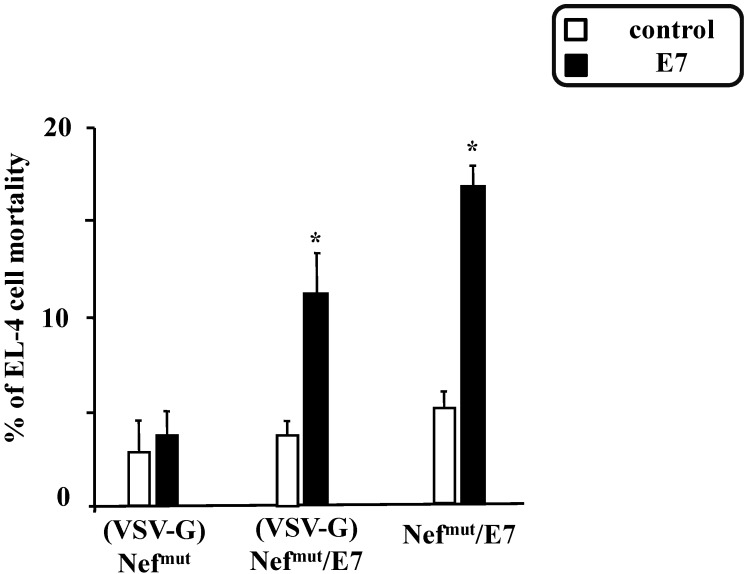
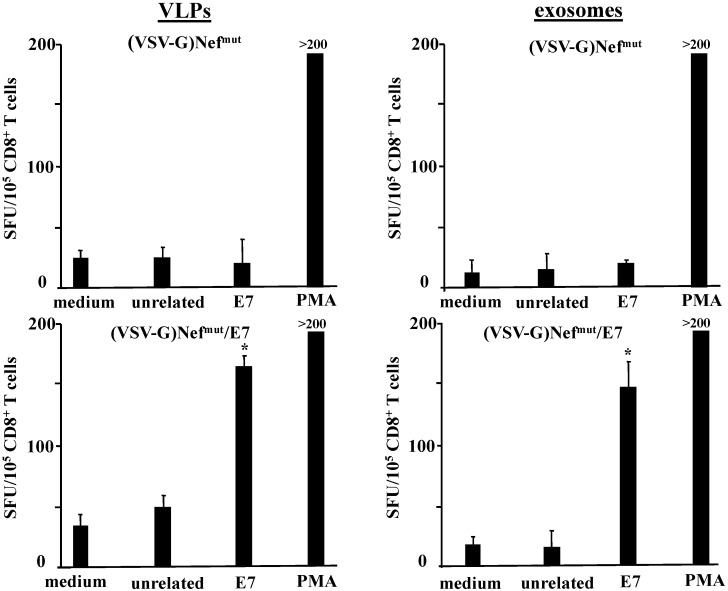
We developed an innovative strategy to induce a cytotoxic T cell (CTL) immune response against protein antigens of choice. It relies on the production of exosomes, i.e., nanovesicles spontaneously released by all cell types. We engineered the upload of huge amounts of protein antigens upon fusion with an anchoring protein (i.e., HIV-1 Nefmut), which is an inactive protein incorporating in exosomes at high levels also when fused with foreign proteins. We compared the immunogenicity of engineered exosomes uploading human papillomavirus (HPV)-E7 with that of lentiviral virus-like particles (VLPs) incorporating equivalent amounts of the same antigen. These exosomes, whose limiting membrane was decorated with VSV-G, i.e., an envelope protein inducing pH-dependent endosomal fusion, proved to be as immunogenic as the cognate VLPs. It is noteworthy that the immunogenicity of the engineered exosomes remained unaltered in the absence of VSV-G. Most important, we provide evidence that the inoculation in mouse of exosomes uploading HPV-E7 induces production of anti-HPV E7 CTLs, blocks the growth of syngeneic tumor cells inoculated after immunization, and controls the development of tumor cells inoculated before the exosome challenge. These results represent the proof-of-concept about both feasibility and efficacy of the Nefmut-based exosome platform for the induction of CD8+ T cell immunity.
我们开发了一种创新策略,以诱导针对所选蛋白质抗原的细胞毒性T细胞(CTL)免疫反应。该策略依赖于外泌体的产生,即所有细胞类型自发释放的纳米囊泡。我们通过与一种锚定蛋白(即HIV-1 Nefmut)融合来设计大量蛋白质抗原的载入,这种无活性蛋白在与外源蛋白融合时也能高水平地掺入外泌体。我们比较了载入人乳头瘤病毒(HPV)-E7的工程化外泌体与掺入等量相同抗原的慢病毒样颗粒(VLP)的免疫原性。这些外泌体的限制膜用VSV-G修饰,VSV-G是一种诱导pH依赖性内体融合的包膜蛋白,结果证明其免疫原性与同源VLP相同。值得注意的是,在没有VSV-G的情况下,工程化外泌体的免疫原性保持不变。最重要的是,我们提供的证据表明,给小鼠接种载入HPV-E7的外泌体可诱导产生抗HPV E7 CTL,阻断免疫后接种的同基因肿瘤细胞的生长,并控制在外泌体攻击前接种的肿瘤细胞的发展。这些结果代表了基于Nefmut的外泌体平台诱导CD8 + T细胞免疫的可行性和有效性的概念验证。