Di Bonito Paola, Chiozzini Chiara, Arenaccio Claudia, Anticoli Simona, Manfredi Francesco, Olivetta Eleonora, Ferrantelli Flavia, Falcone Emiliana, Ruggieri Anna, Federico Maurizio
Department of Infectious, Parasitic and Immunomediated Diseases, Istituto Superiore di Sanità, Rome, Italy.
National AIDS Center, Istituto Superiore di Sanità, Rome, Italy.
Int J Nanomedicine. 2017 Jun 23;12:4579-4591. doi: 10.2147/IJN.S131309. eCollection 2017.
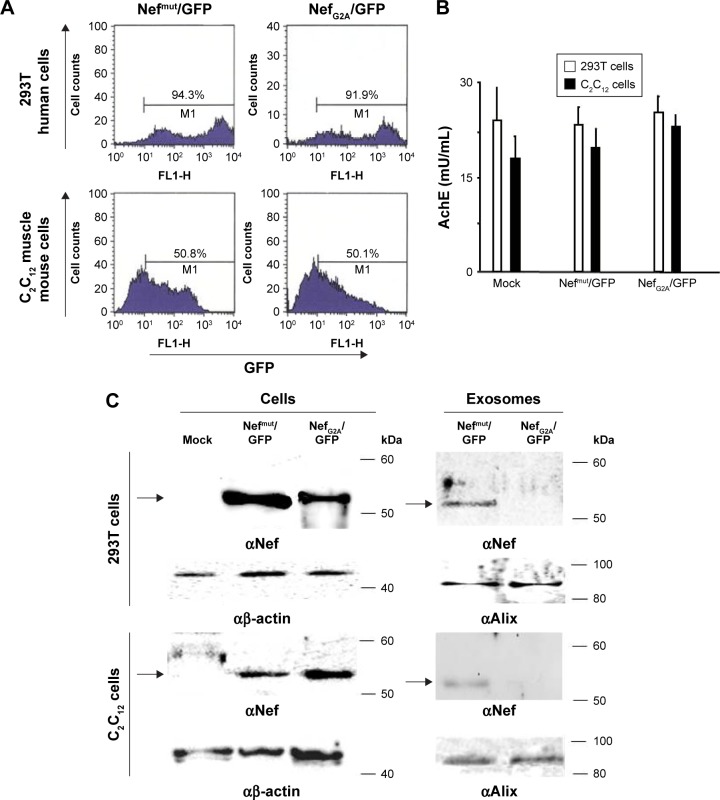
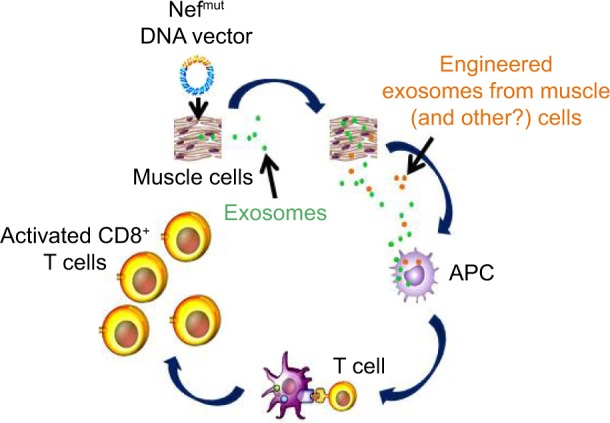
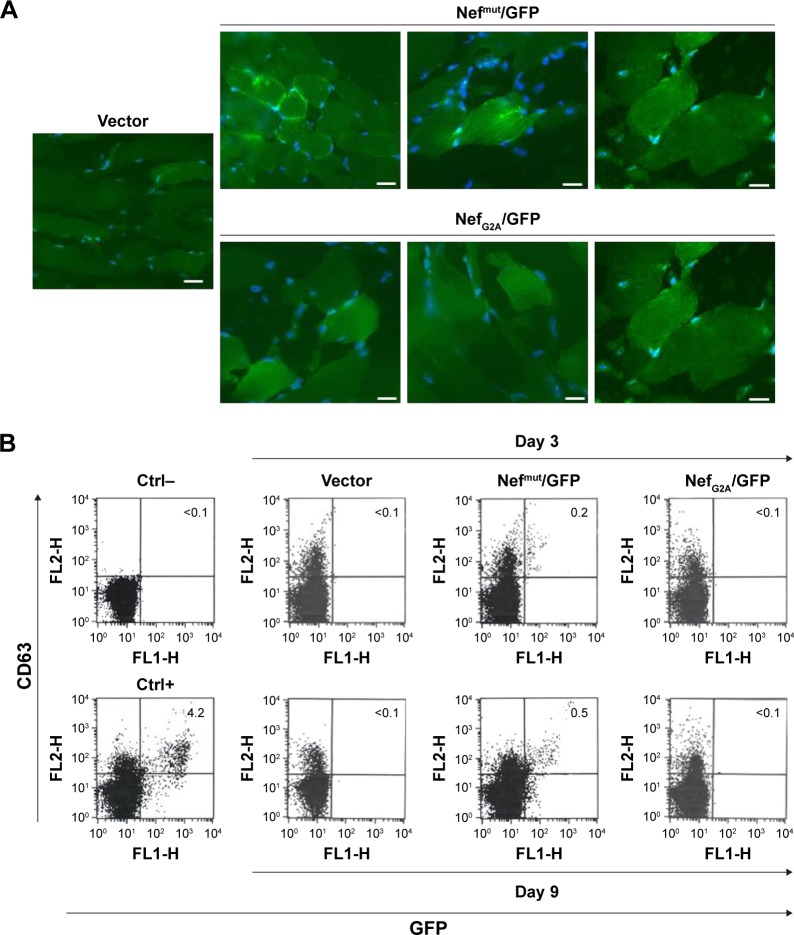
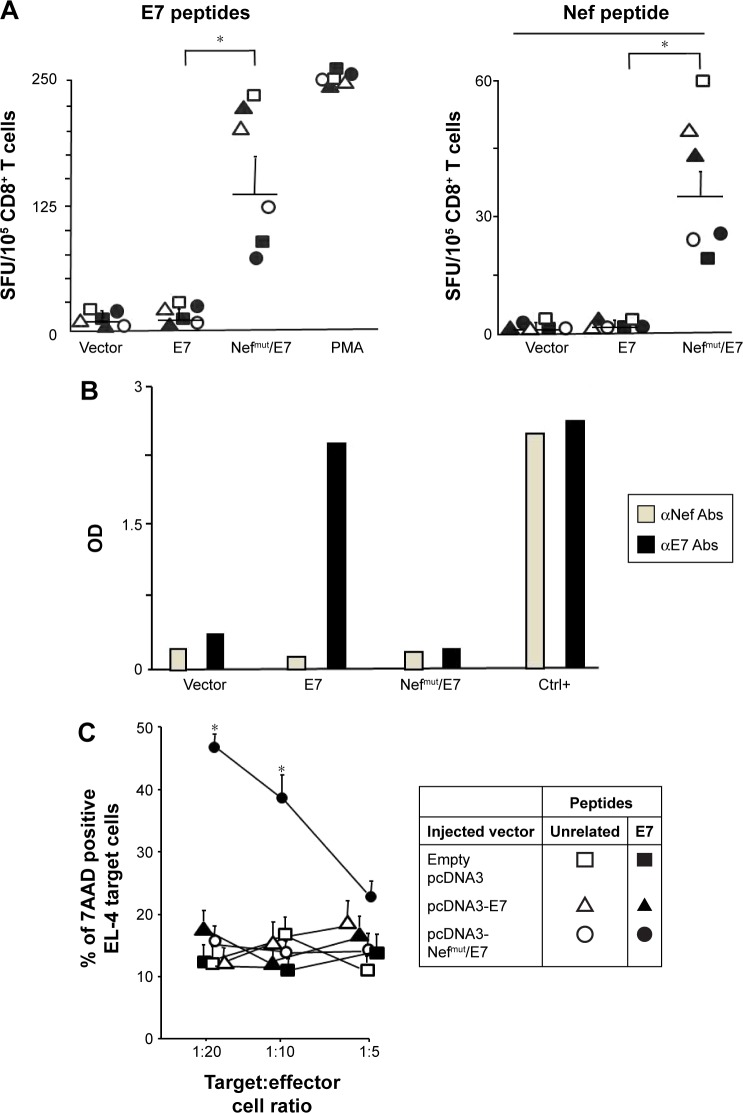
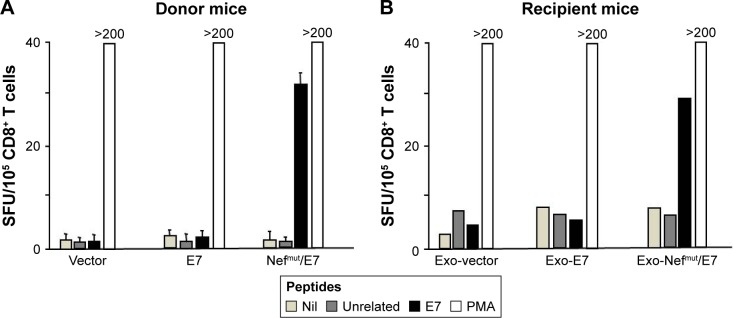
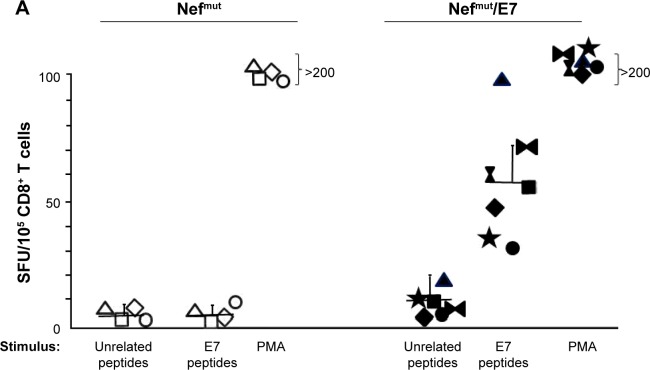
We recently proved that exosomes engineered in vitro to deliver high amounts of HPV E7 upon fusion with the Nef exosome-anchoring protein elicit an efficient anti-E7 cytotoxic T lymphocyte immune response. However, in view of a potential clinic application of this finding, our exosome-based immunization strategy was faced with possible technical difficulties including industrial manufacturing, cost of production, and storage. To overcome these hurdles, we designed an as yet unproven exosome-based immunization strategy relying on delivery by intramuscular inoculation of a DNA vector expressing Nef fused with HPV E7. In this way, we predicted that the expression of the Nef/E7 vector in muscle cells would result in a continuous source of endogenous (ie, produced by the inoculated host) engineered exosomes able to induce an E7-specific immune response. To assess this hypothesis, we first demonstrated that the injection of a Nef/green fluorescent protein-expressing vector led to the release of fluorescent exosomes, as detected in plasma of inoculated mice. Then, we observed that mice inoculated intramuscularly with a vector expressing Nef/E7 developed a CD8 T-cell immune response against both Nef and E7. Conversely, no CD8 T-cell responses were detected upon injection of vectors expressing either the wild-type Nef isoform of E7 alone, most likely a consequence of their inefficient exosome incorporation. The production of immunogenic exosomes in the DNA-injected mice was formally demonstrated by the E7-specific CD8 T-cell immune response we detected in mice inoculated with exosomes isolated from plasma of mice inoculated with the Nef/E7 vector. Finally, we provide evidence that the injection of Nef/E7 DNA led to the generation of effective antigen-specific cytotoxic T lymphocytes whose activity was likely part of the potent, therapeutic antitumor effect we observed in mice implanted with TC-1 tumor cells. In summary, we established a novel method to generate immunogenic exosomes in vivo by the intramuscular inoculation of DNA vectors expressing the exosome-anchoring protein Nef and its derivatives.
我们最近证明,体外工程化的外泌体与Nef外泌体锚定蛋白融合后可递送大量人乳头瘤病毒E7,能引发高效的抗E7细胞毒性T淋巴细胞免疫反应。然而,鉴于这一发现可能的临床应用,我们基于外泌体的免疫策略面临一些潜在技术难题,包括工业化生产、生产成本和储存。为克服这些障碍,我们设计了一种尚未得到验证的基于外泌体的免疫策略,即通过肌肉注射表达与HPV E7融合的Nef的DNA载体来实现递送。通过这种方式,我们预测Nef/E7载体在肌肉细胞中的表达将产生内源性(即由接种宿主产生)工程化外泌体的持续来源,能够诱导E7特异性免疫反应。为评估这一假设,我们首先证明,注射表达Nef/绿色荧光蛋白的载体可导致荧光外泌体的释放,这在接种小鼠的血浆中可检测到。然后,我们观察到肌肉注射表达Nef/E7的载体接种的小鼠产生了针对Nef和E7的CD8 T细胞免疫反应。相反,单独注射表达野生型Nef异构体或E7的载体后未检测到CD8 T细胞反应,这很可能是由于它们的外泌体掺入效率低下。我们在接种了从接种Nef/E7载体的小鼠血浆中分离出的外泌体的小鼠中检测到的E7特异性CD8 T细胞免疫反应,正式证明了DNA注射小鼠中产生了免疫原性外泌体。最后,我们提供证据表明,注射Nef/E7 DNA可导致产生有效的抗原特异性细胞毒性T淋巴细胞,其活性可能是我们在植入TC-1肿瘤细胞的小鼠中观察到的强大治疗性抗肿瘤作用的一部分。总之,我们建立了一种新方法,通过肌肉注射表达外泌体锚定蛋白Nef及其衍生物的DNA载体在体内产生免疫原性外泌体。