Remely Marlene, Hippe Berit, Geretschlaeger Isabella, Stegmayer Sonja, Hoefinger Ingrid, Haslberger Alexander
Institute of Nutritional Sciences, University Vienna, Althahnstraße 14, 1090, Vienna, Austria,
Wien Klin Wochenschr. 2015 May;127(9-10):394-8. doi: 10.1007/s00508-015-0755-1. Epub 2015 Mar 13.
An impaired gut microbiota has been reported as an important factor in the pathogenesis of obesity. Weight reduction has already been mentioned to improve gut microbial subpopulations involved in inflammatory processes, though other subpopulations still need further investigation. Thus, weight reduction in the context of a fasting program together with a probiotic intervention may improve the abundance and diversity of gut microbiota.
In this pilot study, overweight people underwent a fasting program with laxative treatment for 1 week followed by a 6 week intervention with a probiotic formula. Gut microbiota were analyzed on the basis of 16s rDNA with a quantitative real time polymerase chain reaction. Additionally, a food frequency questionnaire with questions about nutritional behavior, lifestyle, and physical activity was administered before and after the intervention.
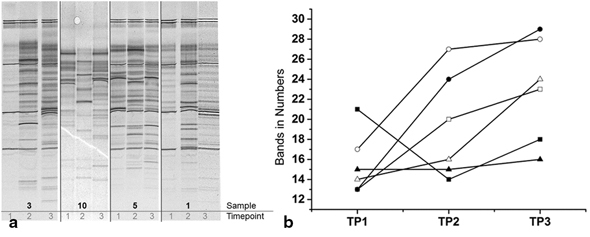
We observed an increase in microbial diversity over the study period. No significant changes in abundance of total bacteria, or of Bacteroidetes, Prevotella, Clostridium cluster XIVa, or Clostridium cluster IV were found, although Faecalibacterium prausnitzii showed an increase over the study period. In addition, Akkermanisa and Bifidobacteria increased in abundance due to intervention. The inflammation-associated gut microbes Enterobacteria and Lactobacilli increased during the first week and then declined by the end of the intervention. Two-thirds of the study participants harbored Archaea. No significant improvements of eating habits were reported, although physical activity improved due to the intervention.
Our results show that caloric restriction affects gut microbiota by proliferating mucin-degrading microbial subpopulations. An additional intervention with a probiotic formula increased probiotic-administered gut microbial populations.
据报道,肠道微生物群受损是肥胖发病机制中的一个重要因素。虽然减轻体重已被提及可改善参与炎症过程的肠道微生物亚群,但其他亚群仍需进一步研究。因此,在禁食计划的背景下减轻体重并结合益生菌干预可能会改善肠道微生物群的丰度和多样性。
在这项试点研究中,超重人群接受了为期1周的含泻药治疗的禁食计划,随后接受了为期6周的益生菌配方干预。基于16s rDNA通过定量实时聚合酶链反应分析肠道微生物群。此外,在干预前后发放了一份关于营养行为、生活方式和体育活动的食物频率问卷。
在研究期间,我们观察到微生物多样性增加。虽然普拉梭菌在研究期间有所增加,但未发现总细菌、拟杆菌、普雷沃菌、梭菌属 XIVa 簇或梭菌属 IV 簇的丰度有显著变化。此外,由于干预,阿克曼氏菌和双歧杆菌的丰度增加。与炎症相关的肠道微生物肠杆菌和乳酸菌在第一周增加,然后在干预结束时下降。三分之二的研究参与者携带古菌。虽然干预后体育活动有所改善,但未报告饮食习惯有显著改善。
我们的结果表明,热量限制通过增殖降解粘蛋白的微生物亚群来影响肠道微生物群。益生菌配方的额外干预增加了摄入益生菌的肠道微生物种群。