Esmaillzadeh Ahmad, Zakizadeh Elahe, Faghihimani Elham, Gohari Mahmoodreza, Jazayeri Shima
Department of Community Nutrition, Food Security Research Center, School of Nutrition and Food Science, Isfahan University Medical Sciences, Isfahan, Iran.
Department of Nutrition, School of Public Health, Iran University of Medical Sciences, Tehran, Iran ; Department of Nutrition and Biochemistry, School of Public Health, Tehran University of Medical Sciences, Tehran, Iran.
J Res Med Sci. 2015 Jan;20(1):47-53.
We are aware of limited data about the effects of purslane on diabetes. Earlier studies have mostly indicated the beneficial effects in animal models. This study aimed to evaluate the effect of purslane seeds on glycemic status and lipid profiles of persons with type 2 diabetes.
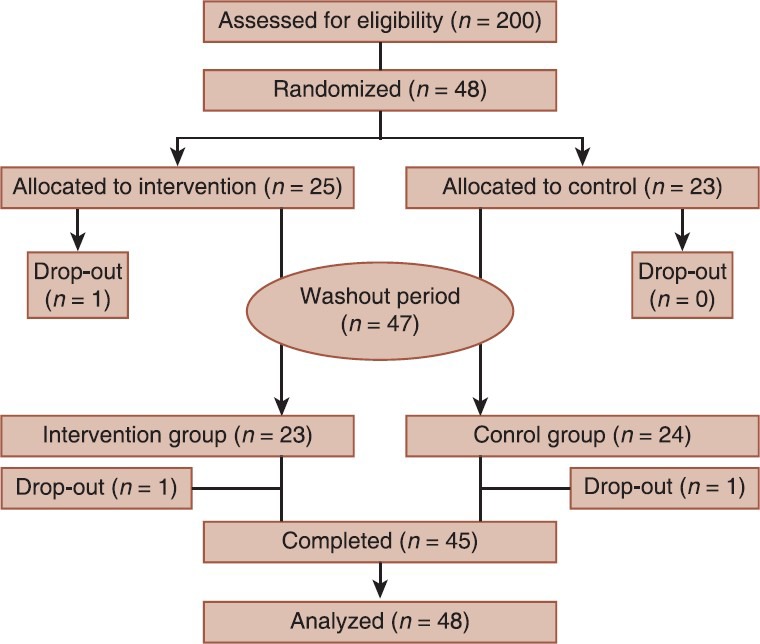
This cross-over randomized controlled clinical trial was conducted on 48 persons with type 2 diabetes. Participants were randomly assigned to receive either 10 g/day purslane seeds with 240 cc low-fat yogurt (intervention group) or only 240 cc low-fat yogurt (as a control group) for 5 weeks. After a 2-week washout period, subjects were moved to the alternate arm for an additional 5 weeks. At baseline and end of each phase of the study, fasting blood samples were collected to quantify plasma glucose levels, as well as serum insulin and lipid profiles. Within-group and between-group changes in anthropometric measures, as well as biochemical indicators, were compared using a paired-samples t-test.
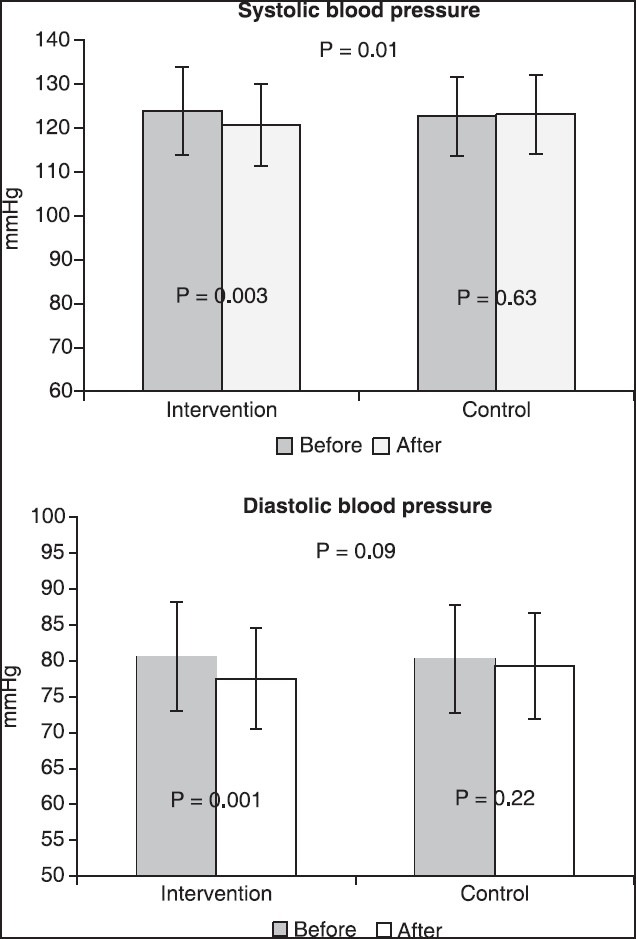
Mean age of study participants was 51.4 ± 6.0 year. We found a significant reduction in weight (-0.57 vs. 0.09 kg, P = 0.003) and body mass index (-0.23 vs. 0.02 kg/m(2), P = 0.004) following purslane seeds consumption. Despite a slight reduction in fasting plasma glucose levels (-2.10 vs. -2.77 mg/dL, P = 0.90), we failed to find any significant effect on serum insulin levels and homeostatic model of assessment of insulin resistance score. Furthermore, purslane consumption decreased serum triglyceride levels (-25.5 vs. -1.8 mg/dL, P = 0.04) but could not affect serum high-density lipoprotein cholesterol, low-density lipoprotein cholesterol, and total cholesterol levels. We observed a significant reduction in systolic blood pressure (-3.33 vs. 0.5 mmHg, P = 0.01) and a borderline significant decrease in diastolic blood pressure (-3.12 vs. -0.93 mmHg, P = 0.09) after purslane seeds intake.
In summary, consumption of purslane seeds for 5 weeks in persons with type 2 diabetes might improve their anthropometric measures, serum triglyceride levels, and blood pressure. Further studies are required to determine the appropriate dosage for these patients.
我们了解到关于马齿苋对糖尿病影响的数据有限。早期研究大多表明其在动物模型中的有益作用。本研究旨在评估马齿苋籽对2型糖尿病患者血糖状况和血脂谱的影响。
这项交叉随机对照临床试验在48名2型糖尿病患者中进行。参与者被随机分配接受10克/天马齿苋籽加240毫升低脂酸奶(干预组)或仅240毫升低脂酸奶(作为对照组),为期5周。经过2周的洗脱期后,受试者切换至另一组,再进行5周。在研究的每个阶段的基线和结束时,采集空腹血样以量化血浆葡萄糖水平以及血清胰岛素和血脂谱。使用配对样本t检验比较组内和组间人体测量指标以及生化指标的变化。
研究参与者的平均年龄为51.4±6.0岁。我们发现食用马齿苋籽后体重显著降低(-0.57对0.09千克,P = 0.003)和体重指数显著降低(-0.23对0.02千克/米²,P = 0.004)。尽管空腹血浆葡萄糖水平略有降低(-2.10对-2.77毫克/分升,P = 0.90),但我们未发现对血清胰岛素水平和胰岛素抵抗评估的稳态模型评分有任何显著影响。此外,食用马齿苋降低了血清甘油三酯水平(-25.5对-1.8毫克/分升,P = 0.04),但不影响血清高密度脂蛋白胆固醇、低密度脂蛋白胆固醇和总胆固醇水平。我们观察到食用马齿苋籽后收缩压显著降低(-3.33对0.5毫米汞柱,P = 0.01),舒张压有临界显著降低(-3.12对-0.93毫米汞柱,P = 0.09)。
总之,2型糖尿病患者食用马齿苋籽5周可能会改善其人体测量指标、血清甘油三酯水平和血压。需要进一步研究以确定这些患者的合适剂量。