Sibley Kathryn M, Howe Tracey, Lamb Sarah E, Lord Stephen R, Maki Brian E, Rose Debra J, Scott Vicky, Stathokostas Liza, Straus Sharon E, Jaglal Susan B
Department of Community Health Sciences, University of Manitoba, Winnipeg, Canada; Toronto Rehabilitation Institute- University Health Network, Toronto, Canada.
School of Health and Life Sciences, Glasgow Caledonian University, Glasgow, United Kingdom.
PLoS One. 2015 Mar 13;10(3):e0120568. doi: 10.1371/journal.pone.0120568. eCollection 2015.
Standing balance is imperative for mobility and avoiding falls. Use of an excessive number of standing balance measures has limited the synthesis of balance intervention data and hampered consistent clinical practice.
To develop recommendations for a core outcome set (COS) of standing balance measures for research and practice among adults.
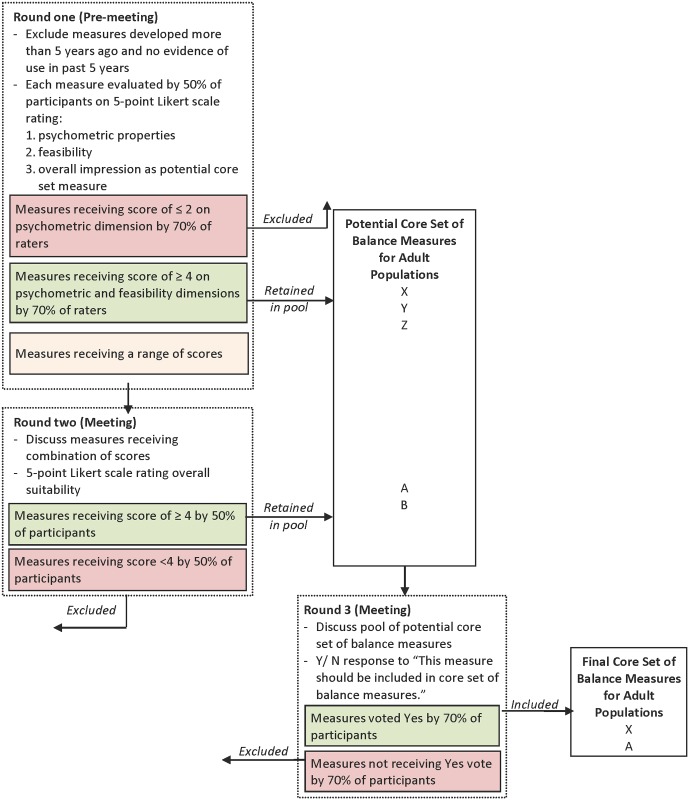
A combination of scoping reviews, literature appraisal, anonymous voting and face-to-face meetings with fourteen invited experts from a range of disciplines with international recognition in balance measurement and falls prevention. Consensus was sought over three rounds using pre-established criteria.
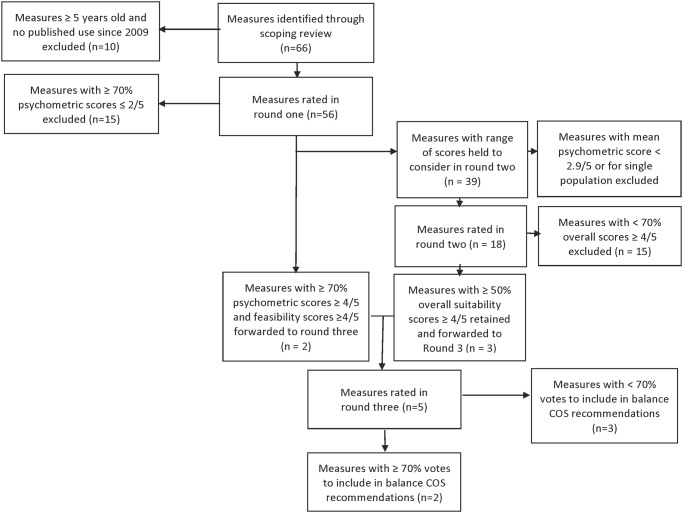
The scoping review identified 56 existing standing balance measures validated in adult populations with evidence of use in the past five years, and these were considered for inclusion in the COS.
Fifteen measures were excluded after the first round of scoring and a further 36 after round two. Five measures were considered in round three. Two measures reached consensus for recommendation, and the expert panel recommended that at a minimum, either the Berg Balance Scale or Mini Balance Evaluation Systems Test be used when measuring standing balance in adult populations.
Inclusion of two measures in the COS may increase the feasibility of potential uptake, but poses challenges for data synthesis. Adoption of the standing balance COS does not constitute a comprehensive balance assessment for any population, and users should include additional validated measures as appropriate.
The absence of a gold standard for measuring standing balance has contributed to the proliferation of outcome measures. These recommendations represent an important first step towards greater standardization in the assessment and measurement of this critical skill and will inform clinical research and practice internationally.
站立平衡对于行动能力和预防跌倒至关重要。过多站立平衡测量方法的使用限制了平衡干预数据的综合分析,并阻碍了一致的临床实践。
为成人研究和实践制定站立平衡测量的核心结局集(COS)建议。
采用范围综述、文献评估、匿名投票以及与来自平衡测量和跌倒预防领域具有国际认可度的多学科14位受邀专家进行面对面会议相结合的方法。使用预先确定的标准在三轮过程中寻求共识。
范围综述确定了56种已在成人中验证且在过去五年中有使用证据的现有站立平衡测量方法,并将这些方法纳入COS考虑范围。
第一轮评分后排除了15种测量方法,第二轮后又排除了36种。第三轮考虑了5种测量方法。两种测量方法达成了推荐共识,专家小组建议在测量成人站立平衡时,至少使用伯格平衡量表或迷你平衡评估系统测试中的一种。
在COS中纳入两种测量方法可能会增加潜在采用的可行性,但给数据综合分析带来挑战。采用站立平衡COS并不构成对任何人群的全面平衡评估,使用者应根据情况纳入其他经过验证的测量方法。
缺乏测量站立平衡的金标准导致了结局测量方法的泛滥。这些建议是朝着这一关键技能评估和测量的更大标准化迈出的重要第一步,并将为国际临床研究和实践提供参考。