Balamurugan Kuppusamy
Laboratory of Cell and Developmental Signaling, Center for Cancer Research, National Cancer Institute, Frederick, MD.
Int J Cancer. 2016 Mar 1;138(5):1058-66. doi: 10.1002/ijc.29519. Epub 2015 Apr 7.
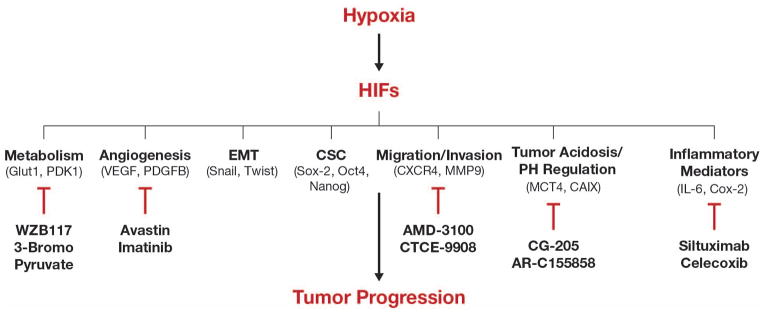
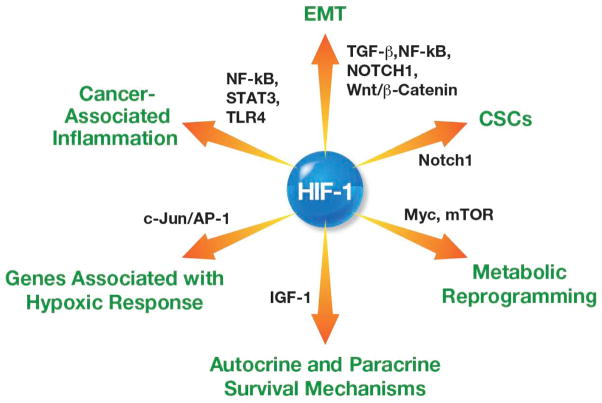
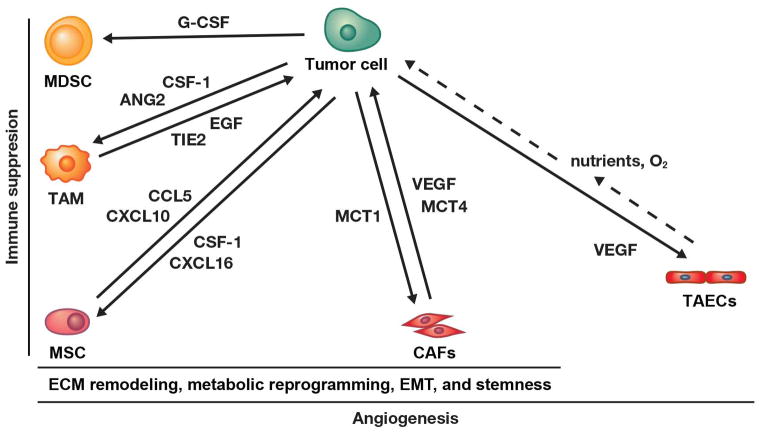
The complex cross-talk of intricate intercellular signaling networks between the tumor and stromal cells promotes cancer progression. Hypoxia is one of the most common conditions encountered within the tumor microenvironment that drives tumorigenesis. Most responses to hypoxia are elicited by a family of transcription factors called hypoxia-inducible factors (HIFs), which induce expression of a diverse set of genes that assist cells to adapt to hypoxic environments. Among the three HIF protein family members, the role of HIF-1 is well established in cancer progression. HIF-1 functions as a signaling hub to coordinate the activities of many transcription factors and signaling molecules that impact tumorigenesis. This mini review discusses the complex role of HIF-1 and its context-dependent partners under various cancer-promoting events including inflammation and generation of cancer stem cells, which are implicated in tumor metastasis and relapse. In addition, the review highlights the importance of therapeutic targeting of HIF-1 for cancer prevention.
肿瘤细胞与基质细胞之间复杂的细胞间信号网络的相互作用促进了癌症进展。缺氧是肿瘤微环境中最常见的驱动肿瘤发生的条件之一。对缺氧的大多数反应是由一类称为缺氧诱导因子(HIFs)的转录因子引发的,这些转录因子可诱导多种基因的表达,帮助细胞适应缺氧环境。在HIF蛋白家族的三个成员中,HIF-1在癌症进展中的作用已得到充分证实。HIF-1作为一个信号枢纽,协调许多影响肿瘤发生的转录因子和信号分子的活性。这篇综述讨论了HIF-1及其在各种促进癌症发生的事件(包括炎症和癌症干细胞的产生)中的上下文相关伙伴的复杂作用,这些事件与肿瘤转移和复发有关。此外,该综述强调了针对HIF-1进行治疗性靶向以预防癌症的重要性。