Anand Shuchi, Shivashankar Roopa, Ali Mohammed K, Kondal Dimple, Binukumar B, Montez-Rath Maria E, Ajay Vamadevan S, Pradeepa R, Deepa M, Gupta Ruby, Mohan Viswanathan, Narayan K M Venkat, Tandon Nikhil, Chertow Glenn M, Prabhakaran Dorairaj
1] CoE-CARRS, Public Health Foundation of India, New Delhi, India [2] Centre for Chronic Disease Control, New Delhi, India [3] Division of Nephrology, Department of Medicine, Stanford University School of Medicine, Palo Alto, California, USA.
1] CoE-CARRS, Public Health Foundation of India, New Delhi, India [2] Centre for Chronic Disease Control, New Delhi, India.
Kidney Int. 2015 Jul;88(1):178-85. doi: 10.1038/ki.2015.58. Epub 2015 Mar 18.
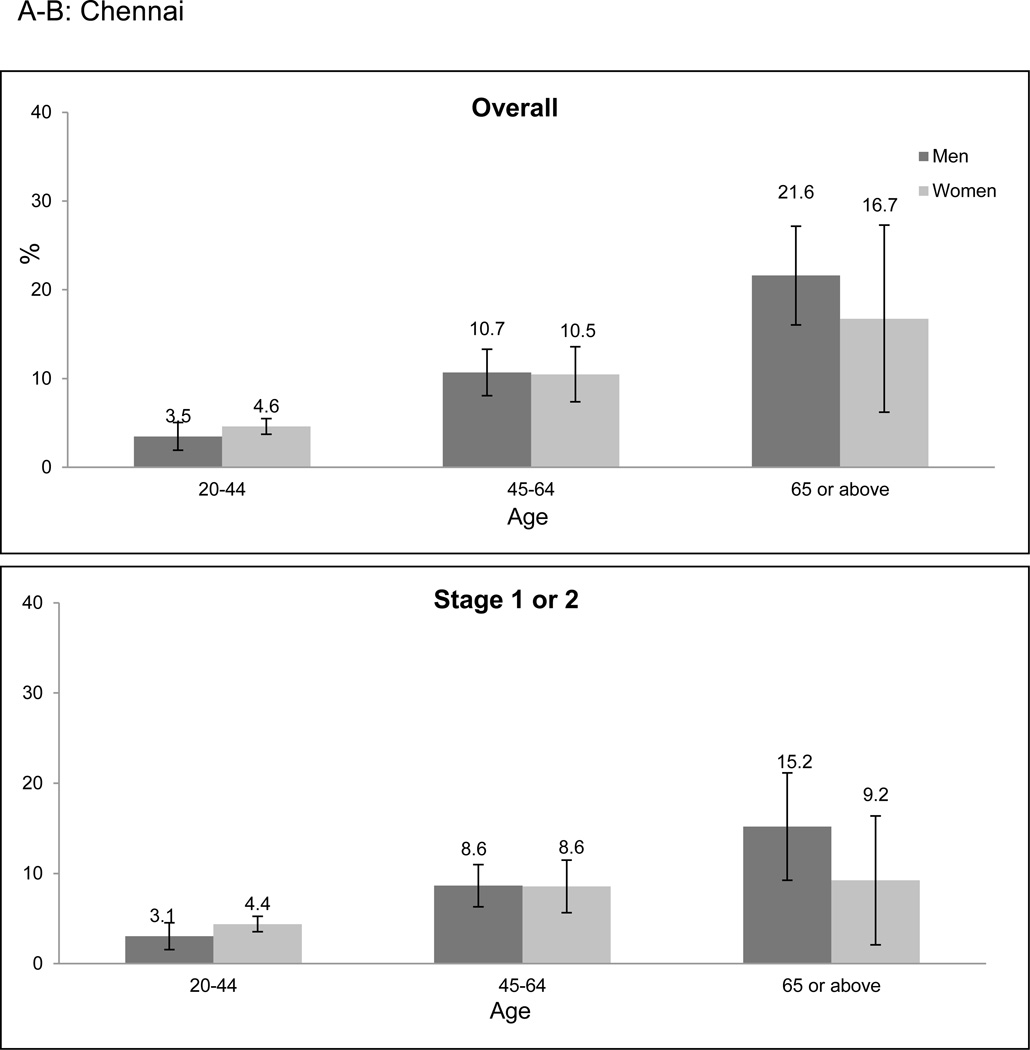
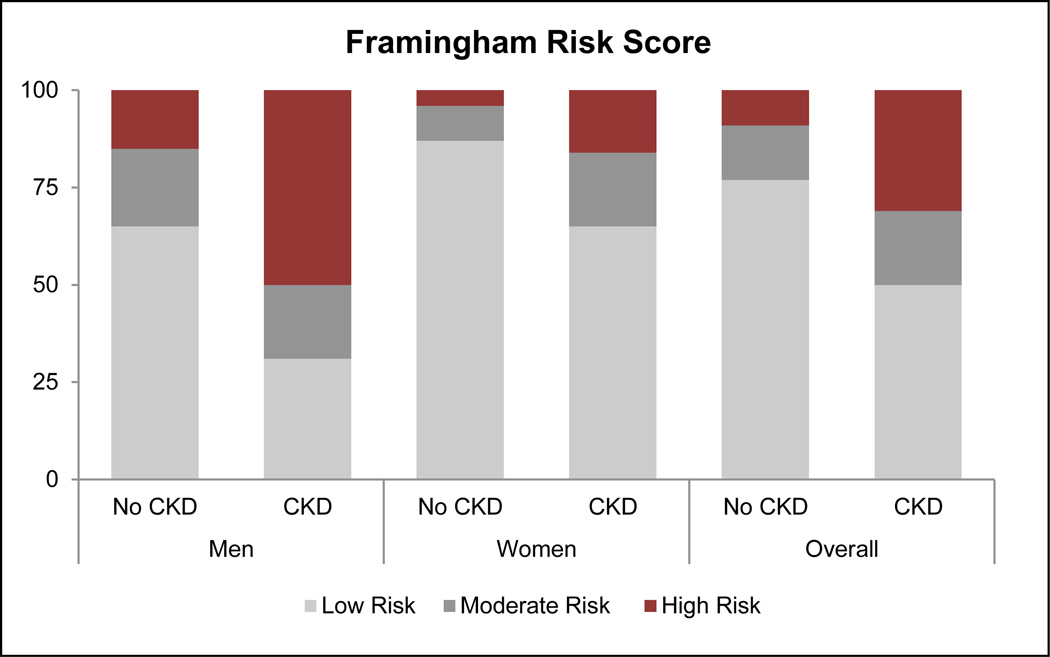
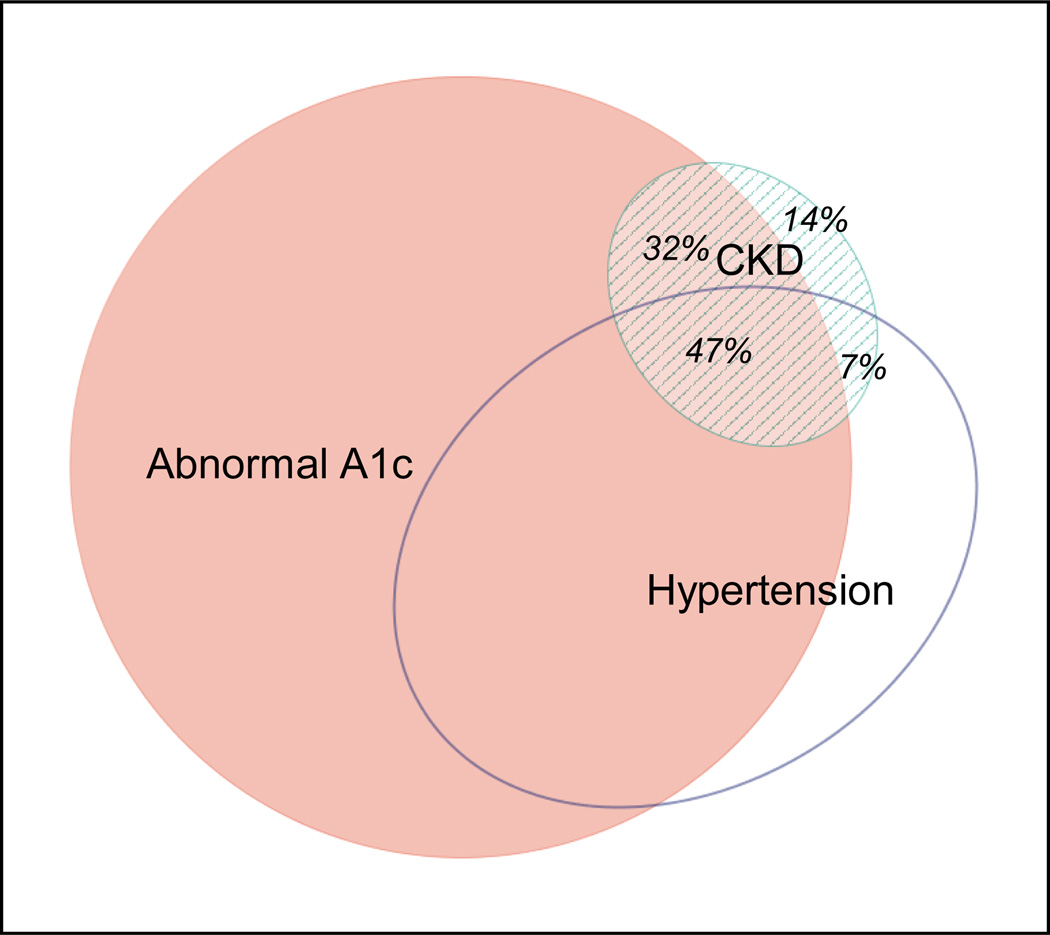
India is experiencing an alarming rise in the burden of noncommunicable diseases, but data on the incidence of chronic kidney disease (CKD) are sparse. Using the Center for Cardiometabolic Risk Reduction in South Asia surveillance study (a population-based survey of Delhi and Chennai, India) we estimated overall, and age-, sex-, city-, and diabetes-specific prevalence of CKD, and defined the distribution of the study population by the Kidney Disease Improving Global Outcomes (KDIGO) classification scheme. The likelihood of cardiovascular events in participants with and without CKD was estimated by the Framingham and Interheart Modifiable Risk Scores. Of the 12,271 participants, 80% had complete data on serum creatinine and albuminuria. The prevalence of CKD and albuminuria, age standardized to the World Bank 2010 world population, was 8.7% (95% confidence interval: 7.9-9.4%) and 7.1% (6.4-7.7%), respectively. Nearly 80% of patients with CKD had an abnormally high hemoglobin A1c (5.7 and above). Based on KDIGO guidelines, 6.0, 1.0, and 0.5% of study participants are at moderate, high, or very high risk for experiencing CKD-associated adverse outcomes. The cardiovascular risk scores placed a greater proportion of patients with CKD in the high-risk categories for experiencing cardiovascular events when compared with participants without CKD. Thus, 1 in 12 individuals living in two of India's largest cities have evidence of CKD, with features that put them at high risk for adverse outcomes.
印度非传染性疾病负担正急剧上升,令人担忧,但有关慢性肾脏病(CKD)发病率的数据却很稀少。利用南亚心血管代谢风险降低中心监测研究(一项针对印度德里和金奈的基于人群的调查),我们估算了CKD的总体患病率以及按年龄、性别、城市和糖尿病划分的患病率,并根据改善全球肾脏病预后组织(KDIGO)的分类方案确定了研究人群的分布情况。通过弗雷明汉和心脏调查可改变风险评分估算了有和没有CKD的参与者发生心血管事件的可能性。在12271名参与者中,80%拥有血清肌酐和蛋白尿的完整数据。根据世界银行2010年世界人口进行年龄标准化后,CKD和蛋白尿的患病率分别为8.7%(95%置信区间:7.9 - 9.4%)和7.1%(6.4 - 7.7%)。近80%的CKD患者糖化血红蛋白(A1c)异常高(5.7及以上)。根据KDIGO指南,6.0%、1.0%和0.5%的研究参与者发生CKD相关不良后果的风险为中度、高度或非常高。与没有CKD的参与者相比,心血管风险评分将更大比例的CKD患者归为发生心血管事件的高风险类别。因此,生活在印度两个最大城市的每12个人中就有1人有CKD迹象,其特征使他们面临不良后果的高风险。