Mira Amira, Yamashita Shuntaro, Katakura Yoshinori, Shimizu Kuniyoshi
Division of Systematic Forest and Forest Products Sciences, Department of agroenvironmental sciences, Faculty of Agriculture, Graduate School of Kyushu University, Fukouka 812-8581, Japan.
Department of Pharmacognosy, Faculty of Pharmacy, Mansoura University, Mansoura 35516, Egypt.
Molecules. 2015 Mar 16;20(3):4813-32. doi: 10.3390/molecules20034813.
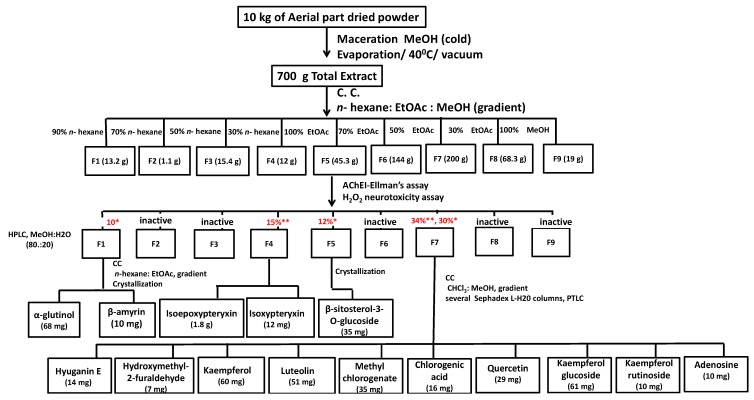
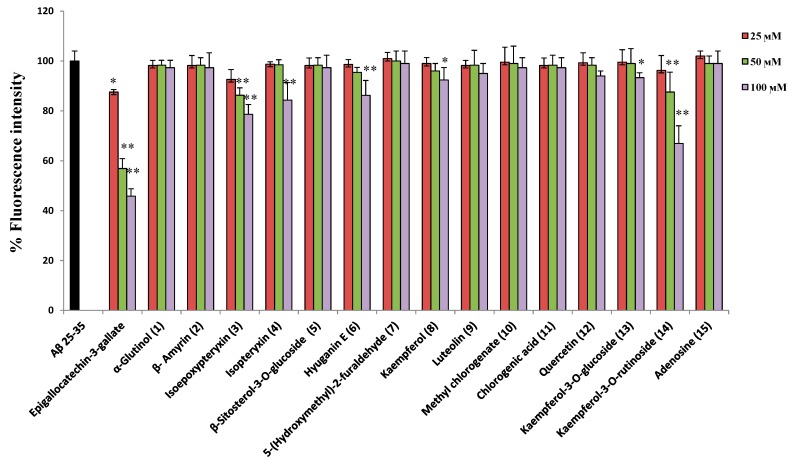
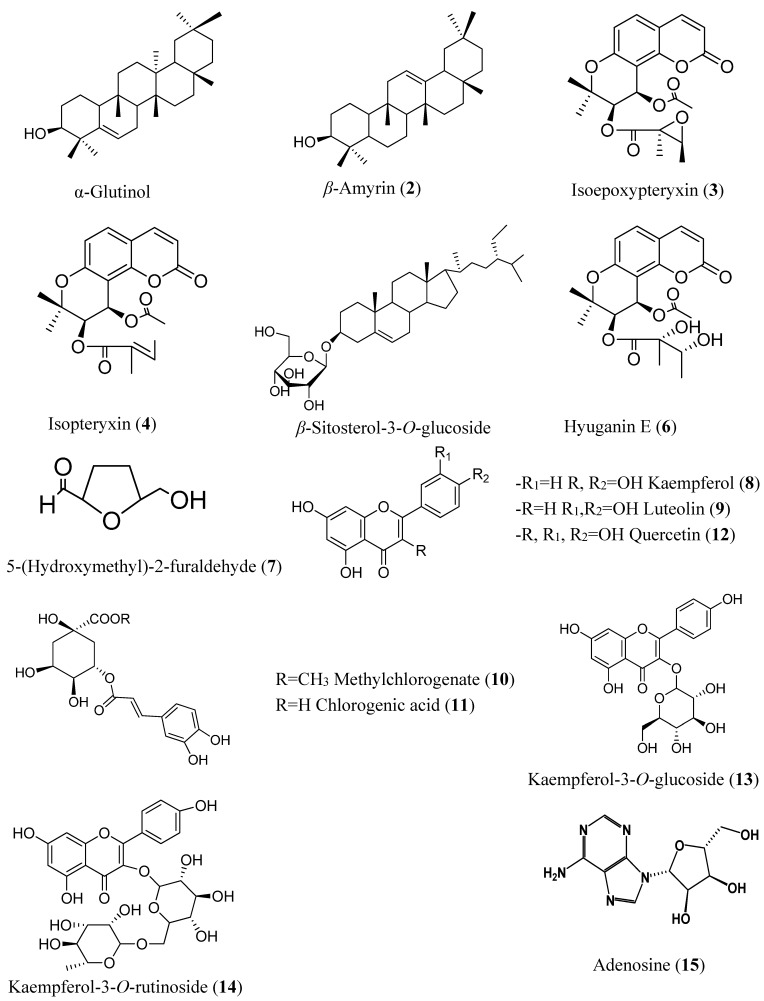
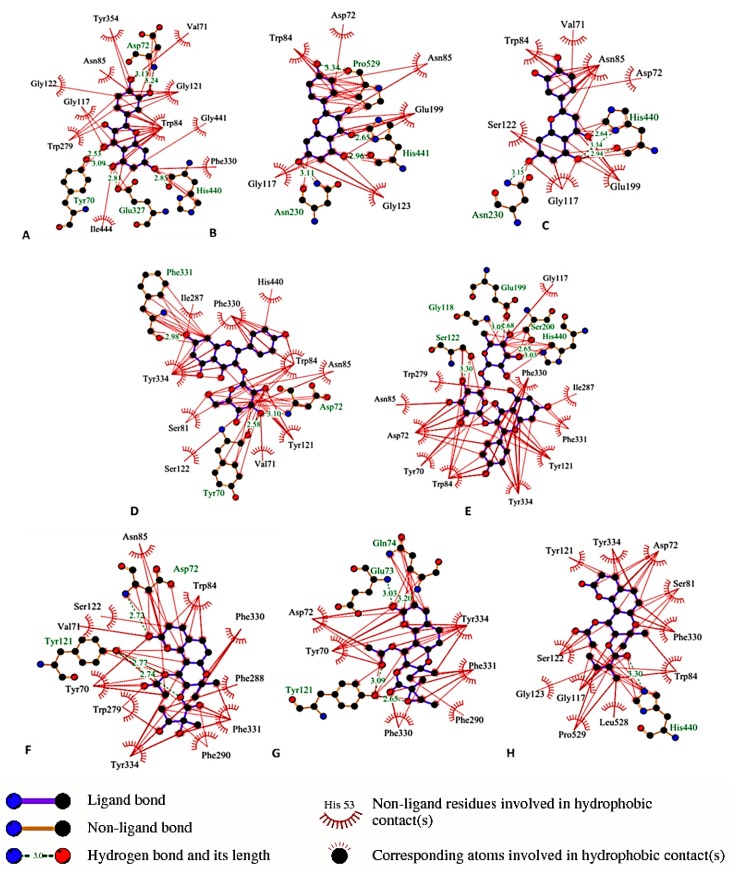
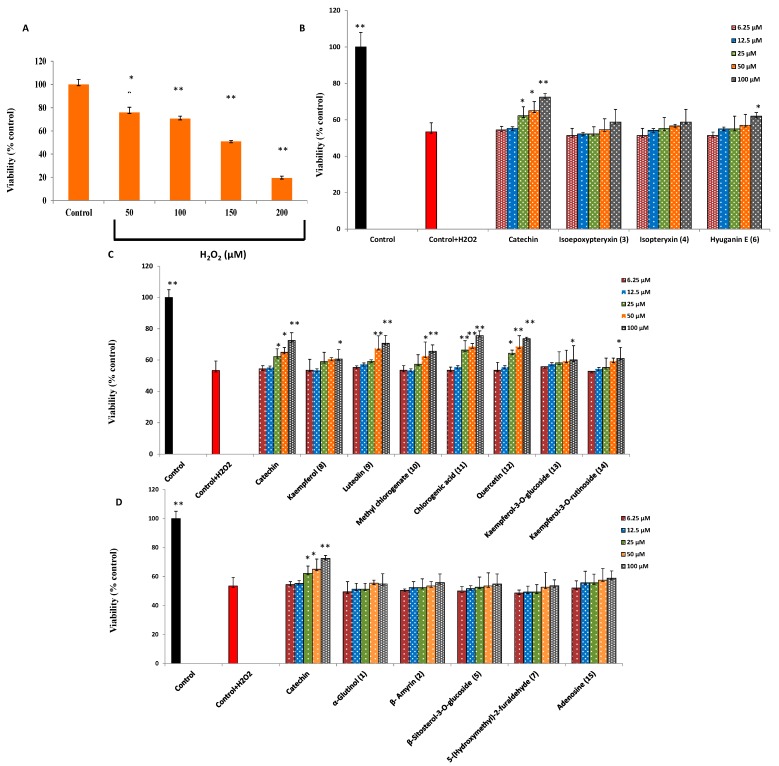
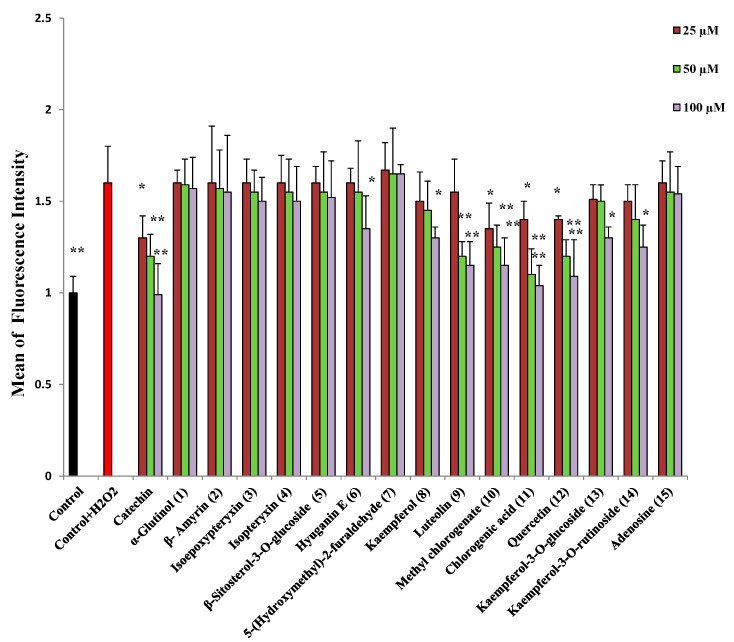
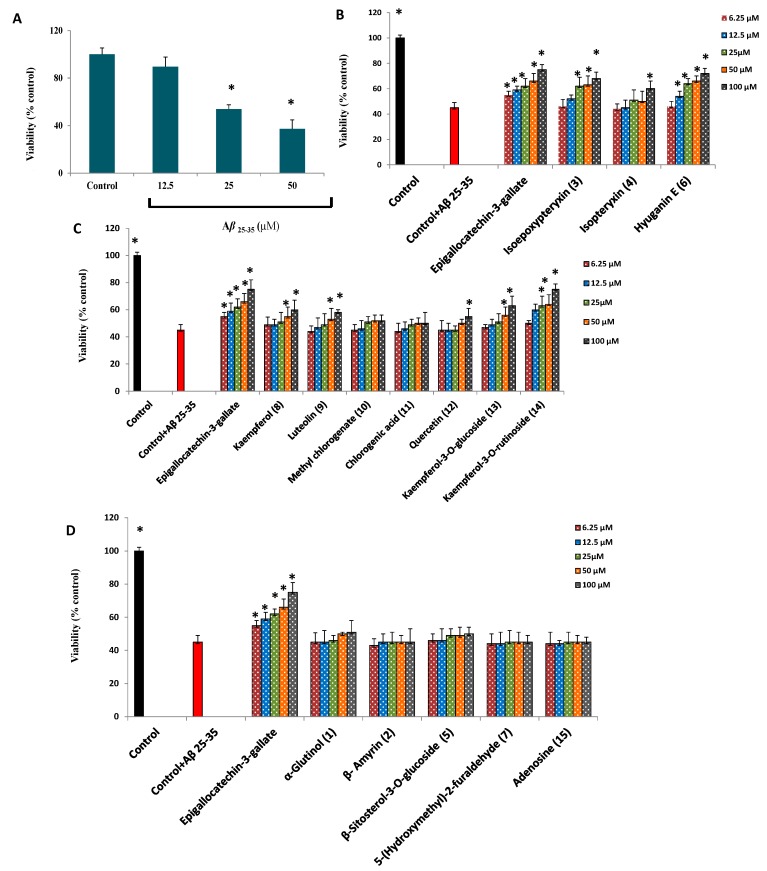
Angelica shikokiana is widely marketed in Japan as a dietary food supplement. With a focus on neurodegenerative conditions such as Alzheimer's disease, the aerial part was extracted and through bio-guided fractionation, fifteen compounds [α-glutinol, β-amyrin, kaempferol, luteolin, quercetin, kaempferol-3-O-glucoside, kaempferol-3-O-rutinoside, methyl chlorogenate, chlorogenic acid, hyuganin E, 5-(hydroxymethyl)-2-furaldehyde, β-sitosterol-3-O-glucoside, adenosine (isolated for the first time from A. shikokiana), isoepoxypteryxin and isopteryxin] were isolated. Isolated compounds were evaluated for in vitro neuroprotection using acetylcholine esterase inhibitory, protection against hydrogen peroxide and amyloid β peptide (Aβ25-35)-induced neurotoxicity in neuro-2A cells, scavenging of hydroxyl radicals and intracellular reactive oxygen species and thioflavin T assays. Quercetin showed the strongest AChE inhibition (IC50 value = 35.5 µM) through binding to His-440 and Tyr-70 residues at the catalytic and anionic sites of acetylcholine esterase, respectively. Chlorogenic acid, its methyl ester, quercetin and luteolin could significantly protect neuro-2A cells against H2O2-induced neurotoxicity and scavenge hydroxyl radical and intracellular reactive oxygen species. Kaempferol-3-O-rutinoiside, hyuganin E and isoepoxypteryxin significantly decreased Aβ25-35-induced neurotoxicity and Th-T fluorescence. To the best of our knowledge, this is the first report about neuroprotection of hyuganin E and isoepoxypteryxin against Aβ25-35-induced neurotoxicity.
日本蛇床当归作为一种膳食食品补充剂在日本广泛销售。针对阿尔茨海默病等神经退行性疾病,对其地上部分进行提取,并通过生物导向分级分离,分离出15种化合物[α-谷甾醇、β-香树脂醇、山奈酚、木犀草素、槲皮素、山奈酚-3-O-葡萄糖苷、山奈酚-3-O-芸香糖苷、甲基绿原酸、绿原酸、日当归素E、5-(羟甲基)-2-糠醛、β-谷甾醇-3-O-葡萄糖苷、腺苷(首次从日本蛇床当归中分离得到)、异环氧翼首草素和翼首草素]。使用乙酰胆碱酯酶抑制、对过氧化氢的保护作用以及淀粉样β肽(Aβ25-35)诱导的神经2A细胞神经毒性、清除羟自由基和细胞内活性氧以及硫黄素T测定等方法,对分离出的化合物进行体外神经保护评估。槲皮素通过分别与乙酰胆碱酯酶催化位点和阴离子位点的His-440和Tyr-70残基结合,表现出最强的乙酰胆碱酯酶抑制作用(IC50值 = 35.5 μM)。绿原酸及其甲酯、槲皮素和木犀草素可显著保护神经2A细胞免受H2O2诱导的神经毒性,并清除羟自由基和细胞内活性氧。山奈酚-3-O-芸香糖苷、日当归素E和异环氧翼首草素可显著降低Aβ25-35诱导的神经毒性和硫代黄素T荧光。据我们所知,这是关于日当归素E和异环氧翼首草素对Aβ25-35诱导的神经毒性的神经保护作用的首次报道。