Pozzi Luciana M, García Borboroglu Pablo, Boersma P Dee, Pascual Miguel A
Centro Nacional Patagónico (CONICET), Boulevard Brown 2915, 9120 Puerto Madryn, Chubut, Argentina.
Centro Nacional Patagónico (CONICET), Boulevard Brown 2915, 9120 Puerto Madryn, Chubut, Argentina; Global Penguin Society, Seattle, Washington, United States of America; Department of Biology, University of Washington, Seattle, Washington, United States of America.
PLoS One. 2015 Mar 18;10(3):e0119002. doi: 10.1371/journal.pone.0119002. eCollection 2015.
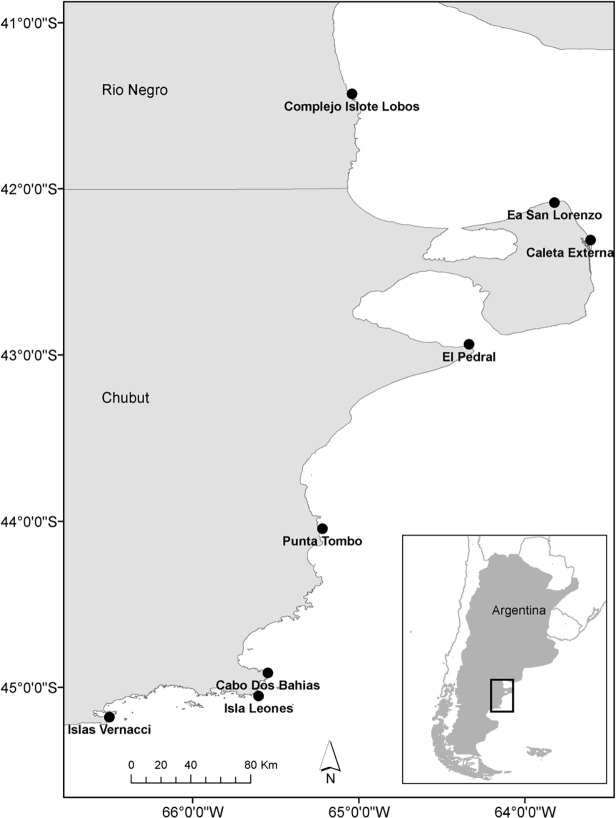
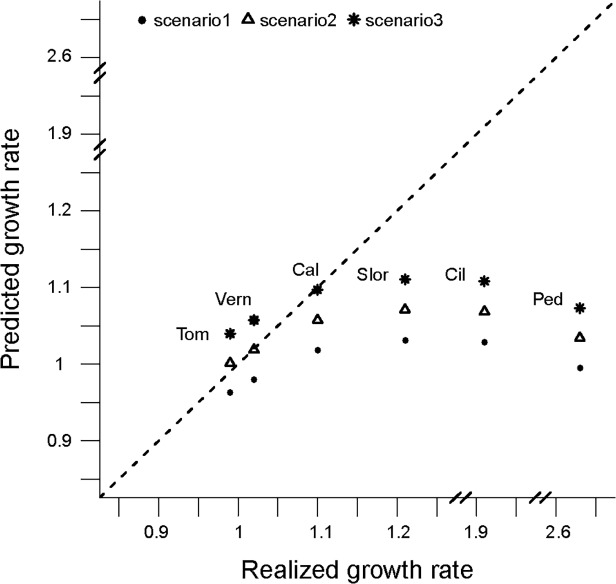
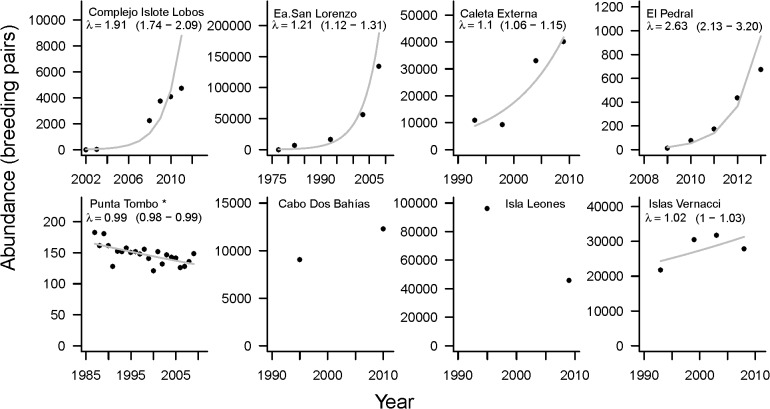
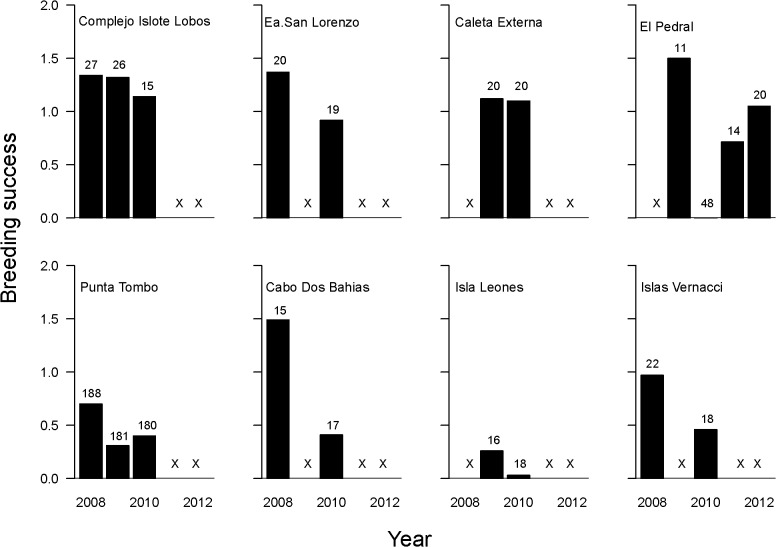
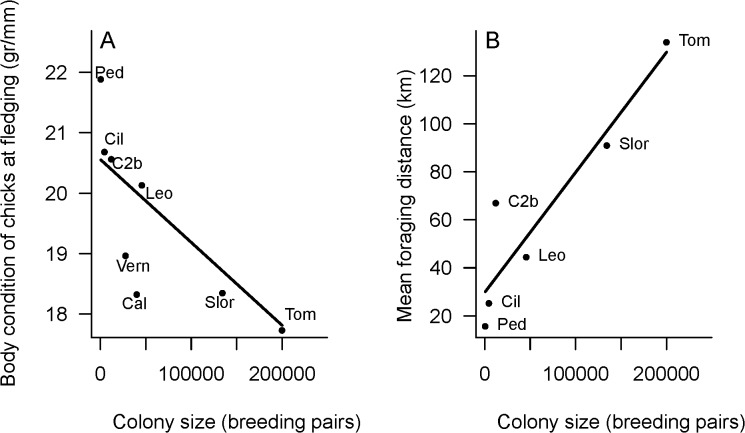
Seabirds are often studied at individual colonies, but the confounding effects of emigration and mortality processes in open populations may lead to inappropriate conclusions on the mechanisms underlying population changes. Magellanic penguin (Spheniscus magellanicus) colonies of variable population sizes are distributed along the Argentine coastline. In recent decades, several population and distributional changes have occurred, with some colonies declining and others newly established or increasing. We integrated data of eight colonies scattered along ∼600 km in Northern Patagonia (from 41°26´S, 65°01´W to 45°11´S, 66°30´W, Rio Negro and Chubut provinces) and conducted analysis in terms of their growth rates, production of young and of the dependence of those vital rates on colony age, size, and location. We contrasted population trends estimated from abundance data with those derived from population modeling to understand if observed growth rates were attainable under closed population scenarios. Population trends were inversely related to colony size, suggesting a density dependent growth pattern. All colonies located in the north--which were established during the last decades--increased at high rates, with the smallest, recently established colonies growing at the fastest rate. In central-southern Chubut, where colonies are the oldest, the largest breeding aggregations declined, but smaller colonies remained relatively stable. Results provided strong evidence that dispersal played a major role in driving local trends. Breeding success was higher in northern colonies, likely mediated by favorable oceanographic conditions. However, mean foraging distance and body condition of chicks at fledging were influenced by colony size. Recruitment of penguins in the northern area may have been triggered by a combination of density dependence, likely exacerbated by less favorable oceanographic conditions in the southern sector. Our results reaffirm the idea that individual colony trends do not provide confident indicators of population health, highlighting the need to redefine the scale for the study of population changes.
海鸟研究通常聚焦于单个鸟群,但开放种群中的迁徙和死亡过程所产生的混杂效应,可能会导致人们对种群变化背后的机制得出不恰当的结论。不同种群规模的麦哲伦企鹅(Spheniscus magellanicus)鸟群分布在阿根廷海岸线上。近几十年来,出现了一些种群和分布变化,一些鸟群数量减少,而另一些则是新建立的或数量在增加。我们整合了分布在巴塔哥尼亚北部约600公里范围内(从南纬41°26′,西经65°01′至南纬45°11′,西经66°30′,内乌肯省和丘布特省)的八个鸟群的数据,并对它们的增长率、幼鸟数量以及这些生命率对鸟群年龄、规模和位置的依赖性进行了分析。我们将根据丰度数据估算的种群趋势与通过种群建模得出的趋势进行对比,以了解在封闭种群情况下观察到的增长率是否可以实现。种群趋势与鸟群规模呈负相关,这表明存在密度依赖的增长模式。所有位于北部的鸟群——它们是在过去几十年中建立的——都以较高的速度增长,其中最小的、最近建立的鸟群增长速度最快。在丘布特省中南部,鸟群存在时间最长,最大的繁殖聚集区数量减少,但较小的鸟群相对稳定。结果提供了有力证据,表明扩散在推动当地趋势方面发挥了主要作用。北部鸟群的繁殖成功率较高,这可能是由有利的海洋学条件介导的。然而,雏鸟离巢时的平均觅食距离和身体状况受鸟群规模影响。北部地区企鹅数量的增加可能是由密度依赖以及南部地区不太有利的海洋学条件可能加剧的这种情况共同引发的。我们的结果再次证实了这样一种观点,即单个鸟群的趋势并不能为种群健康状况提供可靠指标,强调了重新定义种群变化研究规模的必要性。