Palacios Maria G, D'Amico Verónica L, Bertellotti Marcelo
Applied Ecophysiology Group, Centro para el Estudio de Sistemas Marinos, Consejo Nacional de Investigaciones Científicas y Técnicas (CESIMAR-CONICET), Boulevard 2915 (9120) Puerto Madryn, Chubut, Argentina.
Department of Production, Environment and Sustainable Development, University of Chubut, Alem 1573 (9120) Puerto Madryn, Chubut, Argentina.
Conserv Physiol. 2018 Nov 13;6(1):coy060. doi: 10.1093/conphys/coy060. eCollection 2018.
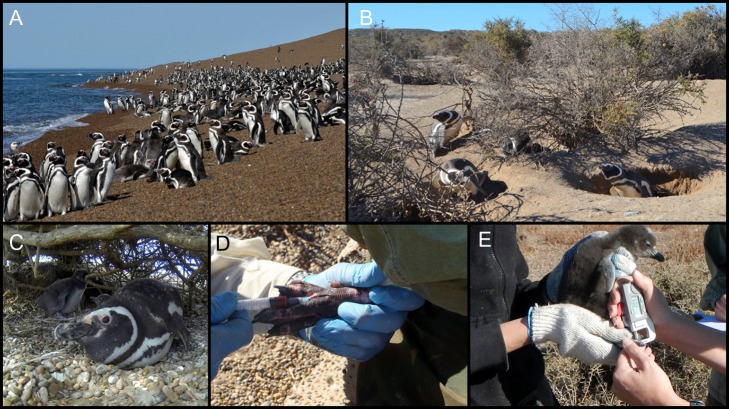
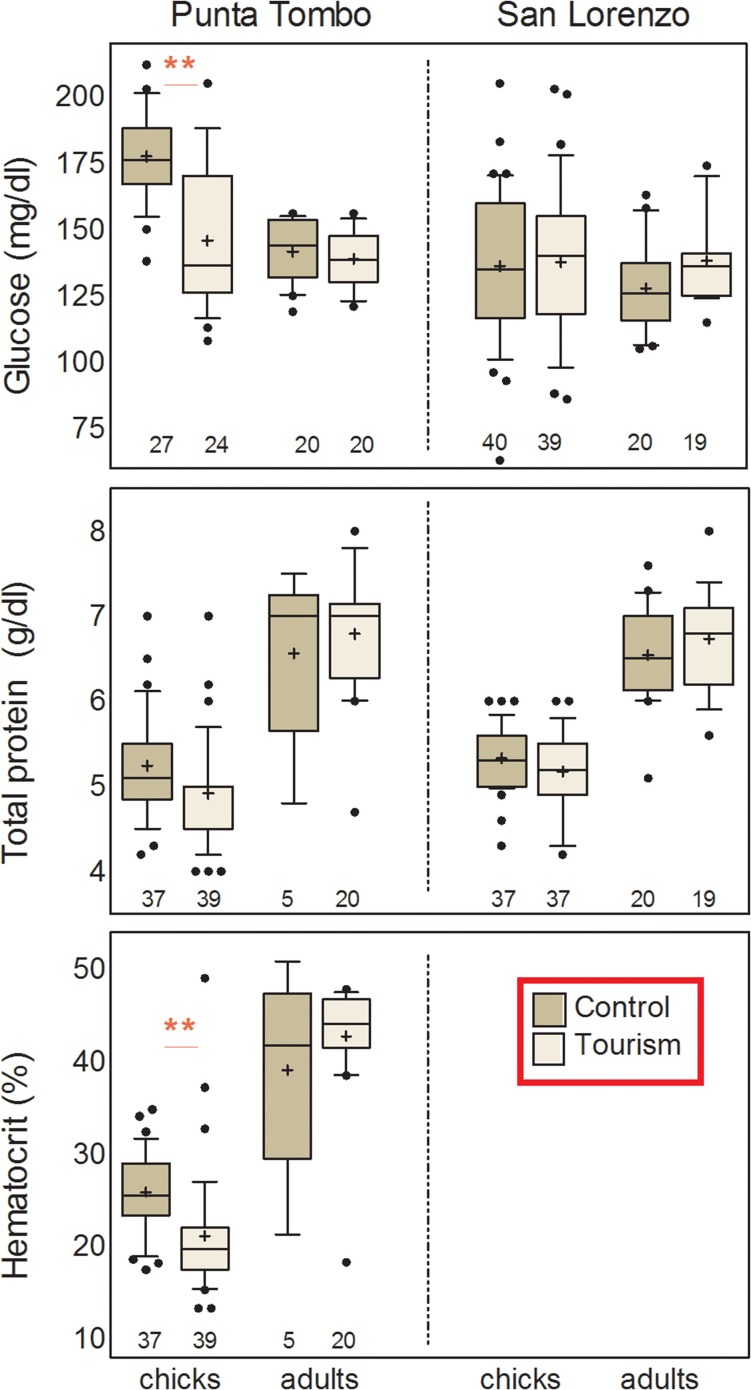
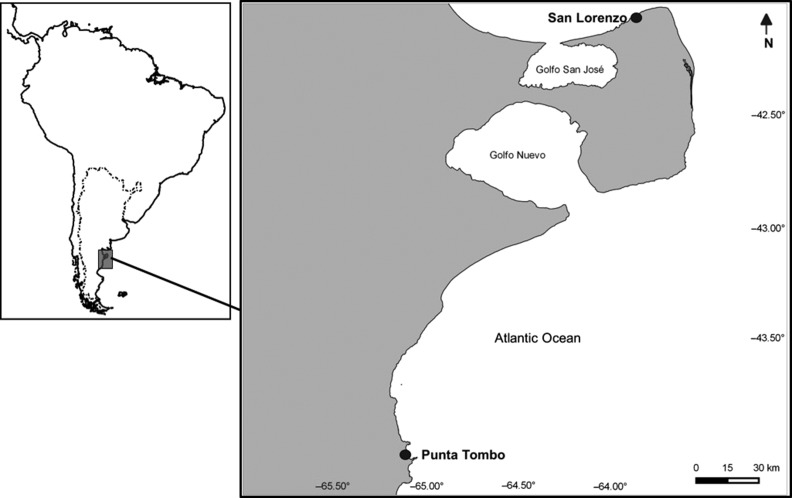
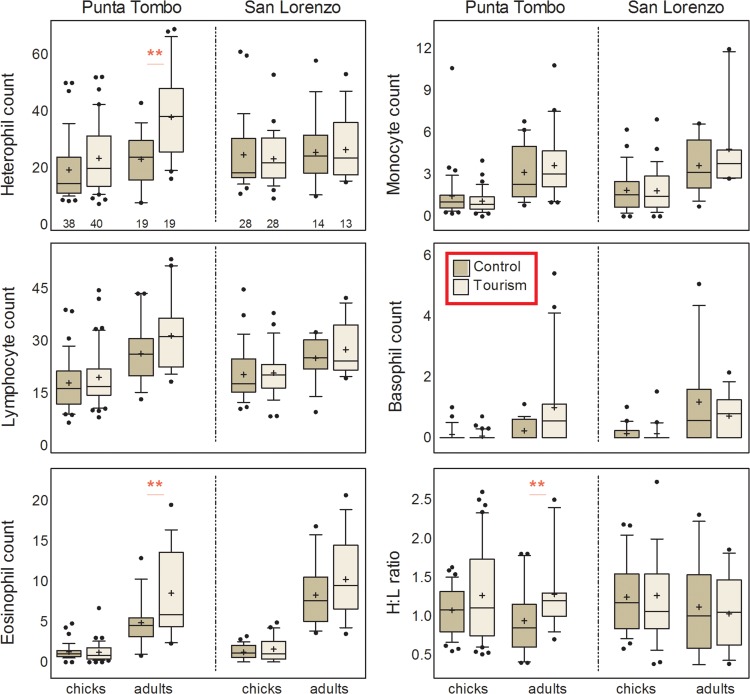
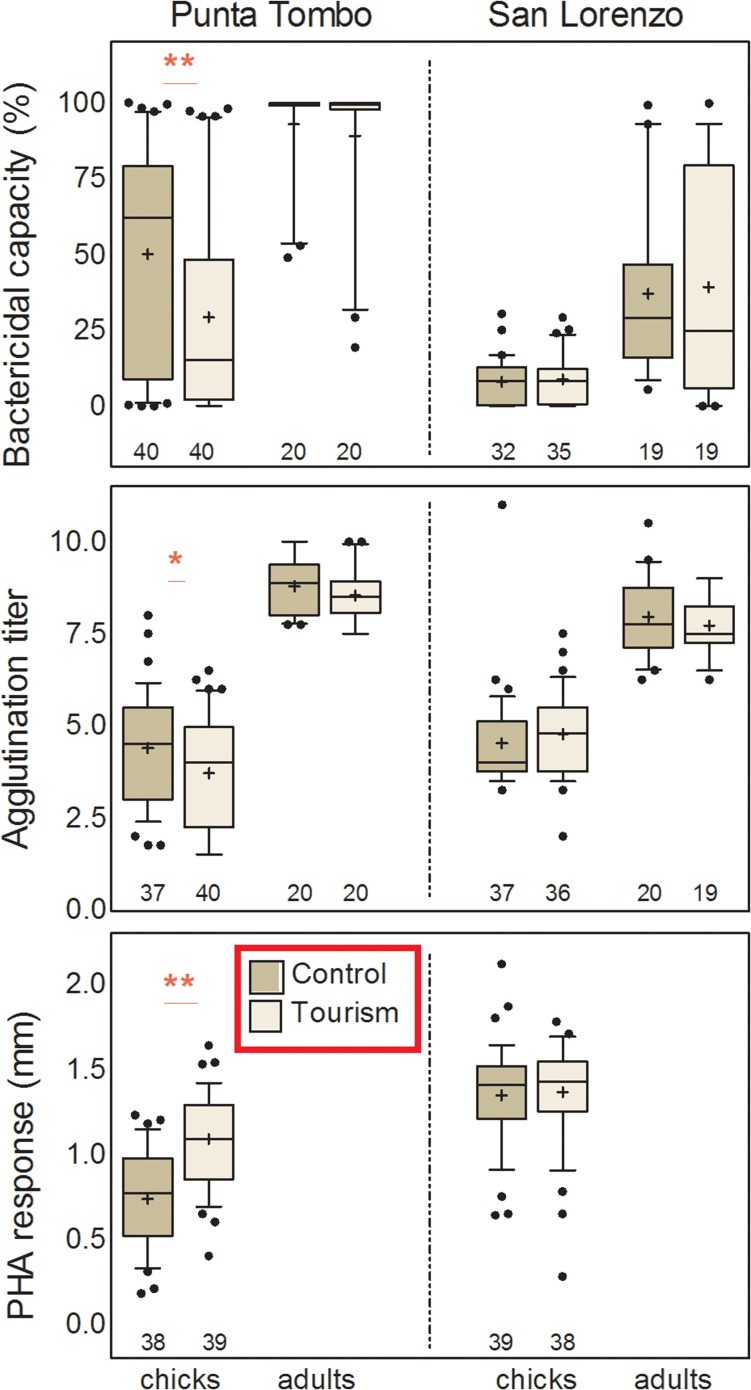
Negative effects of ecotourism on wildlife are rising worldwide. Conservation physiology can play a major role in protecting wildlife by providing early alerts on changes in the status of individuals exposed to tourist activities. We measured an integrated set of immune and health-state indices to evaluate the effects of ecotourism on Magellanic penguins (). We studied two reproductive colonies that differed in the intensity of tourism and population trends: Punta Tombo (higher tourism intensity, declining population) and San Lorenzo (lower tourism intensity, growing population). Within each colony, we compared individuals from an area that was exposed to tourists and a control area where tourism was excluded. Adult penguins exposed to tourism at Punta Tombo, but not at San Lorenzo, showed physiological alterations indicative of chronic stress (higher heterophil to lymphocyte ratios) and parasitic infection (elevated heterophil and eosinophil counts). Penguin chicks exposed to tourism at Punta Tombo, but not at San Lorenzo, also showed physiological alterations indicative of poor immune and general-health condition: lower humoral innate immunity, haematocrit, and glucose levels and higher inflammatory responses likely due to increased prevalence of fleas. Our results indicate that individuals of a declining population exposed to high levels of tourism express physiological indicators of chronic stress and poor health that could make adults and juveniles vulnerable to disease. These effects are expressed despite a long history of exposure and behavioural habituation to human visitation. In contrast, individuals of a growing population exposed to more recent and lower levels of tourism showed no effect. Our study demonstrates how a diverse physiological toolkit within a conservation physiology approach can provide important information for a better comprehension of anthropogenic effects on wild animals in our changing world.
生态旅游对野生动物的负面影响在全球范围内不断增加。保护生理学可以通过对受旅游活动影响的个体的状态变化提供早期预警,在保护野生动物方面发挥重要作用。我们测量了一组综合的免疫和健康状态指标,以评估生态旅游对麦哲伦企鹅的影响。我们研究了两个繁殖群体,它们在旅游强度和种群趋势方面存在差异:蓬塔通博(旅游强度较高,种群数量下降)和圣洛伦索(旅游强度较低,种群数量增长)。在每个群体中,我们比较了来自受游客影响区域的个体和排除旅游影响的对照区域的个体。在蓬塔通博接触旅游的成年企鹅,而不是在圣洛伦索接触旅游的成年企鹅,表现出慢性应激(较高的嗜异性粒细胞与淋巴细胞比率)和寄生虫感染(嗜异性粒细胞和嗜酸性粒细胞计数升高)的生理变化。在蓬塔通博接触旅游的企鹅幼崽,而不是在圣洛伦索接触旅游的企鹅幼崽,也表现出免疫和总体健康状况不佳的生理变化:体液固有免疫、血细胞比容和葡萄糖水平较低,以及可能由于跳蚤患病率增加而导致的炎症反应较高。我们的结果表明,接触高水平旅游的种群数量下降的个体表现出慢性应激和健康状况不佳的生理指标,这可能使成年和幼年个体易患疾病。尽管对人类来访有长期的接触历史和行为习惯化,但这些影响仍然存在。相比之下,接触较新且较低水平旅游的种群数量增长的个体没有表现出影响。我们的研究表明,保护生理学方法中的多样化生理工具包如何能够提供重要信息,以便更好地理解在不断变化的世界中人为因素对野生动物的影响。