Tapia Olga, Fong Loren G, Huber Michael D, Young Stephen G, Gerace Larry
Department of Cell and Molecular Biology, The Scripps Research Institute, 10550 N. Torrey Pines Rd., La Jolla, California 92037, United States of America.
Department of Medicine, University of California Los Angeles, Los Angeles, California 90095, United States of America.
PLoS One. 2015 Mar 19;10(3):e0116196. doi: 10.1371/journal.pone.0116196. eCollection 2015.
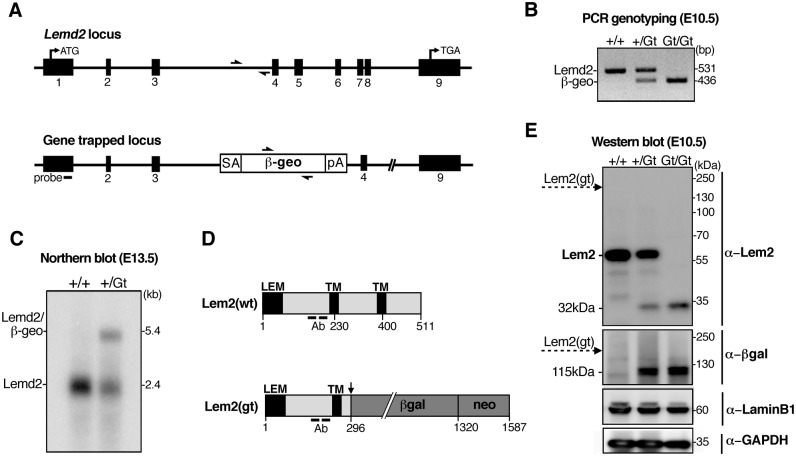
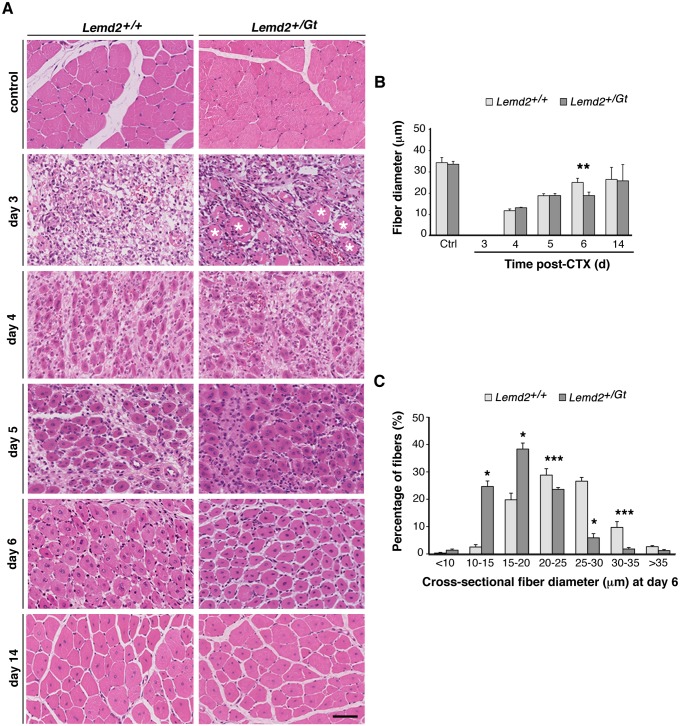
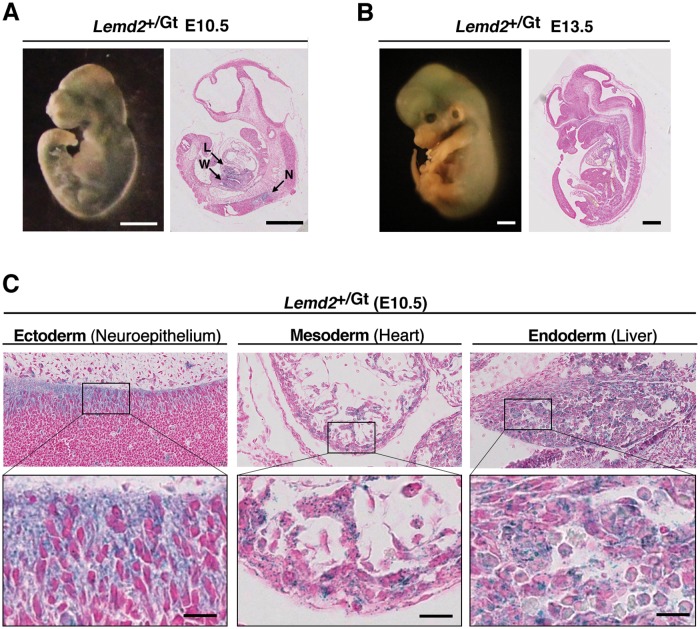
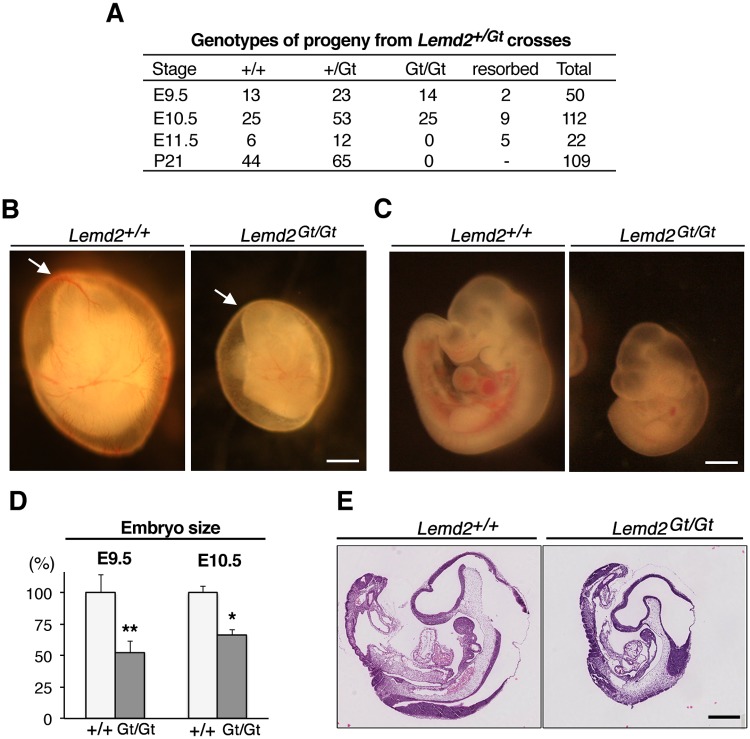
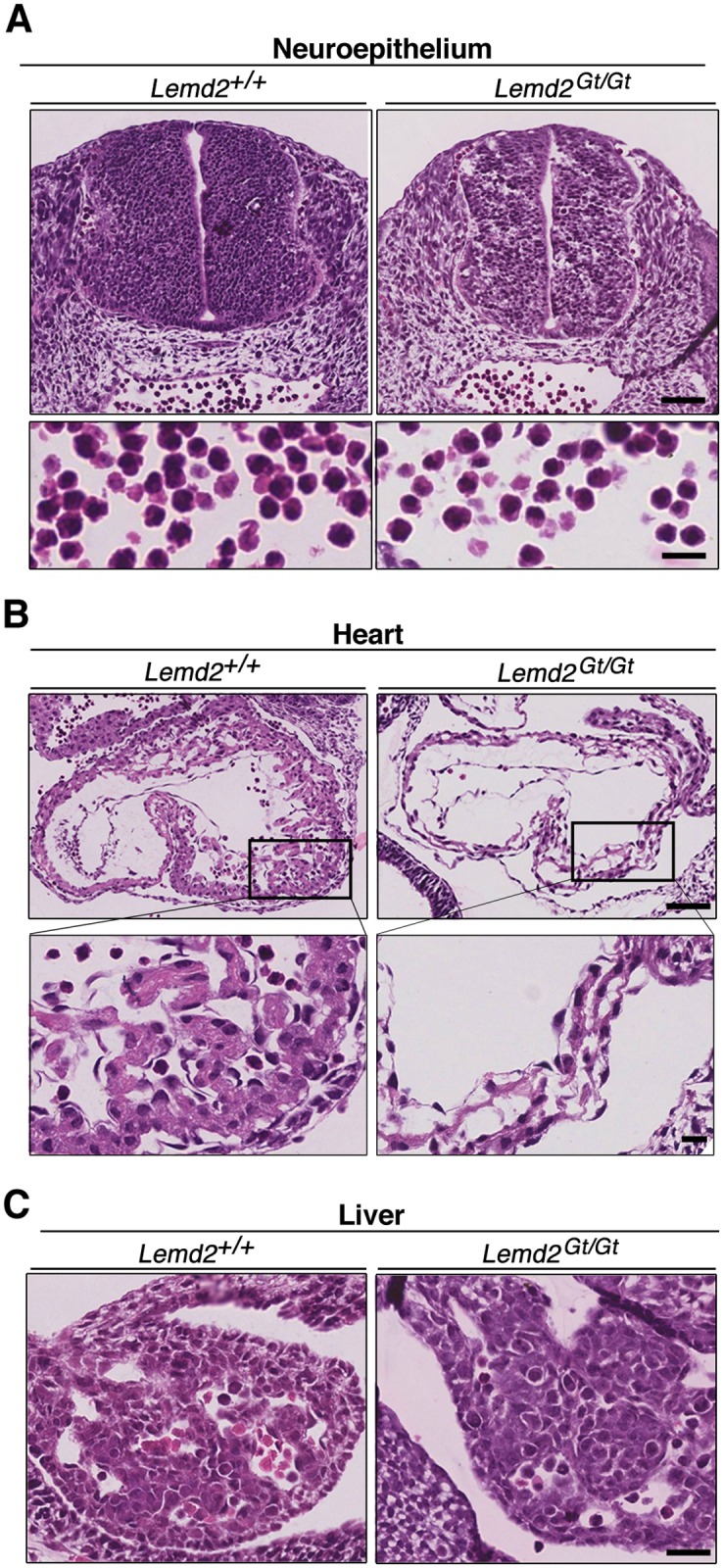
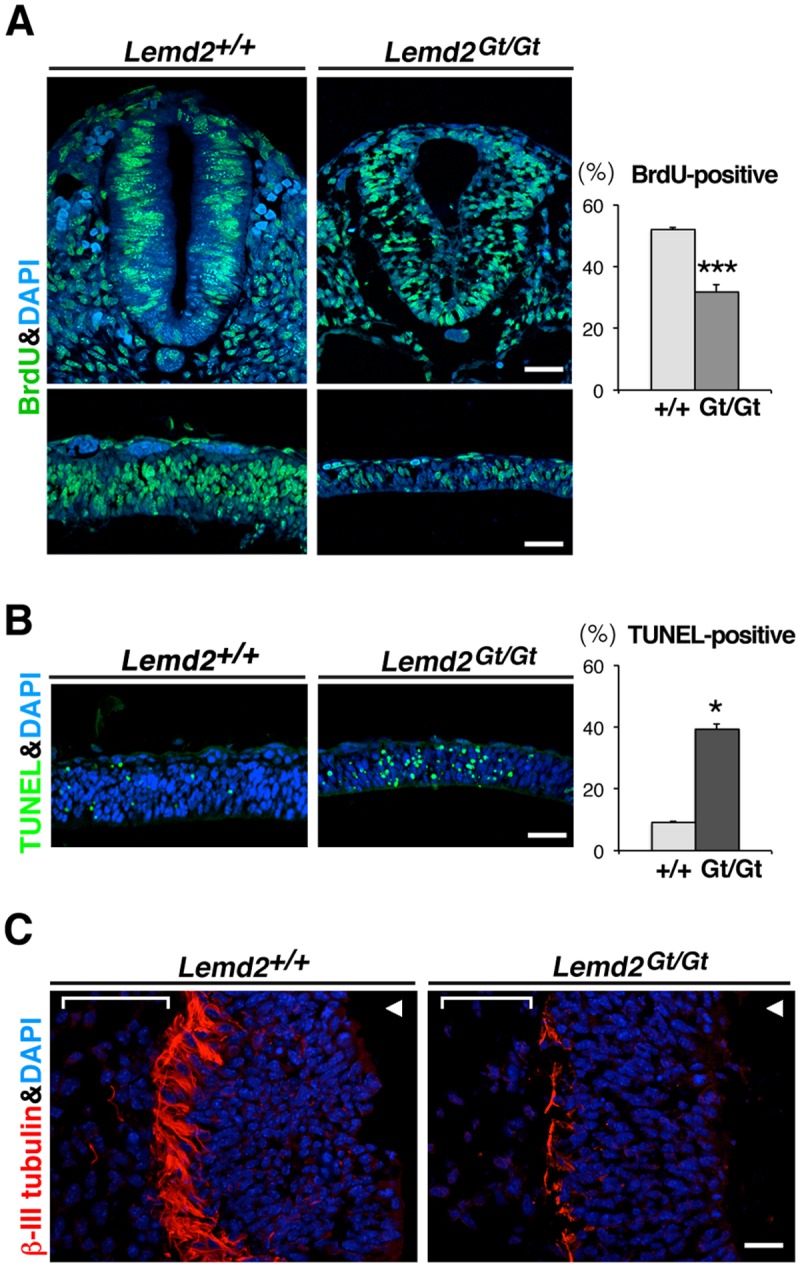
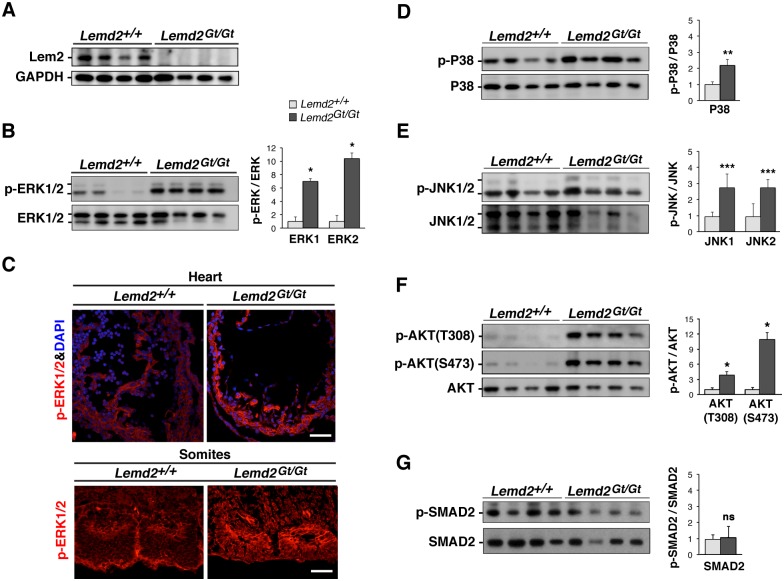
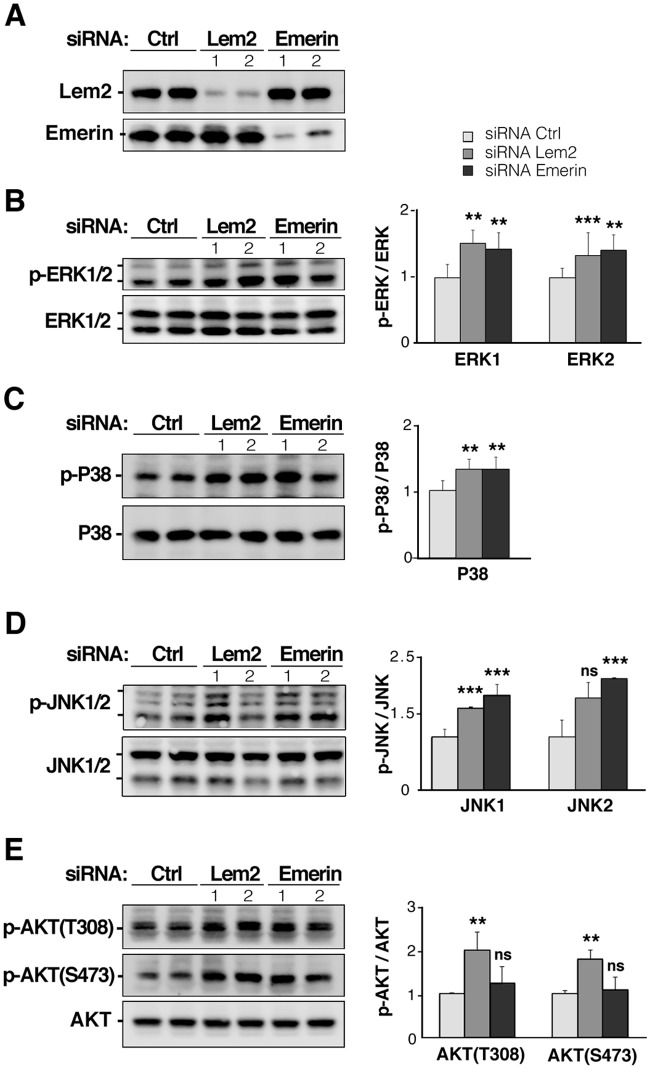
The nuclear lamina, along with associated nuclear membrane proteins, is a nexus for regulating signaling in the nucleus. Numerous human diseases arise from mutations in lamina proteins, and experimental models for these disorders have revealed aberrant regulation of various signaling pathways. Previously, we reported that the inner nuclear membrane protein Lem2, which is expressed at high levels in muscle, promotes the differentiation of cultured myoblasts by attenuating ERK signaling. Here, we have analyzed mice harboring a disrupted allele for the Lem2 gene (Lemd2). No gross phenotypic defects were seen in heterozygotes, although muscle regeneration induced by cardiotoxin was delayed. By contrast, homozygous Lemd2 knockout mice died by E11.5. Although many normal morphogenetic hallmarks were observed in E10.5 knockout embryos, most tissues were substantially reduced in size. This was accompanied by activation of multiple MAP kinases (ERK1/2, JNK, p38) and AKT. Knockdown of Lem2 expression in C2C12 myoblasts also led to activation of MAP kinases and AKT. These findings indicate that Lemd2 plays an essential role in mouse embryonic development and that it is involved in regulating several signaling pathways. Since increased MAP kinase and AKT/mTORC signaling is found in other animal models for diseases linked to nuclear lamina proteins, LEMD2 should be considered to be another candidate gene for human disease.
核纤层与相关的核膜蛋白一起,是调节细胞核内信号传导的枢纽。许多人类疾病源于核纤层蛋白的突变,这些疾病的实验模型揭示了各种信号通路的异常调节。此前,我们报道在肌肉中高水平表达的内核膜蛋白Lem2通过减弱ERK信号促进培养的成肌细胞分化。在此,我们分析了携带Lem2基因(Lemd2)破坏等位基因的小鼠。杂合子未观察到明显的表型缺陷,尽管心脏毒素诱导的肌肉再生延迟。相比之下,纯合Lemd2基因敲除小鼠在胚胎期11.5天死亡。尽管在胚胎期10.5天的基因敲除胚胎中观察到许多正常的形态发生特征,但大多数组织的大小显著减小。这伴随着多种丝裂原活化蛋白激酶(ERK1/2、JNK、p38)和AKT的激活。在C2C12成肌细胞中敲低Lem2表达也导致丝裂原活化蛋白激酶和AKT的激活。这些发现表明Lemd2在小鼠胚胎发育中起重要作用,并且它参与调节多种信号通路。由于在与核纤层蛋白相关疾病的其他动物模型中发现丝裂原活化蛋白激酶和AKT/mTORC信号增加,LEMD2应被视为人类疾病的另一个候选基因。