Neubert Jenni, Wagner Susanne, Kiwit Jürgen, Bräuer Anja U, Glumm Jana
Institute of Cell Biology and Neurobiology, Center for Anatomy, Charité-Universitaetsmedizin Berlin, Berlin, Germany.
Institute for Radiology, Charité-Universitaetsmedizin Berlin, Berlin, Germany.
Int J Nanomedicine. 2015 Mar 13;10:2033-49. doi: 10.2147/IJN.S74404. eCollection 2015.
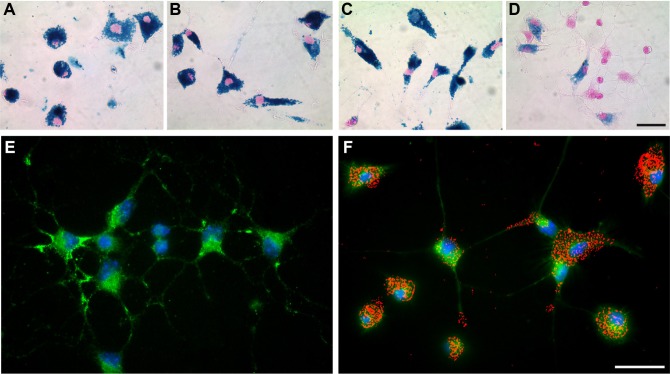
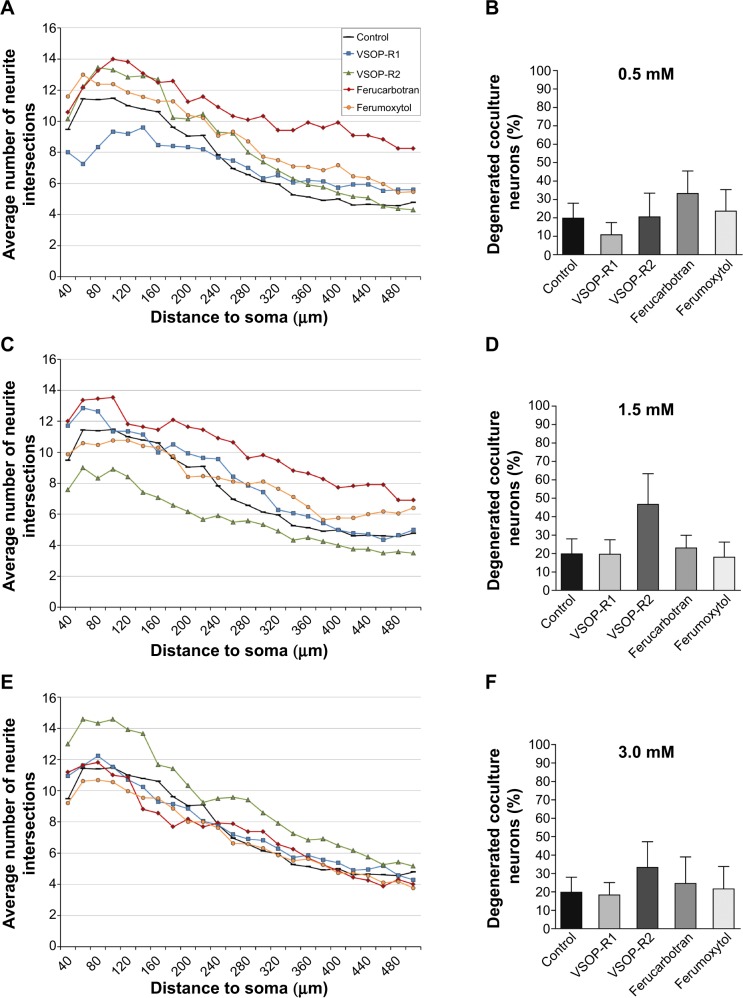
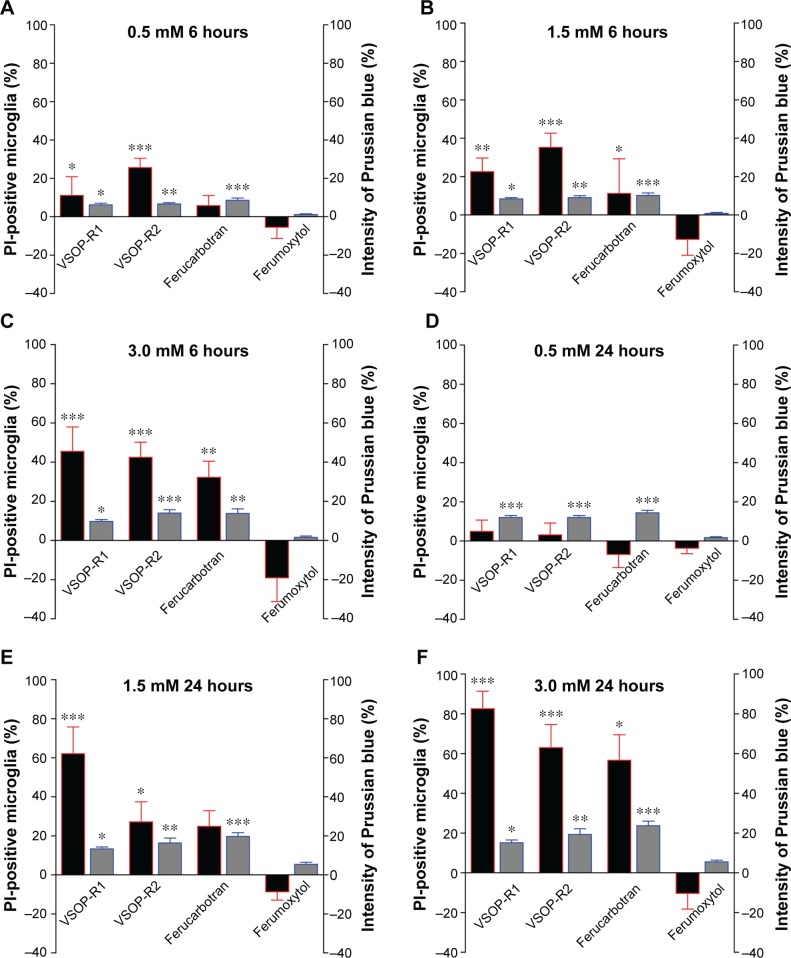
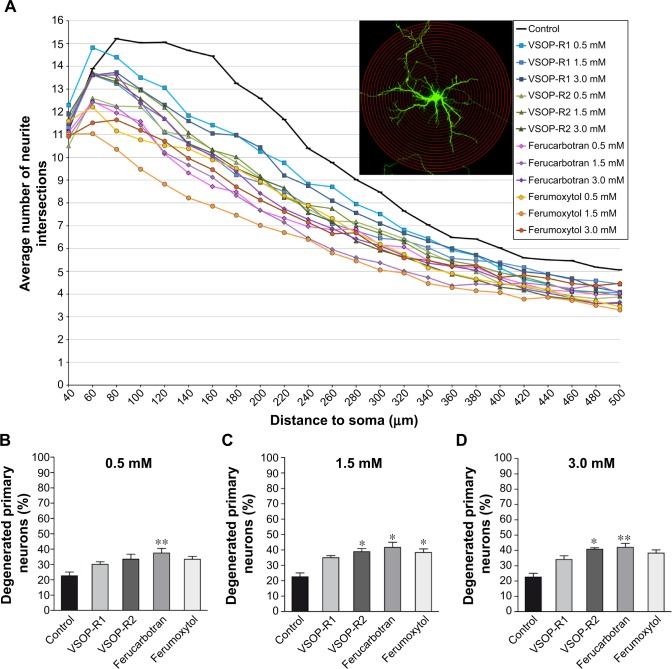
The physicochemical properties of superparamagnetic iron oxide nanoparticles (SPIOs) enable their application in the diagnostics and therapy of central nervous system diseases. However, since crucial information regarding side effects of particle-cell interactions within the central nervous system is still lacking, we investigated the influence of novel very small iron oxide particles or the clinically approved ferucarbotran or ferumoxytol on the vitality and morphology of brain cells. We exposed primary cell cultures of microglia and hippocampal neurons, as well as neuron-glia cocultures to varying concentrations of SPIOs for 6 and/or 24 hours, respectively. Here, we show that SPIO accumulation by microglia and subsequent morphological alterations strongly depend on the respective nanoparticle type. Microglial viability was severely compromised by high SPIO concentrations, except in the case of ferumoxytol. While ferumoxytol did not cause immediate microglial death, it induced severe morphological alterations and increased degeneration of primary neurons. Additionally, primary neurons clearly degenerated after very small iron oxide particle and ferucarbotran exposure. In neuron-glia cocultures, SPIOs rather stimulated the outgrowth of neuronal processes in a concentration- and particle-dependent manner. We conclude that the influence of SPIOs on brain cells not only depends on the particle type but also on the physiological system they are applied to.
超顺磁性氧化铁纳米颗粒(SPIOs)的物理化学性质使其能够应用于中枢神经系统疾病的诊断和治疗。然而,由于仍缺乏关于中枢神经系统内颗粒与细胞相互作用副作用的关键信息,我们研究了新型超小氧化铁颗粒或临床批准的 ferucarbotran 或 ferumoxytol 对脑细胞活力和形态的影响。我们将小胶质细胞和海马神经元的原代细胞培养物以及神经元 - 胶质细胞共培养物分别暴露于不同浓度的 SPIOs 中 6 小时和/或 24 小时。在此,我们表明小胶质细胞对 SPIO 的摄取以及随后的形态改变强烈依赖于各自的纳米颗粒类型。高浓度的 SPIO 会严重损害小胶质细胞的活力,但 ferumoxytol 除外。虽然 ferumoxytol 不会立即导致小胶质细胞死亡,但它会引起严重的形态改变并增加原代神经元的退化。此外,在暴露于超小氧化铁颗粒和 ferucarbotran 后,原代神经元明显退化。在神经元 - 胶质细胞共培养物中,SPIOs 以浓度和颗粒依赖性方式刺激神经元突起的生长。我们得出结论,SPIOs 对脑细胞的影响不仅取决于颗粒类型,还取决于它们所应用的生理系统。