
超顺磁性氧化铁纳米颗粒在脑和耳中作为药物载体的应用:现状与挑战
Use of Super Paramagnetic Iron Oxide Nanoparticles as Drug Carriers in Brain and Ear: State of the Art and Challenges.
作者信息
Guigou Caroline, Lalande Alain, Millot Nadine, Belharet Karim, Bozorg Grayeli Alexis
机构信息
Department of Otolaryngology-Head and Neck Surgery, Dijon University Hospital, 21000 Dijon, France.
ImVia Laboratory, EA 7535, Université Bourgogne Franche-Comté, 21079 Dijon, France.
出版信息
Brain Sci. 2021 Mar 11;11(3):358. doi: 10.3390/brainsci11030358.
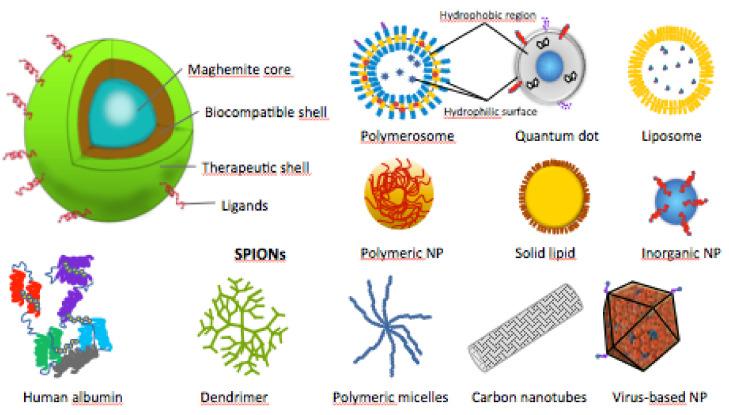
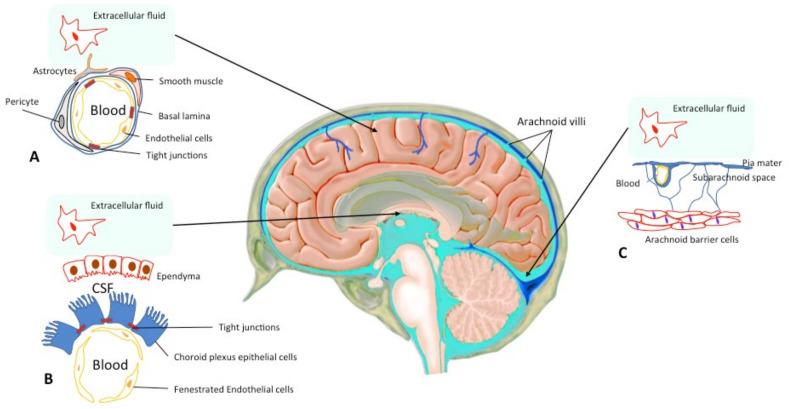
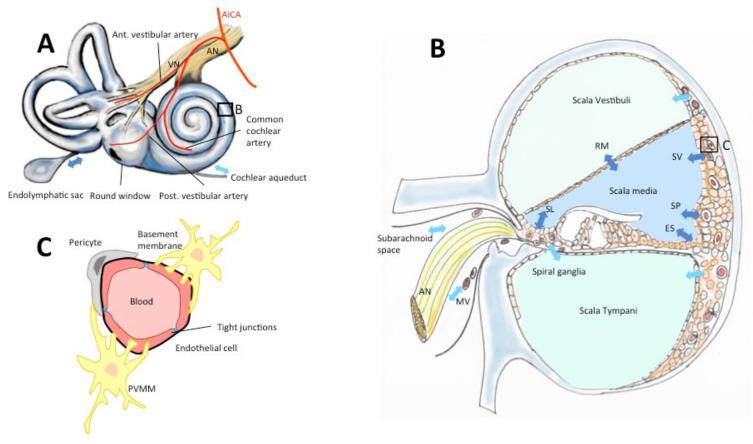
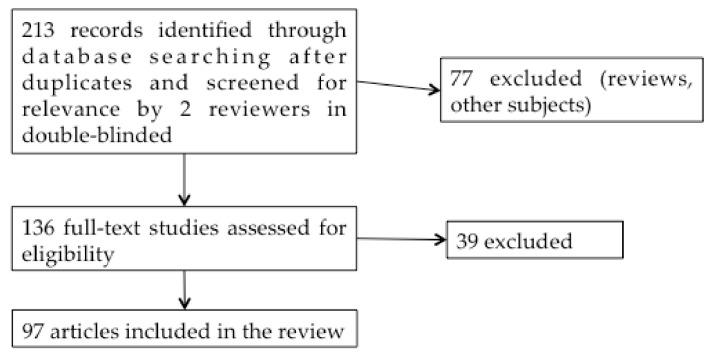
Drug delivery and distribution in the central nervous system (CNS) and the inner ear represent a challenge for the medical and scientific world, especially because of the blood-brain and the blood-perilymph barriers. Solutions are being studied to circumvent or to facilitate drug diffusion across these structures. Using superparamagnetic iron oxide nanoparticles (SPIONs), which can be coated to change their properties and ensure biocompatibility, represents a promising tool as a drug carrier. They can act as nanocarriers and can be driven with precision by magnetic forces. The aim of this study was to systematically review the use of SPIONs in the CNS and the inner ear. A systematic PubMed search between 1999 and 2019 yielded 97 studies. In this review, we describe the applications of the SPIONS, their design, their administration, their pharmacokinetic, their toxicity and the methods used for targeted delivery of drugs into the ear and the CNS.
药物在中枢神经系统(CNS)和内耳中的递送与分布对医学和科学界来说是一项挑战,尤其是由于血脑屏障和血迷路屏障的存在。目前正在研究各种解决方案,以规避或促进药物穿过这些结构的扩散。使用超顺磁性氧化铁纳米颗粒(SPIONs),其可以进行表面包覆以改变其性质并确保生物相容性,这是一种很有前景的药物载体工具。它们可以作为纳米载体,并可通过磁力精确驱动。本研究的目的是系统评价SPIONs在中枢神经系统和内耳中的应用。在1999年至2019年间对PubMed进行的系统检索共获得97项研究。在本综述中,我们描述了SPIONs的应用、设计、给药方式、药代动力学、毒性以及将药物靶向递送至内耳和中枢神经系统所使用的方法。
 Zotero 插件