Mitra A K, Chiang C Y, Tiwari P, Tomar S, Watters K M, Peter M E, Lengyel E
Department of Obstetrics and Gynecology, Section of Gynecologic Oncology - Center for Integrative Science, University of Chicago, Chicago, IL, USA.
Medical Sciences Program, Indiana University School of Medicine, Indiana University, Bloomington, IN, USA.
Oncogene. 2015 Nov 26;34(48):5923-32. doi: 10.1038/onc.2015.43. Epub 2015 Mar 23.
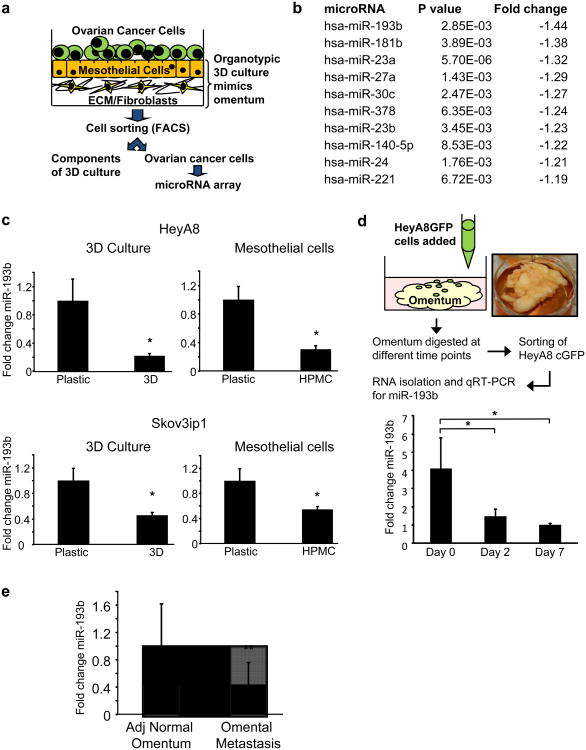
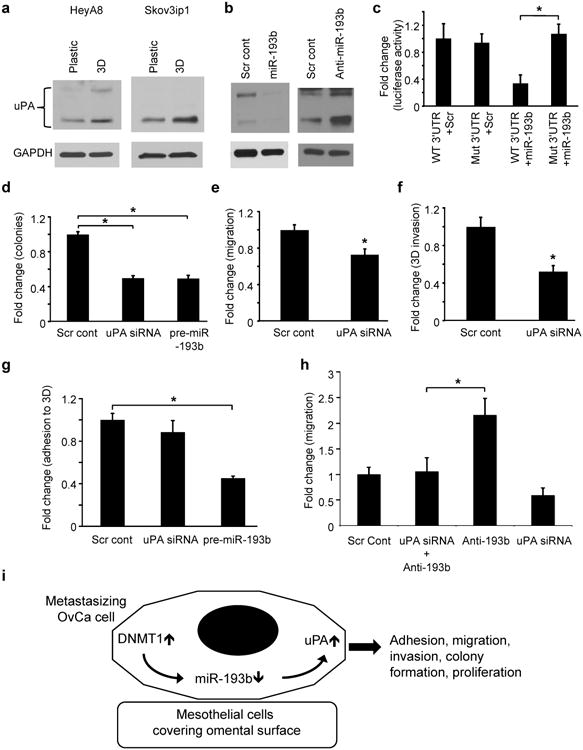
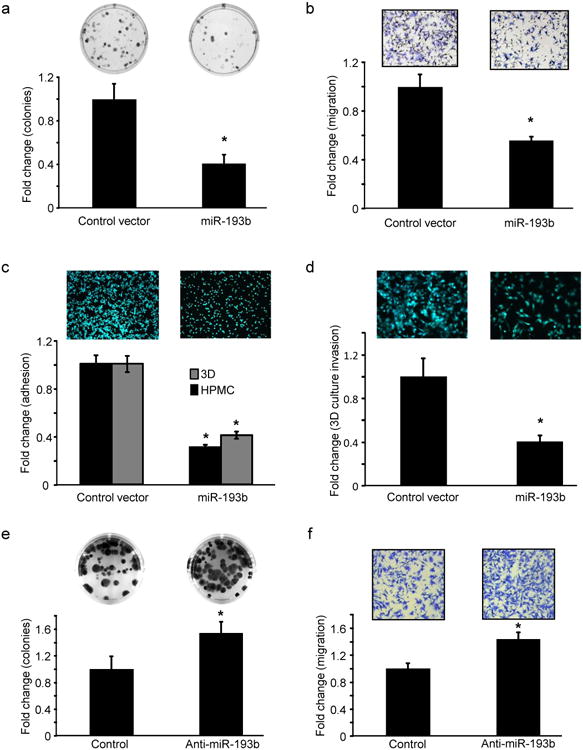
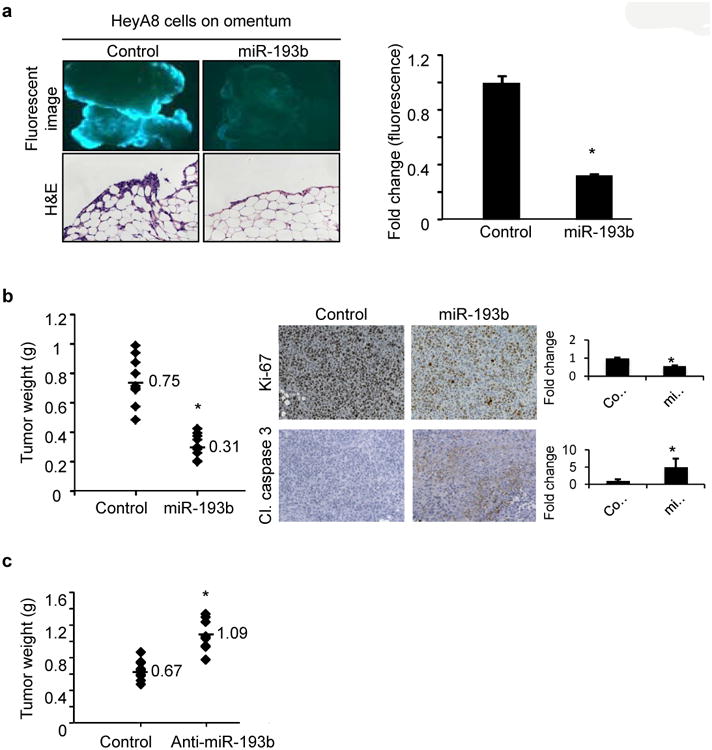
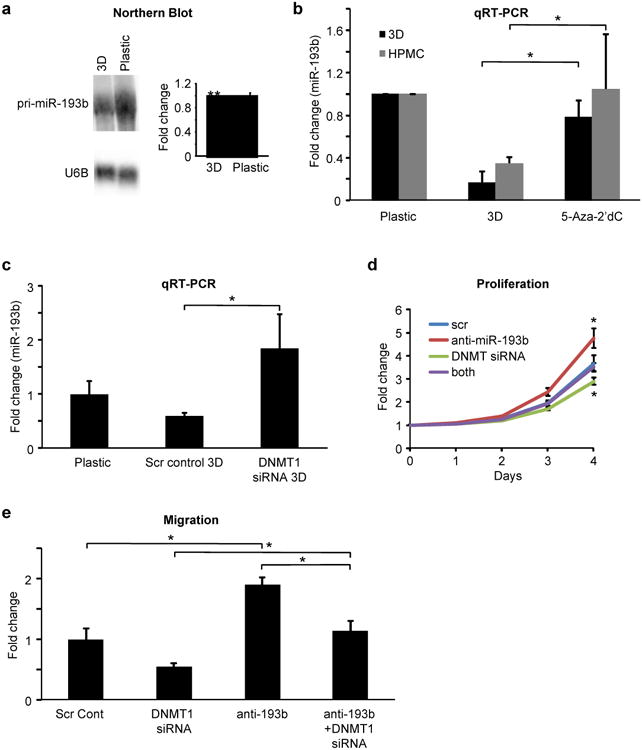
The cross-talk between ovarian cancer (OvCa) cells and the metastatic microenvironment is an essential determinant of successful colonization. MicroRNAs (miRNAs) have several critical roles during metastasis; however, the role of microenvironmental cues in the regulation of miRNAs in metastasizing cancer cells has not been studied. Using a three-dimensional culture model that mimics the human omentum, one of the principal sites of OvCa metastasis, we identified and characterized the microenvironment-induced downregulation of a tumor suppressor miRNA, miR-193b, in metastasizing OvCa cells. The direct interaction of the OvCa cells with mesothelial cells, which cover the surface of the omentum, caused a DNA methyltransferase 1-mediated decrease in the expression of miR-193b in the cancer cells. The reduction in miR-193b enabled the metastasizing cancer cells to invade and proliferate into human omental pieces ex vivo and into the omentum of a mouse xenograft model of OvCa metastasis. The functional effects of miR-193b were mediated, in large part, by the concomitant increased expression of its target, urokinase-type plasminogen activator, a known tumor-associated protease. These findings link paracrine signals from the microenvironment to the regulation of a key miRNA in cancer cells. Targeting miR-193b, which is essential for metastatic colonization of cancer cells could prove effective in the treatment of OvCa metastasis.
卵巢癌细胞与转移微环境之间的相互作用是成功定植的关键决定因素。微小RNA(miRNA)在转移过程中发挥着多种关键作用;然而,微环境信号在转移癌细胞中对miRNA调控的作用尚未得到研究。利用一种模拟人网膜(卵巢癌转移的主要部位之一)的三维培养模型,我们鉴定并表征了微环境诱导的转移卵巢癌细胞中一种肿瘤抑制性miRNA——miR-193b的下调。卵巢癌细胞与覆盖网膜表面的间皮细胞的直接相互作用,导致癌细胞中DNA甲基转移酶1介导的miR-193b表达降低。miR-193b的减少使转移癌细胞能够在体外侵袭并增殖到人类网膜组织中,并在卵巢癌转移的小鼠异种移植模型的网膜中增殖。miR-193b的功能效应在很大程度上是由其靶标尿激酶型纤溶酶原激活剂(一种已知的肿瘤相关蛋白酶)的表达增加介导的。这些发现将微环境的旁分泌信号与癌细胞中关键miRNA的调控联系起来。靶向对癌细胞转移定植至关重要的miR-193b可能在卵巢癌转移治疗中被证明是有效的。