Yee Christine, Dickson Kristie-Ann, Muntasir Mohammed N, Ma Yue, Marsh Deborah J
Translational Oncology Group, School of Life Sciences, Faculty of Science, University of Technology Sydney, Ultimo, NSW, Australia.
Northern Clinical School, Faculty of Medicine and Health, University of Sydney, Camperdown, NSW, Australia.
Front Bioeng Biotechnol. 2022 Feb 10;10:836984. doi: 10.3389/fbioe.2022.836984. eCollection 2022.
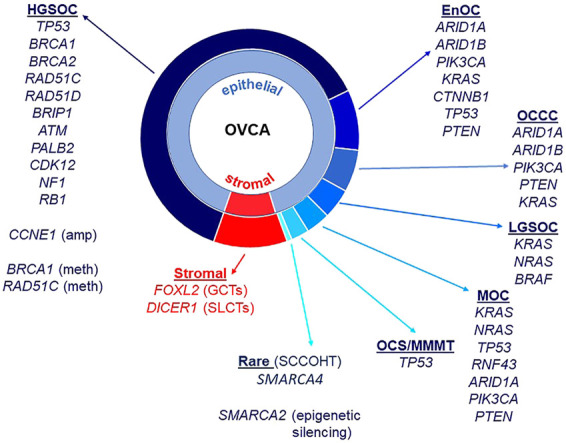
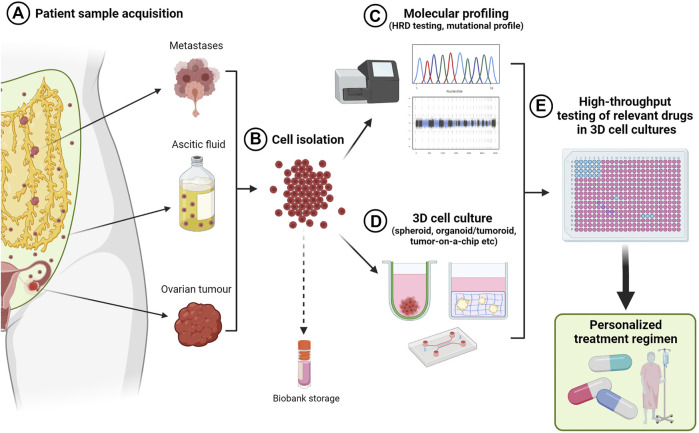
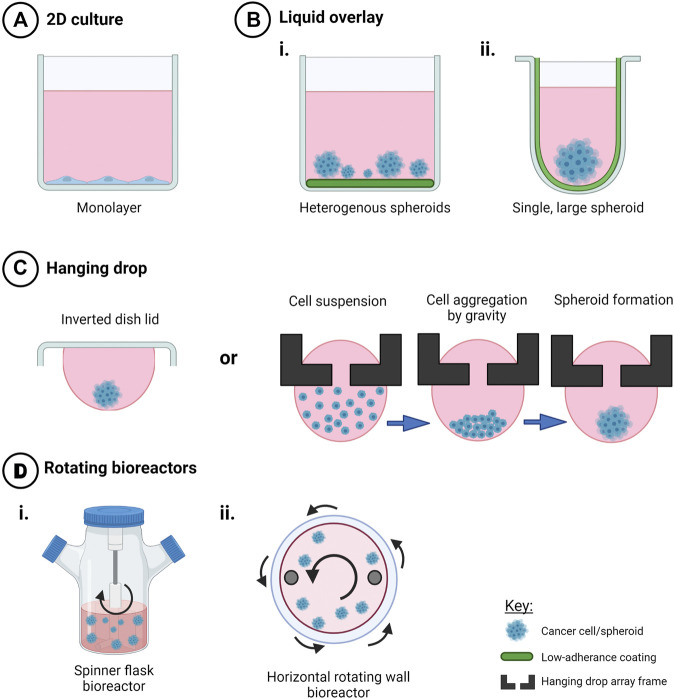
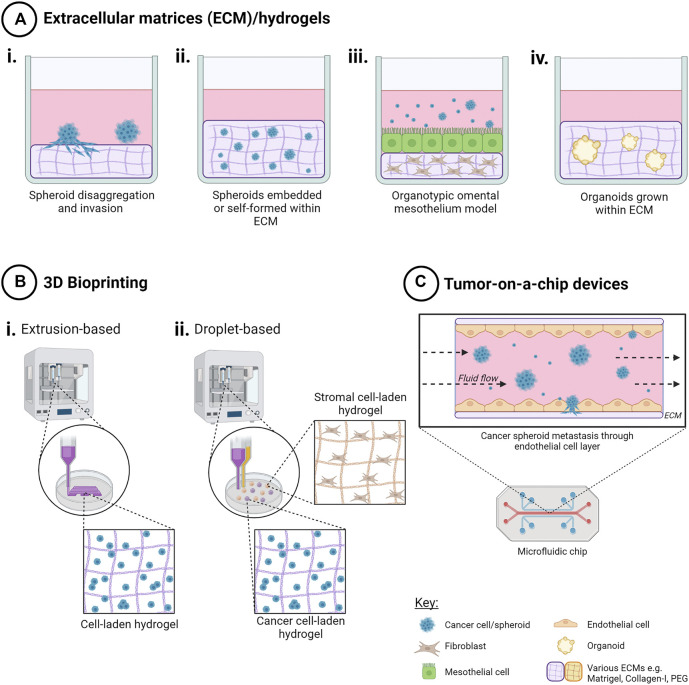
Ovarian cancer has the highest mortality of all of the gynecological malignancies. There are several distinct histotypes of this malignancy characterized by specific molecular events and clinical behavior. These histotypes have differing responses to platinum-based drugs that have been the mainstay of therapy for ovarian cancer for decades. For histotypes that initially respond to a chemotherapeutic regime of carboplatin and paclitaxel such as high-grade serous ovarian cancer, the development of chemoresistance is common and underpins incurable disease. Recent discoveries have led to the clinical use of PARP (poly ADP ribose polymerase) inhibitors for ovarian cancers defective in homologous recombination repair, as well as the anti-angiogenic bevacizumab. While predictive molecular testing involving identification of a genomic scar and/or the presence of germline or somatic or mutation are in clinical use to inform the likely success of a PARP inhibitor, no similar tests are available to identify women likely to respond to bevacizumab. Functional tests to predict patient response to any drug are, in fact, essentially absent from clinical care. New drugs are needed to treat ovarian cancer. In this review, we discuss applications to address the currently unmet need of developing physiologically relevant and models of ovarian cancer for fundamental discovery science, and personalized medicine approaches. Traditional two-dimensional (2D) cell culture of ovarian cancer lacks critical cell-to-cell interactions afforded by culture in three-dimensions. Additionally, modelling interactions with the tumor microenvironment, including the surface of organs in the peritoneal cavity that support metastatic growth of ovarian cancer, will improve the power of these models. Being able to reliably grow primary tumoroid cultures of ovarian cancer will improve the ability to recapitulate tumor heterogeneity. Three-dimensional (3D) modelling systems, from cell lines to organoid or tumoroid cultures, represent enhanced starting points from which improved translational outcomes for women with ovarian cancer will emerge.
卵巢癌是所有妇科恶性肿瘤中死亡率最高的。这种恶性肿瘤有几种不同的组织学类型,其特征在于特定的分子事件和临床行为。这些组织学类型对铂类药物的反应不同,而铂类药物几十年来一直是卵巢癌治疗的主要手段。对于最初对卡铂和紫杉醇化疗方案有反应的组织学类型,如高级别浆液性卵巢癌,化疗耐药的发生很常见,也是导致疾病无法治愈的原因。最近的发现已使PARP(聚ADP核糖聚合酶)抑制剂用于同源重组修复缺陷的卵巢癌的临床治疗,以及抗血管生成药物贝伐单抗。虽然涉及识别基因组瘢痕和/或胚系或体细胞突变的存在的预测性分子检测已用于临床,以判断PARP抑制剂可能的疗效,但尚无类似检测可用于识别可能对贝伐单抗有反应的女性。事实上,临床治疗中基本没有用于预测患者对任何药物反应的功能测试。治疗卵巢癌需要新的药物。在本综述中,我们讨论了相关应用,以满足当前尚未满足的需求,即开发用于基础发现科学和个性化医学方法的生理相关的卵巢癌模型。卵巢癌的传统二维细胞培养缺乏三维培养所提供的关键细胞间相互作用。此外,模拟与肿瘤微环境的相互作用,包括支持卵巢癌转移生长的腹腔器官表面,将提高这些模型的效能。能够可靠地培养卵巢癌原代肿瘤样培养物将提高概括肿瘤异质性的能力。从细胞系到类器官或肿瘤样培养物的三维建模系统是更好的起点,由此将为卵巢癌女性患者带来更好的转化治疗结果。