Czemmel Stefan, Galarneau Erin R, Travadon Renaud, McElrone Andrew J, Cramer Grant R, Baumgartner Kendra
Department of Biochemistry and Molecular Biology, University of Nevada, Reno, Nevada, United States of America.
United States Department of Agriculture-Agricultural Research Service, Davis, California, United States of America.
PLoS One. 2015 Mar 23;10(3):e0121828. doi: 10.1371/journal.pone.0121828. eCollection 2015.
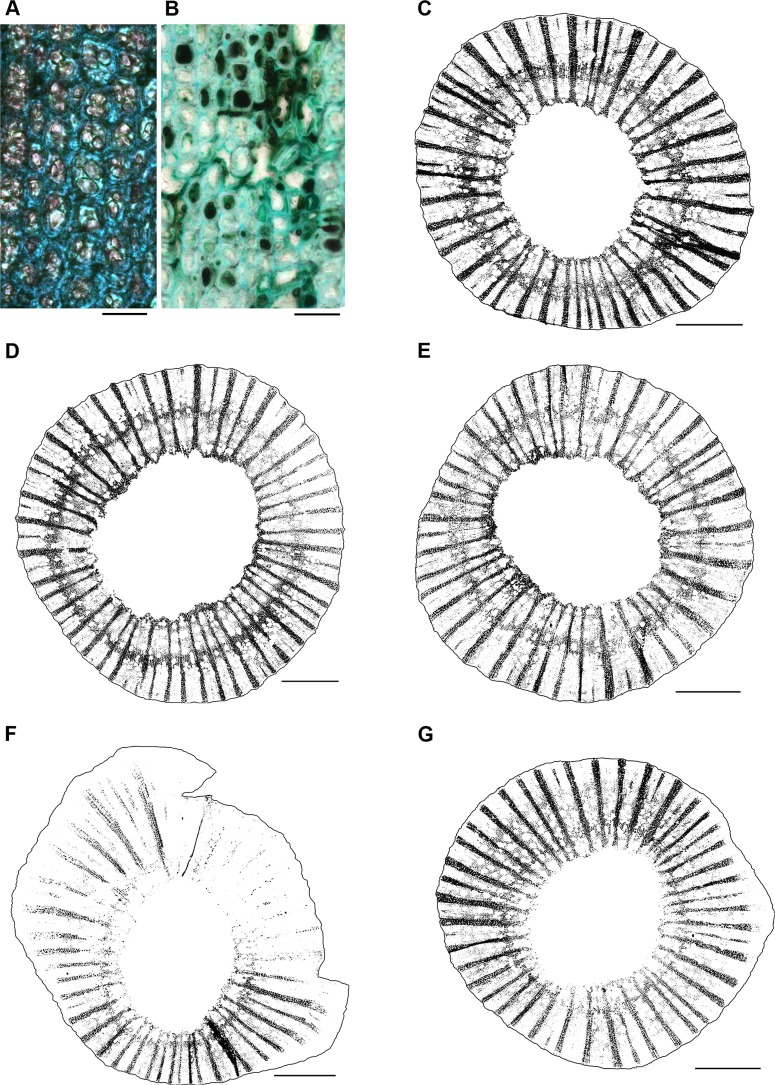
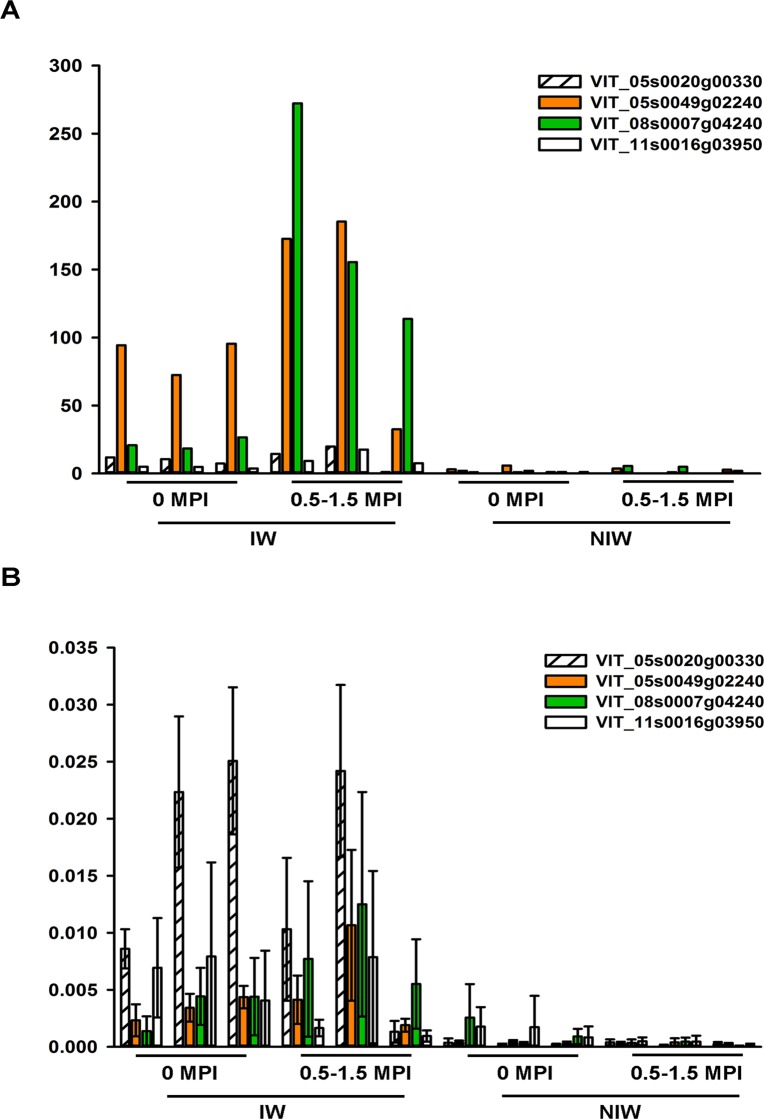
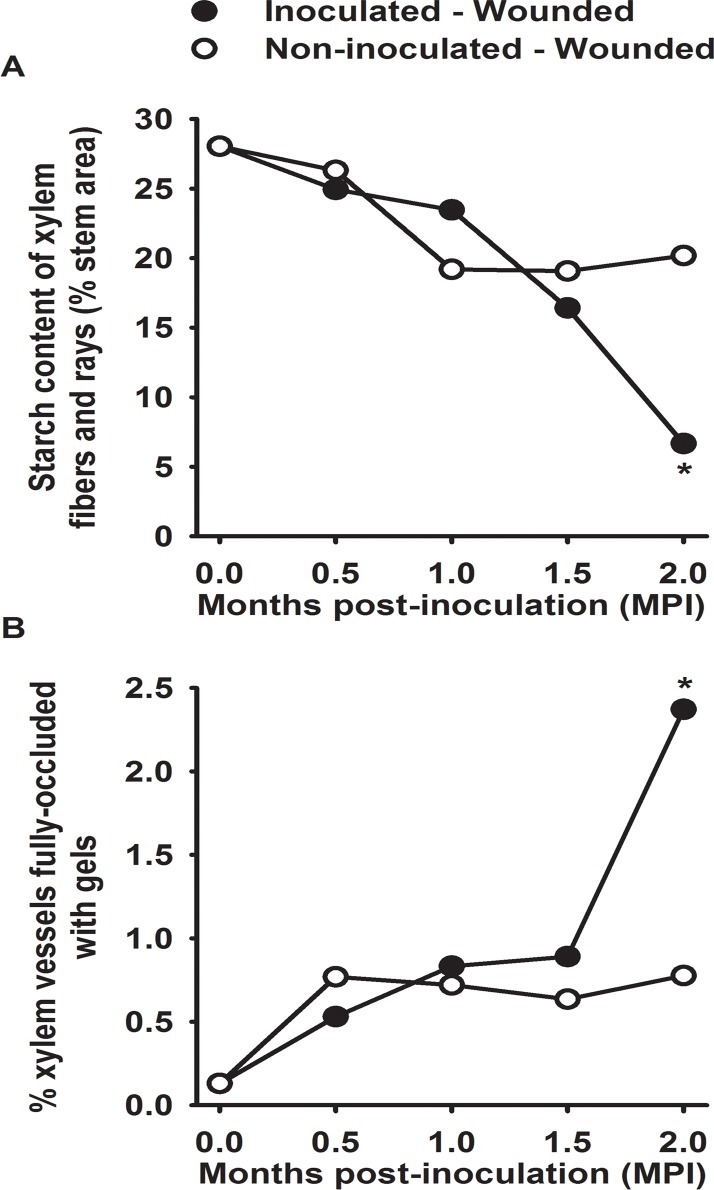
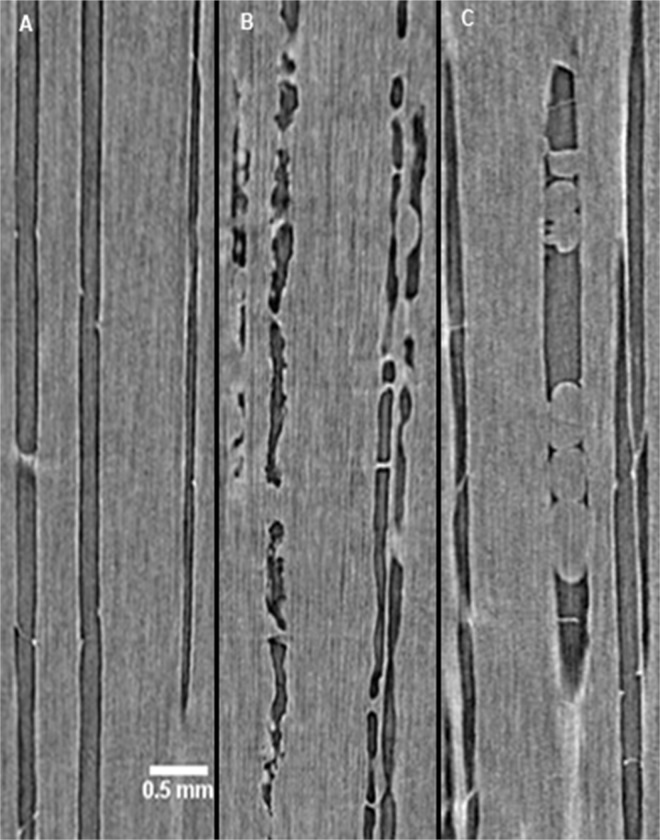
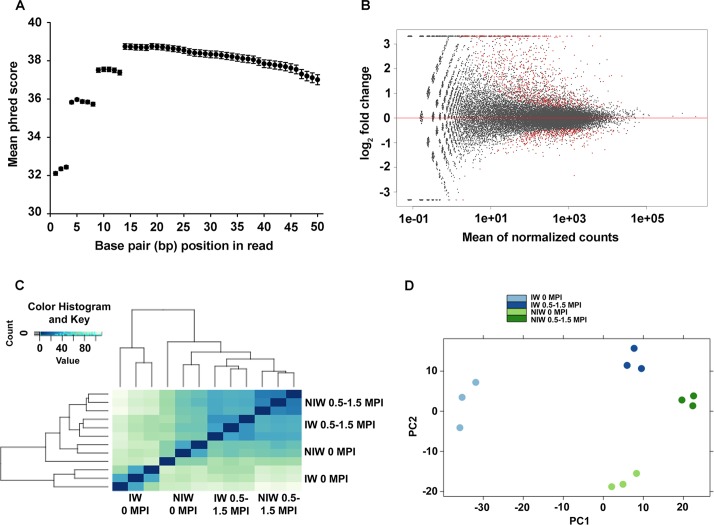
Some pathogenic species of the Botryosphaeriaceae have a latent phase, colonizing woody tissues while perennial hosts show no apparent symptoms until conditions for disease development become favorable. Detection of these pathogens is often limited to the later pathogenic phase. The latent phase is poorly characterized, despite the need for non-destructive detection tools and effective quarantine strategies, which would benefit from identification of host-based markers in leaves. Neofusicoccum parvum infects the wood of grapevines and other horticultural crops, killing the fruit-bearing shoots. We used light microscopy and high-resolution computed tomography (HRCT) to examine the spatio-temporal relationship between pathogen colonization and anatomical changes in stem sections. To identify differentially-expressed grape genes, leaves from inoculated and non-inoculated plants were examined using RNA-Seq. The latent phase occurred between 0 and 1.5 months post-inoculation (MPI), during which time the pathogen did not spread significantly beyond the inoculation site nor were there differences in lesion lengths between inoculated and non-inoculated plants. The pathogenic phase occurred between 1.5 and 2 MPI, when recovery beyond the inoculation site increased and lesion lengths of inoculated plants tripled. By 2 MPI, inoculated plants also had decreased starch content in xylem fibers and rays, and increased levels of gel-occluded xylem vessels, the latter of which HRCT revealed at a higher frequency than microscopy. RNA-Seq and screening of 21 grape expression datasets identified 20 candidate genes that were transcriptionally-activated by infection during the latent phase, and confirmed that the four best candidates (galactinol synthase, abscisic acid-induced wheat plasma membrane polypeptide-19 ortholog, embryonic cell protein 63, BURP domain-containing protein) were not affected by a range of common foliar and wood pathogens or abiotic stresses. Assuming such host responses are consistent among cultivars, and do not cross react with other trunk/foliar pathogens, these grape genes may serve as host-based markers of the latent phase of N. parvum infection.
葡萄座腔菌科的一些致病物种具有潜伏阶段,它们在木质组织中定殖,而多年生寄主在疾病发展的条件变得有利之前不会表现出明显症状。这些病原体的检测通常仅限于后期致病阶段。尽管需要无损检测工具和有效的检疫策略,但潜伏阶段的特征却知之甚少,而这些策略将受益于叶片中基于寄主的标记物的识别。细小新壳梭孢菌感染葡萄藤和其他园艺作物的木质部,导致结果新梢死亡。我们使用光学显微镜和高分辨率计算机断层扫描(HRCT)来研究病原菌定殖与茎段解剖结构变化之间的时空关系。为了鉴定差异表达的葡萄基因,我们使用RNA测序技术检测了接种和未接种植株的叶片。潜伏阶段发生在接种后0至1.5个月(MPI)之间,在此期间,病原体没有显著扩散到接种部位以外,接种和未接种植株的病斑长度也没有差异。致病阶段发生在1.5至2 MPI之间,此时接种部位以外的恢复情况增加,接种植株的病斑长度增加了两倍。到2 MPI时,接种植株木质部纤维和射线中的淀粉含量也降低,凝胶阻塞的木质部导管水平增加,HRCT显示后者的频率高于显微镜检查。RNA测序和对21个葡萄表达数据集的筛选确定了20个候选基因,这些基因在潜伏阶段被感染转录激活,并证实四个最佳候选基因(棉子糖合酶、脱落酸诱导的小麦质膜多肽-19直系同源物、胚胎细胞蛋白63、含BURP结构域的蛋白)不受一系列常见叶部和木质部病原体或非生物胁迫的影响。假设这些寄主反应在不同品种间是一致的,并且不会与其他树干/叶部病原体发生交叉反应,那么这些葡萄基因可能作为细小新壳梭孢菌感染潜伏阶段基于寄主的标记物。