Immunotoxicology group, Institute for Risk Assessment Sciences, Utrecht University, Utrecht, The Netherlands ; Utrecht Centre for Food Allergy, Utrecht, The Netherlands.
Utrecht Centre for Food Allergy, Utrecht, The Netherlands ; Utrecht University Medical Center, Utrecht, The Netherlands ; Current affiliation: HU University of Applied Sciences, Utrecht, The Netherlands.
Clin Transl Allergy. 2015 Mar 23;5:13. doi: 10.1186/s13601-015-0056-9. eCollection 2015.
The relative contribution and the relation between individual peanut allergens in peanut allergic responses is still matter of debate. We determined the individual contribution of peanut proteins to B, T cell and allergic effector responses in a mouse model for peanut allergy.
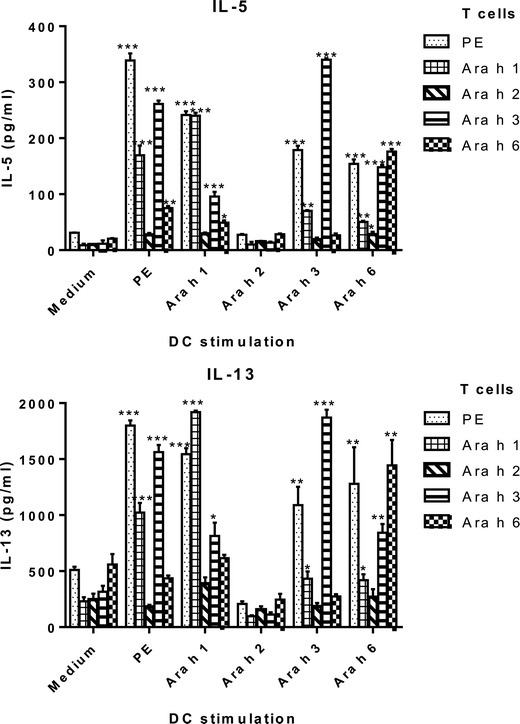
Mice were immunized and challenged by oral gavage with peanut protein extract or isolated allergens Ara h 1, 2, 3 and 6 followed by assessment of food allergic manifestations. In addition, T cell responses to the individual proteins were measured by an in vitro dendritic cell-T cell assay.
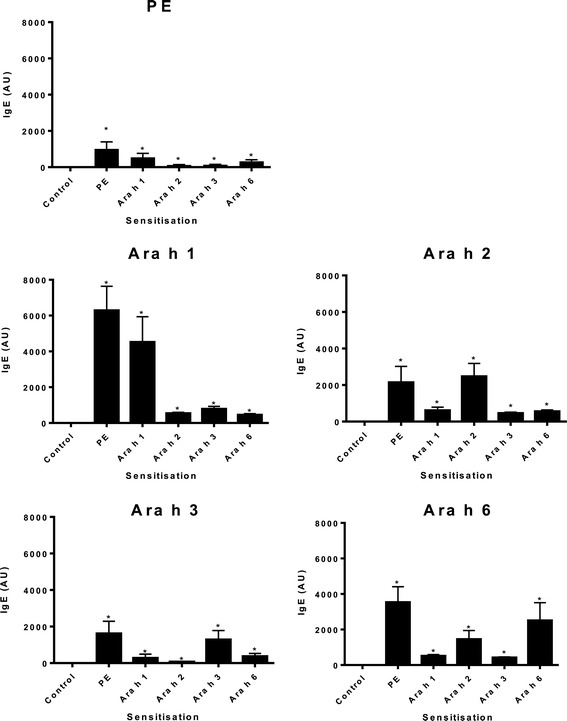
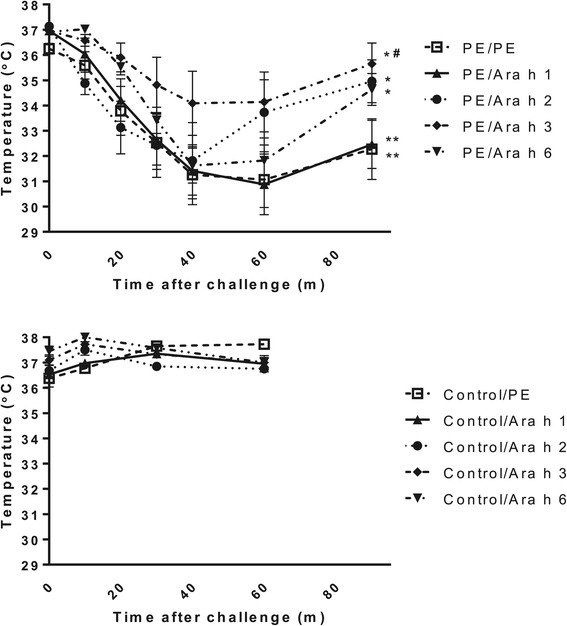
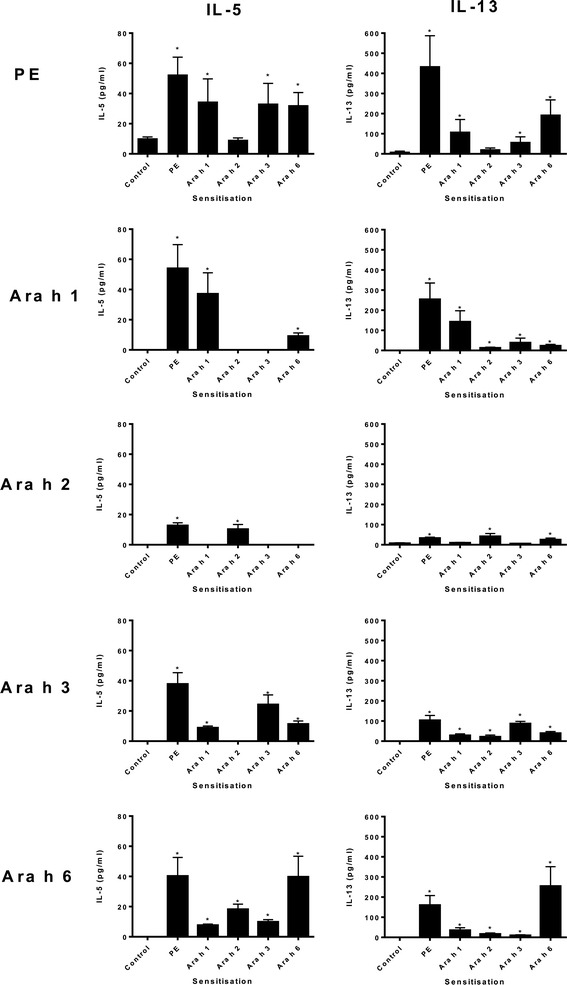
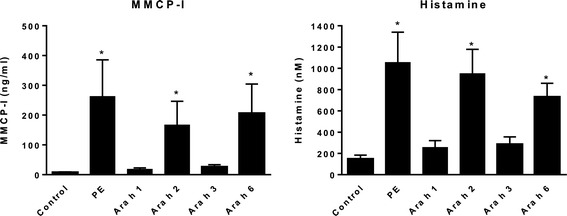
Sensitization with the individual peanut proteins elicited IgE responses with specificity to the allergen used as expected. However, cross reactivity among Ara h 1, 2, 3 and 6 was observed. T cell re-stimulations with peanut extract and individual peanut proteins also showed cross reactivity between Ara h 1, 2, 3 and 6. Despite the cross reactivity at the IgE level, only Ara h 2 and 6 were able to elicit mast cell degranulation after an oral challenge. However, after systemic challenge, Ara h 1, 2 and 6 and to lesser extent Ara h 3 were able to elicit anaphylactic responses.
Ara h 1, 2, 3 and 6 sensitize via the intra-gastric route, but differ in their capacity to cause allergic effector responses. Interestingly, extensive cross reactivity at T cell and antibody level is observed among Ara h 1, 2, 3 and 6, which may have important implications for the diagnosis and therapy of peanut allergy. Awareness about the relative contribution of individual peanut allergens and cross reactivity between these allergens is of importance for current research in diagnostics and therapeutics for and the mechanism of peanut allergy.
在花生过敏反应中,个体花生过敏原的相对贡献及其关系仍存在争议。我们在花生过敏的小鼠模型中确定了花生蛋白对 B、T 细胞和过敏效应反应的个体贡献。
通过口服灌胃用花生蛋白提取物或分离的过敏原 Ara h 1、2、3 和 6 对小鼠进行免疫和攻毒,然后评估食物过敏表现。此外,通过体外树突状细胞-T 细胞测定来测量对各蛋白的 T 细胞反应。
用个别花生蛋白进行致敏会引起对所用过敏原具有特异性的 IgE 反应。然而,观察到 Ara h 1、2、3 和 6 之间存在交叉反应。用花生提取物和个别花生蛋白对 T 细胞的再刺激也显示出 Ara h 1、2、3 和 6 之间的交叉反应。尽管在 IgE 水平上存在交叉反应,但只有 Ara h 2 和 6 在口服攻毒后能够引发肥大细胞脱颗粒。然而,在全身攻毒后,Ara h 1、2 和 6(以及程度较轻的 Ara h 3)能够引发过敏反应。
Ara h 1、2、3 和 6 通过胃内途径致敏,但引起过敏效应反应的能力不同。有趣的是,在 T 细胞和抗体水平上观察到 Ara h 1、2、3 和 6 之间存在广泛的交叉反应,这对花生过敏的诊断和治疗以及花生过敏的机制具有重要意义。了解个别花生过敏原的相对贡献及其之间的交叉反应性对于当前花生过敏的诊断和治疗以及机制研究具有重要意义。