EMERALD project, School of Applied Human Sciences, University of KwaZulu-Natal, P/Bag X01, Scottsville, Pietermaritzburg, 3201 South Africa.
EMERALD project, School of Applied Human Sciences, University of KwaZulu-Natal, Durban, South Africa.
Int J Ment Health Syst. 2015 Mar 11;9:14. doi: 10.1186/s13033-015-0004-z. eCollection 2015.
While South Africa has a new policy framework supporting the integration of mental health care into primary health care, this is not sufficient to ensure transformation of the health care system towards integrated primary mental health care. Health systems strengthening is needed, incorporating, inter alia, capacity building and resource inputs, as well as good governance for ensuring that the relevant policy imperatives are implemented.
To identify systemic factors within institutional and policy contexts that are likely to facilitate or impede the implementation of integrated mental health care in South Africa.
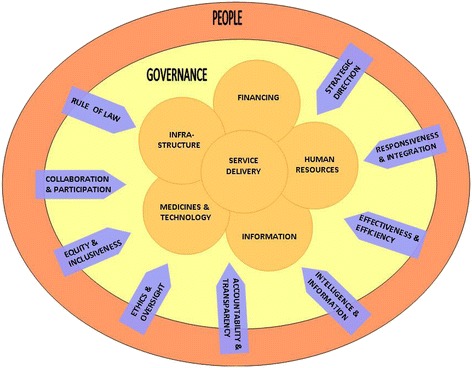
Semi-structured qualitative interviews were conducted with 17 key stakeholders in the Department of Health and Department of Social Development at national level, at provincial level in the North West Province, and at district level in the Dr Kenneth Kaunda district. Participants were purposively identified based on their positions and job responsibilities. Interview questions were guided by a hybrid of Siddiqi et al.'s governance framework principles and Mikkelsen-Lopez et al.'s health system governance approach. Data were analysed using framework analysis in NVivo.
Facilitative factors included the recent mental health care policy framework and national action plan that embraces integrated care using a task sharing model and provides policy imperatives for the establishment of district mental health teams to facilitate the development and implementation of district mental health care plans; the roll out of the integrated chronic disease service delivery platform that can be leveraged to increase access and resources as well as decrease stigma; and the presence of NGOs that can assist with service delivery. Challenges included the low prioritisation and stigmatisation of mental illness; weak managerial and planning capacity to develop and implement mental health care plans at provincial and district level; poor pre-service training of generalists in mental health care; weak orientation to integrated care; high staff turnover; weak intersectoral coordination; infrastructural constraints; and no dedicated mental health budget.
This study identifies strategies to support and improve integrated mental health care in primary health care services.
南非有一个新的政策框架,支持将精神卫生保健纳入初级卫生保健,但这还不足以确保卫生保健系统向综合初级精神卫生保健转变。需要加强卫生系统,除其他外,包括能力建设和资源投入,以及良好的治理,以确保实施相关政策。
确定体制和政策环境中的系统性因素,这些因素可能有利于或阻碍南非综合精神卫生保健的实施。
在国家一级的卫生部和社会发展部、西北省省级和肯尼思·卡翁达区县级,对 17 名卫生和社会发展部的主要利益攸关方进行了半结构式定性访谈。根据他们的职位和工作职责,有针对性地确定了参与者。访谈问题是根据 Siddiqi 等人的治理框架原则和 Mikkelsen-Lopez 等人的卫生系统治理方法制定的。在 NVivo 中使用框架分析对数据进行分析。
促进因素包括最近的精神卫生保健政策框架和国家行动计划,该计划采用任务分担模式,支持综合护理,并为建立区县级精神卫生团队提供政策,以促进区县级精神卫生保健计划的制定和实施;综合慢性病服务提供平台的推出,可以利用该平台增加获得服务和资源的机会,并减少污名化;以及非政府组织的存在,可以协助提供服务。挑战包括对精神疾病的重视程度低和污名化;在省级和区县级制定和实施精神卫生保健计划方面,管理和规划能力薄弱;普通保健人员的岗前培训不足;对综合护理的认识不足;人员流动率高;部门间协调不力;基础设施受限;以及没有专门的精神卫生预算。
本研究确定了支持和改善初级卫生保健服务中综合精神卫生保健的策略。