Chan Nymph, He Shikun, Spee Christine K, Ishikawa Keijiro, Hinton David R
Department of Pathology, Keck School of Medicine of the University of Southern California, Los Angeles, CA, United States of America; Doheny Eye Institute, Los Angeles, CA, United States of America.
Department of Pathology, Keck School of Medicine of the University of Southern California, Los Angeles, CA, United States of America; Department of Ophthalmology, Keck School of Medicine of the University of Southern California, Los Angeles, CA, United States of America.
PLoS One. 2015 Mar 25;10(3):e0120587. doi: 10.1371/journal.pone.0120587. eCollection 2015.
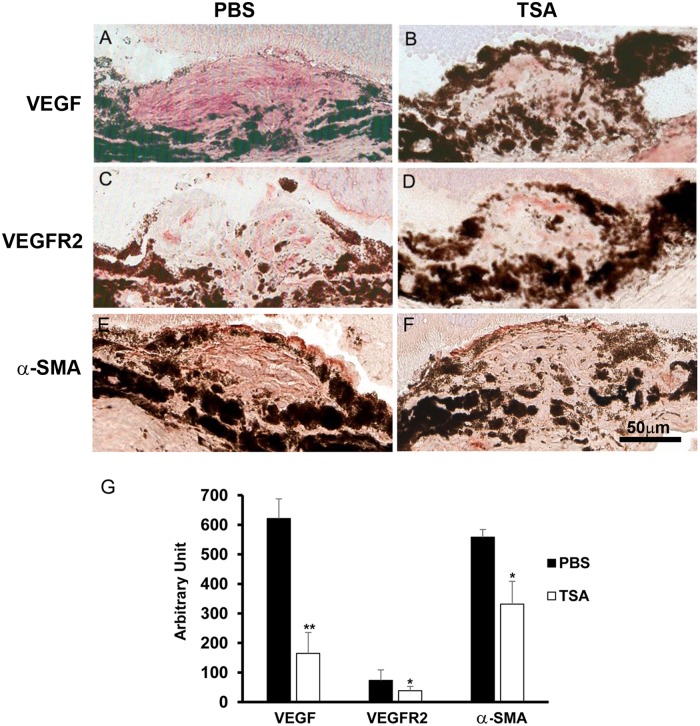
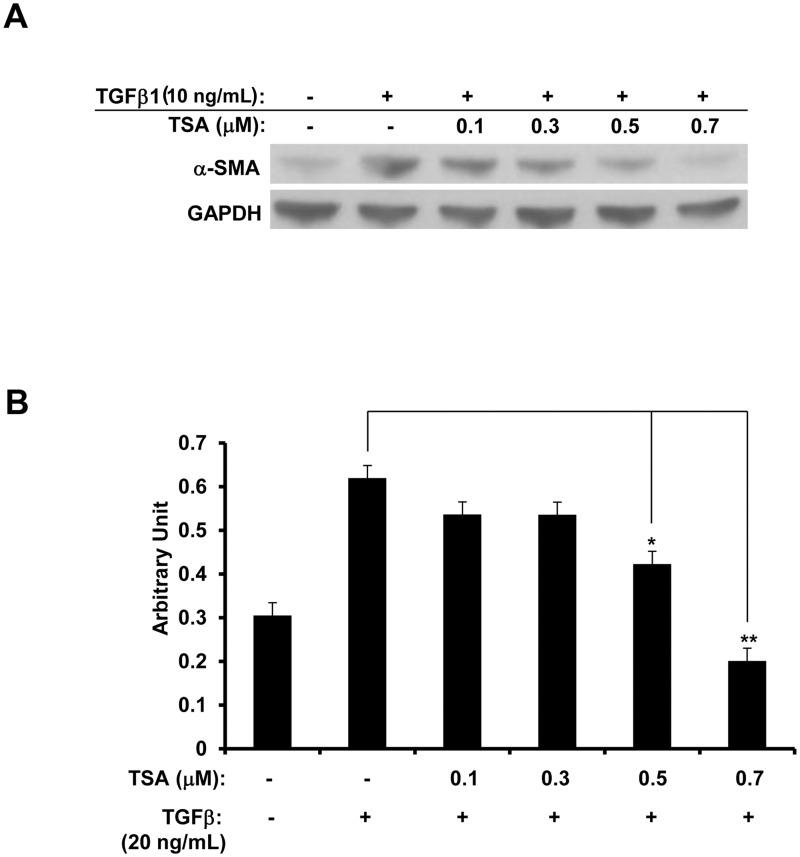
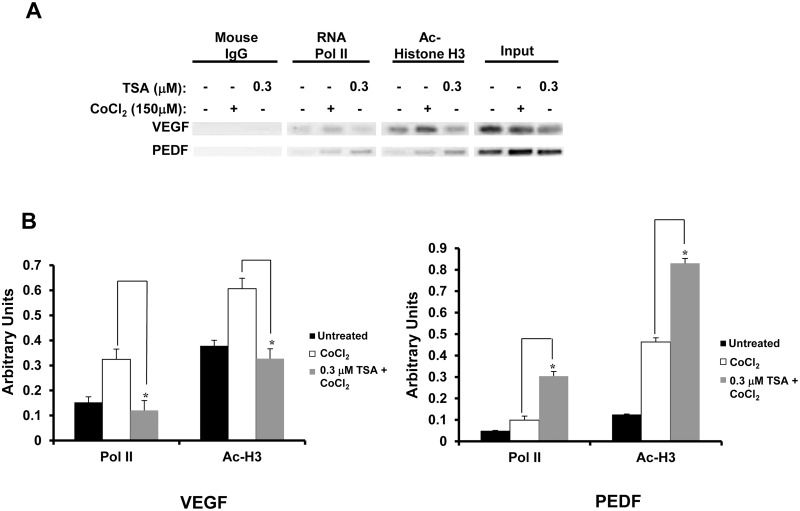
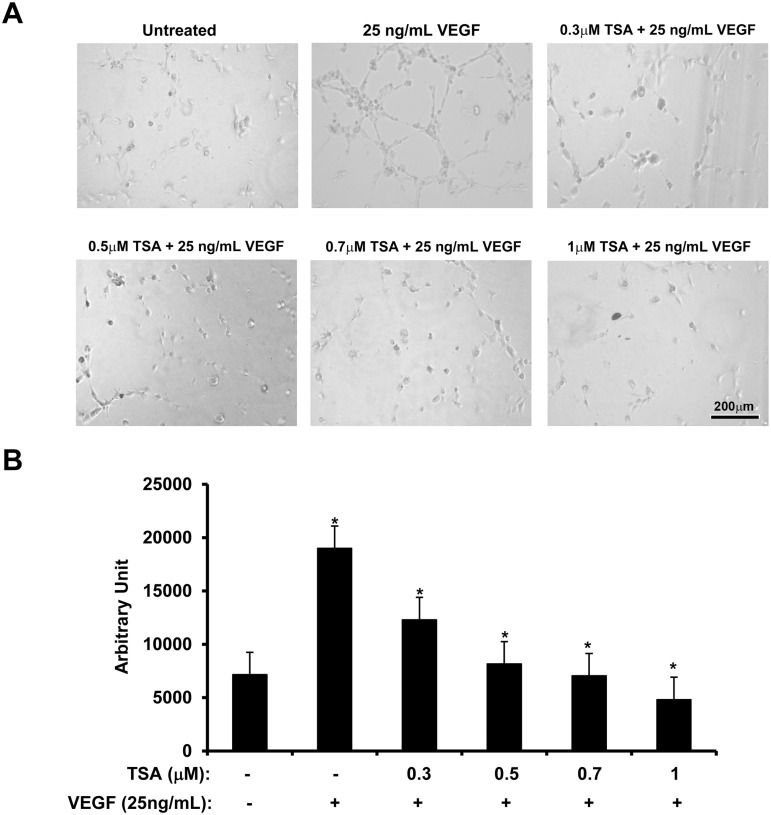
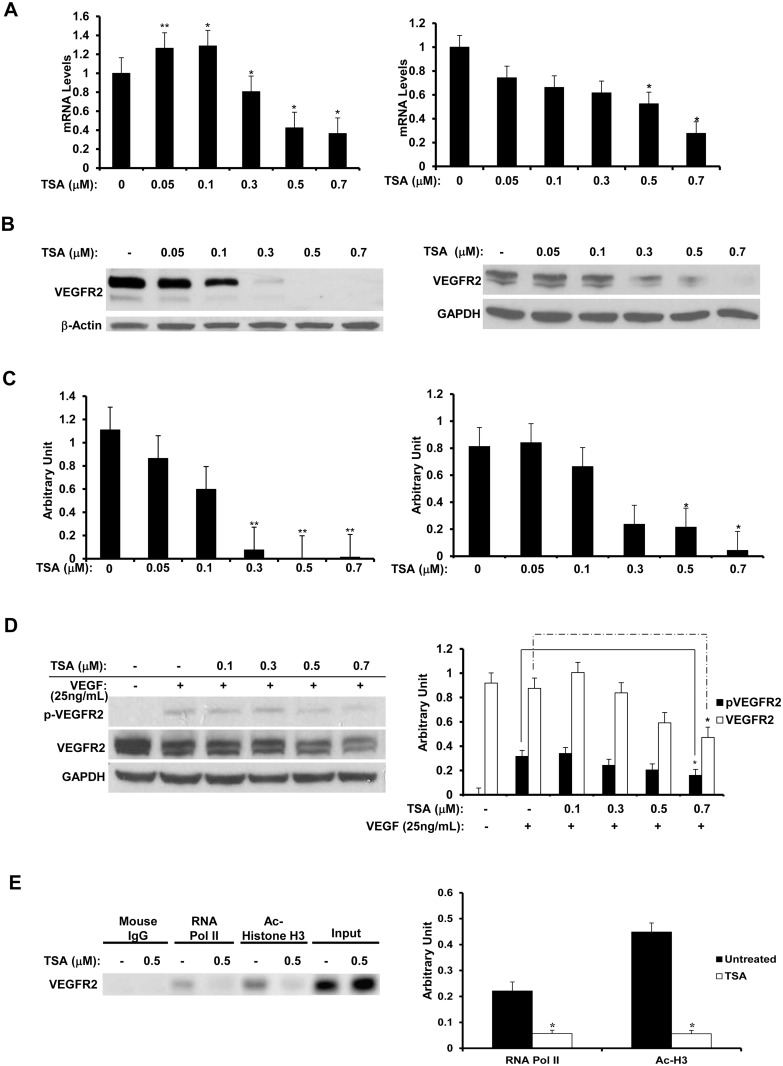
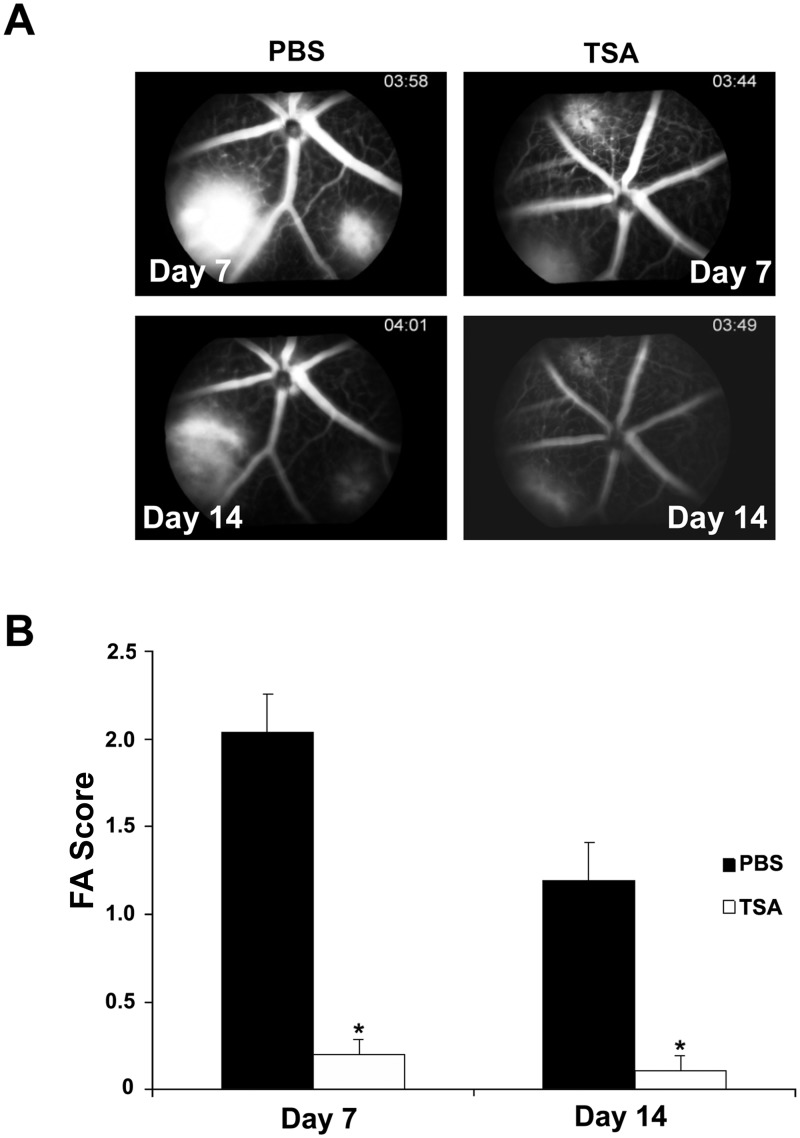
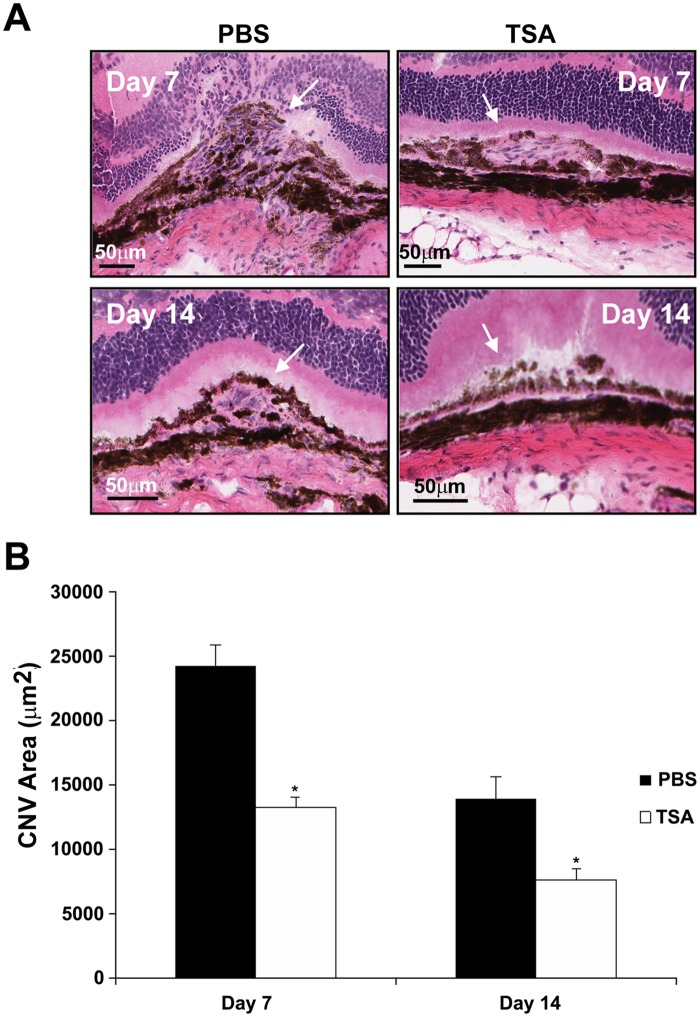
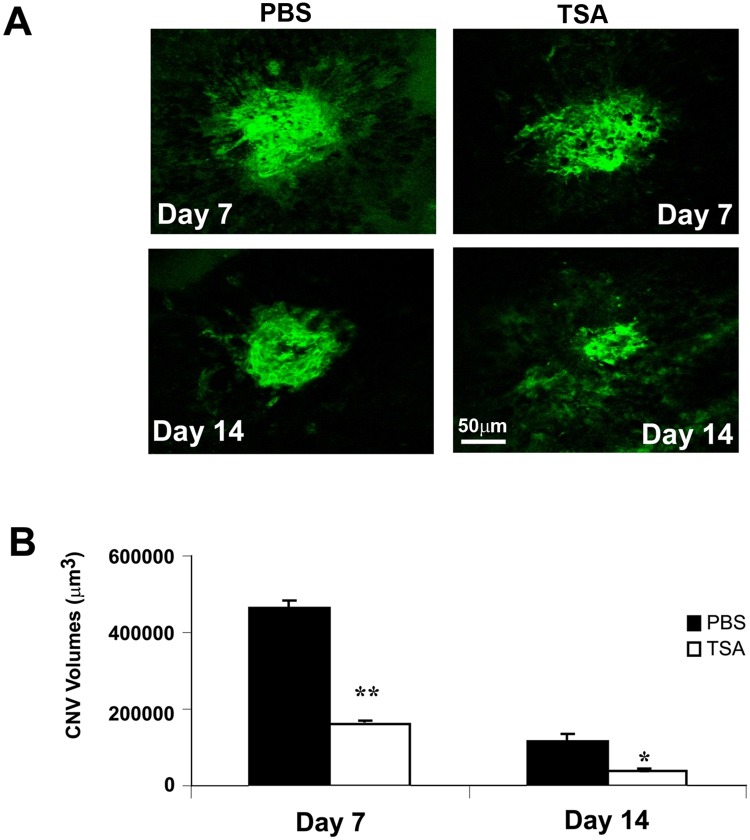
Choroidal neovascularization (CNV) is a blinding complication of age-related macular degeneration that manifests as the growth of immature choroidal blood vessels through Bruch's membrane, where they can leak fluid or hemorrhage under the retina. Here, we demonstrate that the histone deacetylase inhibitor (HDACi) trichostatin A (TSA) can down-regulate the pro-angiogenic hypoxia-inducible factor-1α and vascular endothelial growth factor (VEGF), and up-regulate the anti-angiogenic and neuro-protective pigment epithelium derived factor in human retinal pigment epithelial (RPE) cells. Most strikingly, TSA markedly down-regulates the expression of VEGF receptor-2 in human vascular endothelial cells and, thus, can knock down pro-angiogenic cell signaling. Additionally, TSA suppresses CNV-associated wound healing response and RPE epithelial-mesenchymal transdifferentiation. In the laser-induced model of CNV using C57Bl/6 mice, systemic administration of TSA significantly reduces fluorescein leakage and the size of CNV lesions at post-laser days 7 and 14 as well as the immunohistochemical expression of VEGF, VEGFR2, and smooth muscle actin in CNV lesions at post-laser day 7. This report suggests that TSA, and possibly HDACi's in general, should be further evaluated for their therapeutic potential for the treatment of CNV.
脉络膜新生血管(CNV)是年龄相关性黄斑变性的一种致盲并发症,表现为不成熟的脉络膜血管穿过布鲁赫膜生长,在视网膜下可发生液体渗漏或出血。在此,我们证明组蛋白去乙酰化酶抑制剂(HDACi)曲古抑菌素A(TSA)可下调促血管生成的缺氧诱导因子-1α和血管内皮生长因子(VEGF),并上调人视网膜色素上皮(RPE)细胞中抗血管生成和神经保护的色素上皮衍生因子。最显著的是,TSA可显著下调人血管内皮细胞中VEGF受体-2的表达,从而可抑制促血管生成的细胞信号传导。此外,TSA可抑制与CNV相关的伤口愈合反应和RPE上皮-间质转分化。在使用C57Bl/6小鼠的激光诱导CNV模型中,全身给予TSA可显著减少激光照射后第7天和第14天的荧光素渗漏和CNV病变大小,以及激光照射后第7天CNV病变中VEGF、VEGFR2和平滑肌肌动蛋白的免疫组化表达。本报告表明,TSA以及一般的HDACi应进一步评估其治疗CNV的治疗潜力。