Laborde Carlos M, Mourino-Alvarez Laura, Posada-Ayala María, Alvarez-Llamas Gloria, Serranillos-Reus Manuel Gómez, Moreu José, Vivanco Fernando, Padial Luis R, Barderas María G
Department of Vascular Physiopathology, Hospital Nacional de Paraplejicos, SESCAM, Toledo, Spain.
Department of Immunology, IIS-Fundación Jiménez Díaz, Madrid, Spain.
Metabolomics. 2014;10(3):414-424. doi: 10.1007/s11306-013-0595-9. Epub 2013 Oct 26.
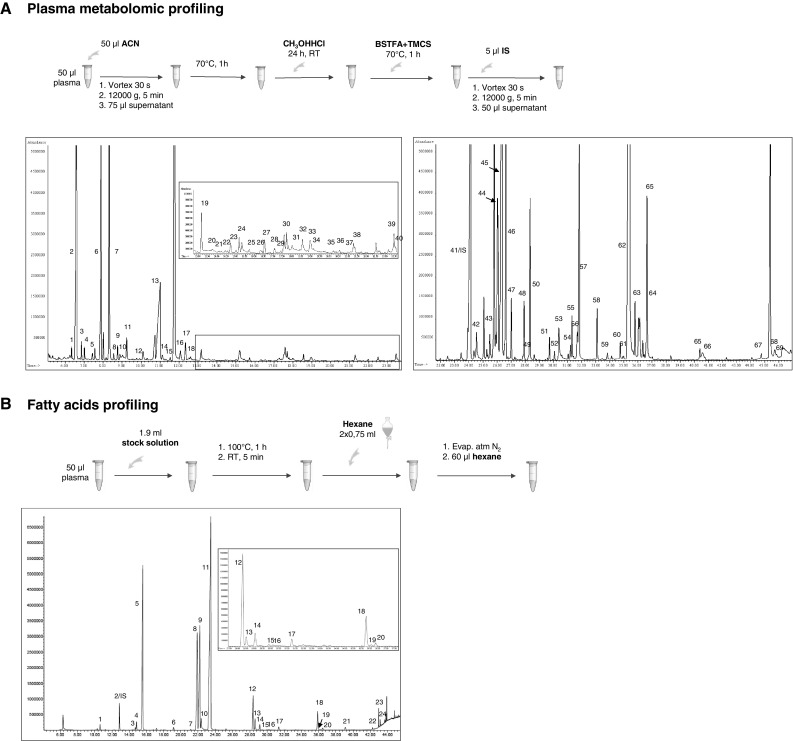
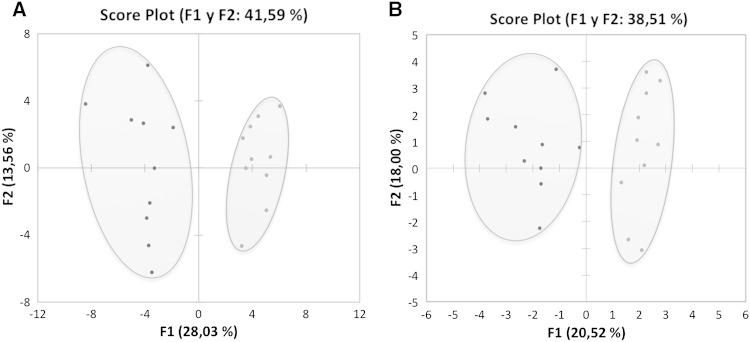
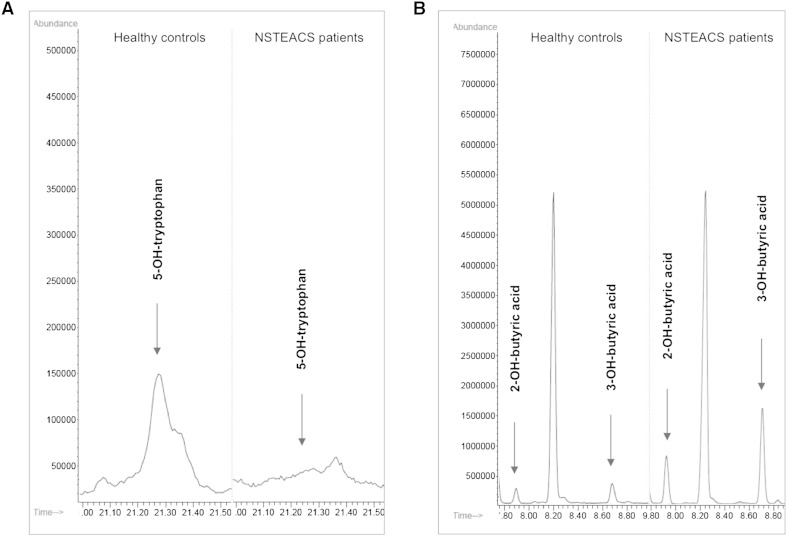
Discovery of new biomarkers is critical for early diagnosis of acute coronary syndrome (ACS). Recent advances in metabolomic technologies have drastically enhanced the possibility of improving the knowledge of its physiopathology through the identification of the altered metabolic pathways. In this study, analyses of peripheral plasma from non-ST segment elevation ACS patients and healthy controls by gas chromatography-mass spectrometry (GC-MC) permitted the identification of 15 metabolites with statistical differences ( < 0.05) between experimental groups. Additionally, validation by GC-MC and liquid chromatography-MC permitted us to identify a potential panel of biomarkers formed by 5-OH-tryptophan, 2-OH-butyric acid and 3-OH-butyric acid. This panel of biomarkers reflects the oxidative stress and the hypoxic state that suffers the myocardial cells and consequently constitutes a metabolomic signature of the atherogenesis process that could be used for early diagnosis of ACS.
发现新的生物标志物对于急性冠状动脉综合征(ACS)的早期诊断至关重要。代谢组学技术的最新进展极大地提高了通过识别改变的代谢途径来增进对其病理生理学认识的可能性。在本研究中,通过气相色谱 - 质谱联用(GC - MC)对非ST段抬高型ACS患者和健康对照者的外周血浆进行分析,在实验组之间鉴定出15种具有统计学差异(P < 0.05)的代谢物。此外,通过GC - MC和液相色谱 - 质谱联用进行验证,使我们能够鉴定出由5 - 羟基色氨酸、2 - 羟基丁酸和3 - 羟基丁酸组成的潜在生物标志物组。该生物标志物组反映了心肌细胞所遭受的氧化应激和缺氧状态,因此构成了动脉粥样硬化形成过程的代谢组学特征,可用于ACS的早期诊断。