Cutuli Debora, Caporali Paola, Gelfo Francesca, Angelucci Francesco, Laricchiuta Daniela, Foti Francesca, De Bartolo Paola, Bisicchia Elisa, Molinari Marco, Farioli Vecchioli Stefano, Petrosini Laura
Department of Psychology, University "Sapienza" of Rome Rome, Italy ; Santa Lucia Foundation Rome, Italy.
Santa Lucia Foundation Rome, Italy ; Department of Systemic Medicine, University of Rome Tor Vergata Rome, Italy.
Front Behav Neurosci. 2015 Mar 12;9:66. doi: 10.3389/fnbeh.2015.00066. eCollection 2015.
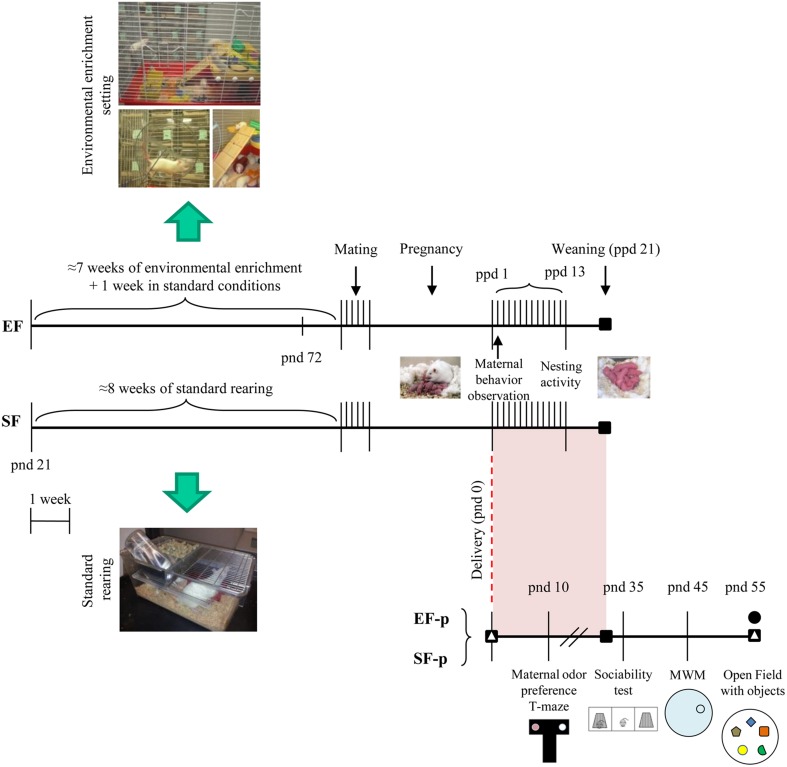
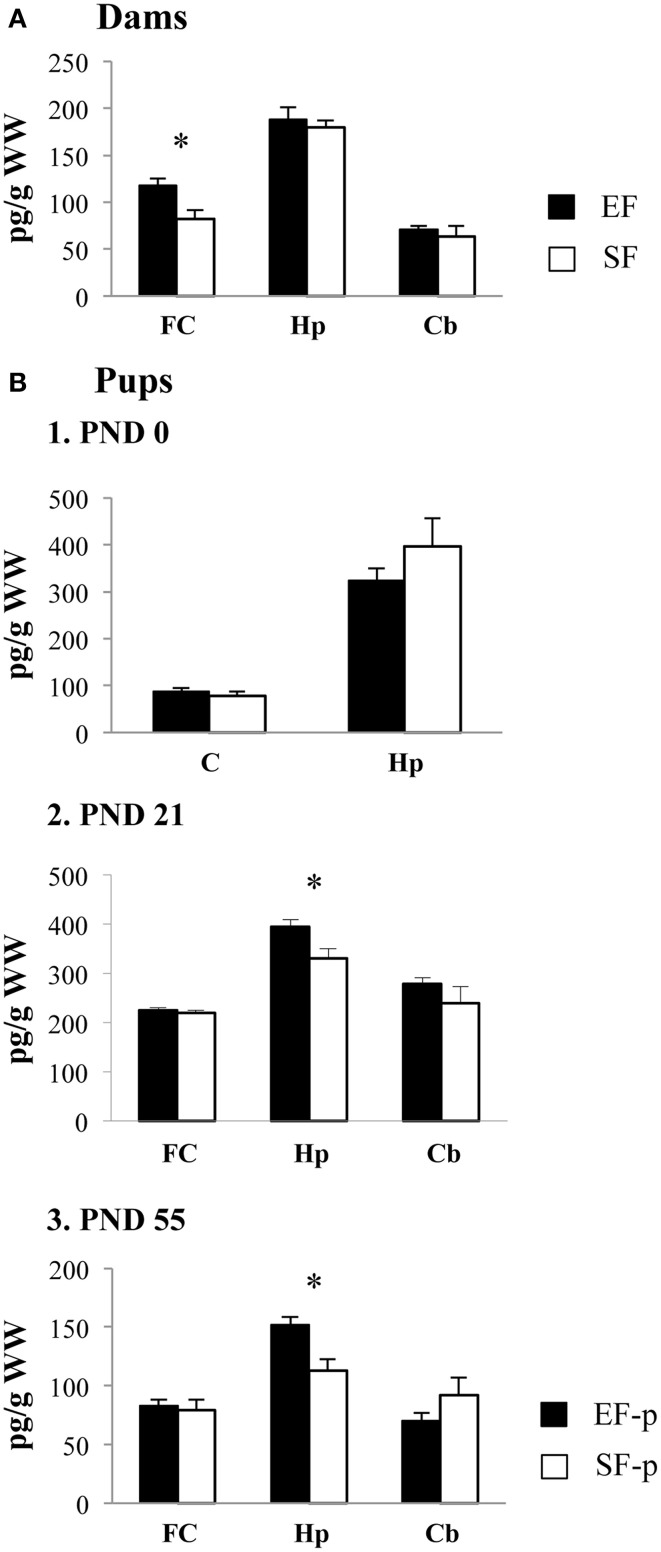
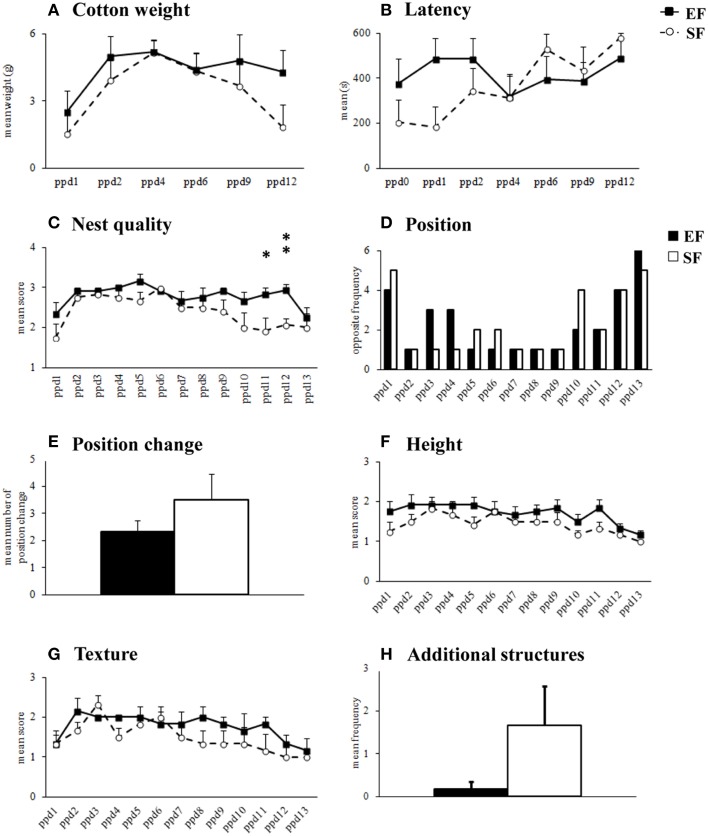
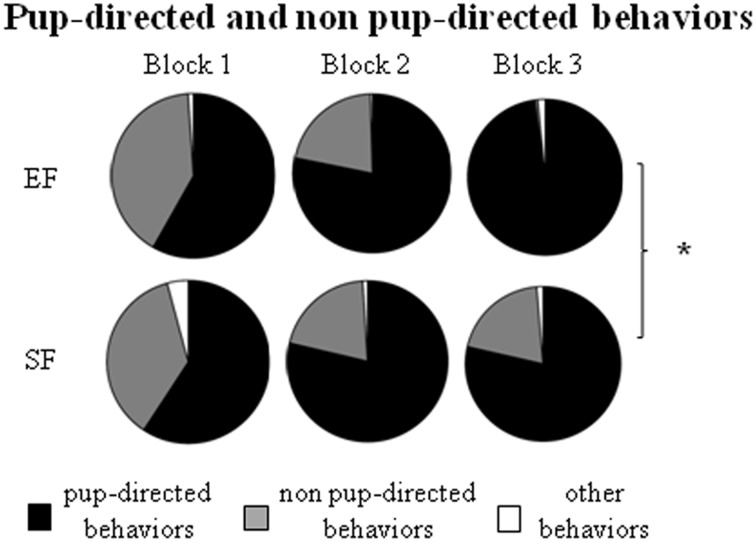
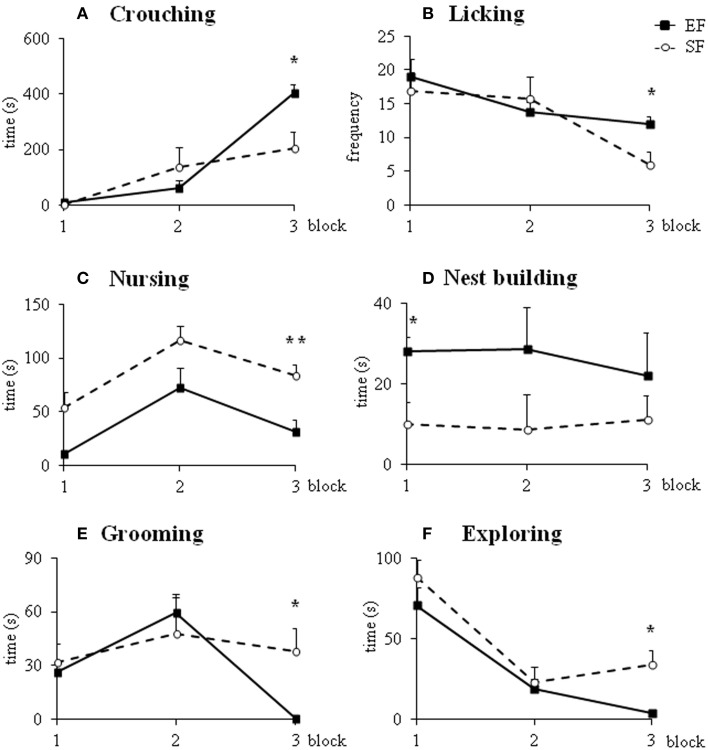
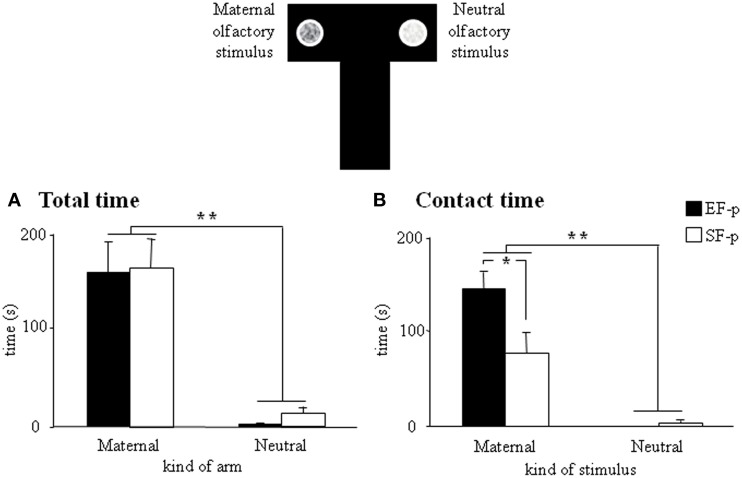
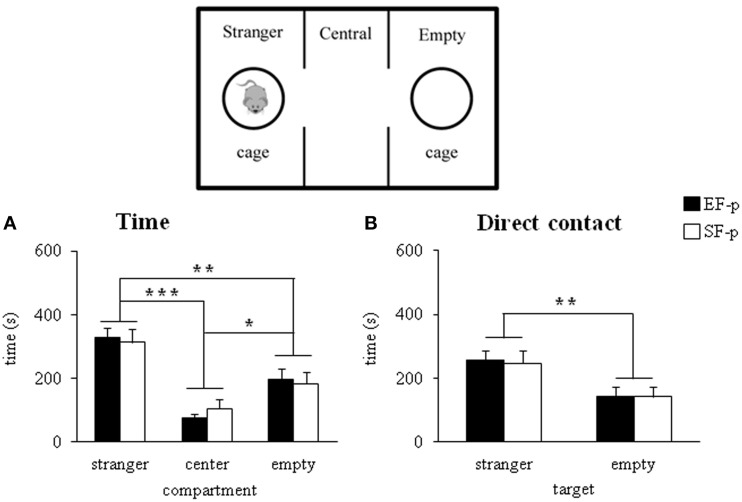
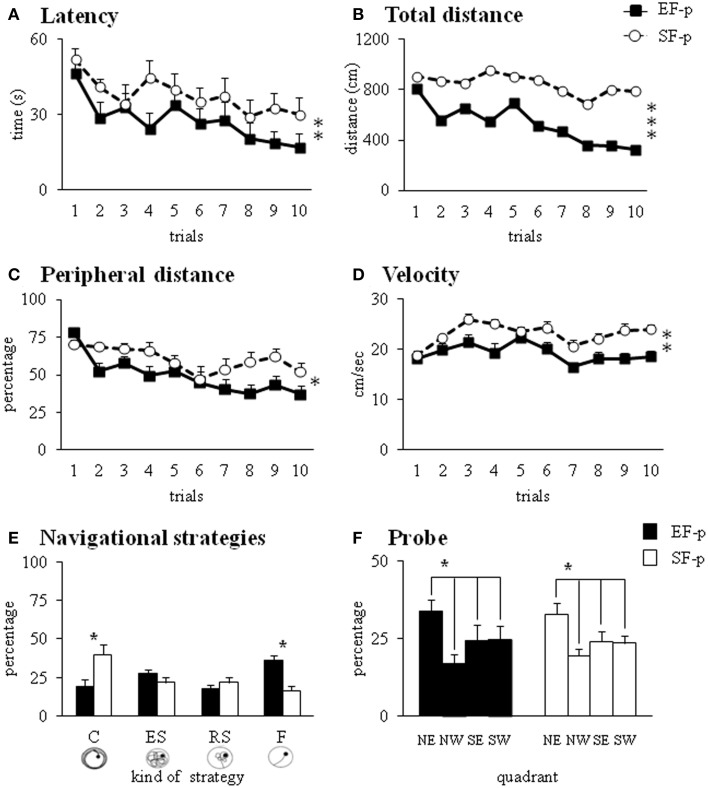
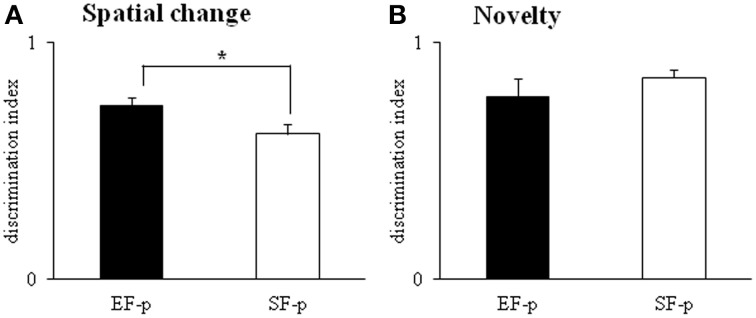
Environmental enrichment (EE) is a widely used paradigm for investigating the influence of complex stimulations on brain and behavior. Here we examined whether pre-reproductive exposure to EE of female rats may influence their maternal care and offspring cognitive performances. To this aim, from weaning to breeding age enriched females (EF) were reared in enriched environments. Females reared in standard conditions were used as controls. At 2.5 months of age all females were mated and reared in standard conditions with their offspring. Maternal care behaviors and nesting activity were assessed in lactating dams. Their male pups were also behaviorally evaluated at different post-natal days (pnd). Brain BDNF, reelin and adult hippocampal neurogenesis levels were measured as biochemical correlates of neuroplasticity. EF showed more complex maternal care than controls due to their higher levels of licking, crouching and nest building activities. Moreover, their offspring showed higher discriminative (maternal odor preference T-maze, pnd 10) and spatial (Morris Water Maze, pnd 45; Open Field with objects, pnd 55) performances, with no differences in social abilities (Sociability test, pnd 35), in comparison to controls. BDNF levels were increased in EF frontal cortex at pups' weaning and in their offspring hippocampus at pnd 21 and 55. No differences in offspring reelin and adult hippocampal neurogenesis levels were found. In conclusion, our study indicates that pre-reproductive maternal enrichment positively influences female rats' maternal care and cognitive development of their offspring, demonstrating thus a transgenerational transmission of EE benefits linked to enhanced BDNF-induced neuroplasticity.
环境富集(EE)是一种广泛用于研究复杂刺激对大脑和行为影响的范式。在此,我们研究了雌性大鼠在生殖前暴露于环境富集是否会影响其母性行为和后代的认知表现。为此,从断奶到繁殖年龄,将处于富集环境中的雌性大鼠(EF)饲养在丰富的环境中。在标准条件下饲养的雌性大鼠用作对照。在2.5月龄时,所有雌性大鼠均进行交配,并与它们的后代一起在标准条件下饲养。在哺乳期母鼠中评估母性行为和筑巢活动。还在不同的出生后天数(pnd)对它们的雄性幼崽进行行为评估。测量脑源性神经营养因子(BDNF)、Reelin和成年海马神经发生水平,作为神经可塑性的生化相关指标。由于EF有更高水平的舔舐、蹲伏和筑巢活动,它们表现出比对照组更复杂的母性行为。此外,与对照组相比,它们的后代在辨别能力(母性气味偏好T迷宫,pnd 10)和空间能力(莫里斯水迷宫,pnd 45;有物体的旷场实验,pnd 55)方面表现更高,而社交能力(社交性测试,pnd 35)没有差异。在幼崽断奶时,EF额叶皮质中的BDNF水平升高,在pnd 21和55时,其后代海马中的BDNF水平也升高。未发现后代Reelin和成年海马神经发生水平存在差异。总之,我们的研究表明,生殖前母体富集对雌性大鼠的母性行为和后代的认知发展有积极影响,从而证明了与增强的BDNF诱导的神经可塑性相关的环境富集益处的代际传递。