• 文献检索
  • 文档翻译
  • 深度研究
  • 学术资讯
  • Suppr Zotero 插件Zotero 插件
  • 邀请有礼
  • 套餐&价格
  • 历史记录
应用&插件
Suppr Zotero 插件Zotero 插件浏览器插件Mac 客户端Windows 客户端微信小程序
定价
高级版会员购买积分包购买API积分包
服务
文献检索文档翻译深度研究API 文档MCP 服务
关于我们
关于 Suppr公司介绍联系我们用户协议隐私条款
关注我们

Suppr 超能文献

核心技术专利:CN118964589B侵权必究
粤ICP备2023148730 号-1Suppr @ 2026

文献检索

告别复杂PubMed语法,用中文像聊天一样搜索,搜遍4000万医学文献。AI智能推荐,让科研检索更轻松。

立即免费搜索

文件翻译

保留排版,准确专业,支持PDF/Word/PPT等文件格式,支持 12+语言互译。

免费翻译文档

深度研究

AI帮你快速写综述,25分钟生成高质量综述,智能提取关键信息,辅助科研写作。

立即免费体验

丙型肝炎病毒感染患者单核细胞和粒细胞来源的髓系抑制细胞亚群分析及其临床意义。

Analysis of monocytic and granulocytic myeloid-derived suppressor cells subsets in patients with hepatitis C virus infection and their clinical significance.

作者信息

Ning Gang, She Lanhui, Lu Lirong, Liu Ying, Zeng Yingfu, Yan Ying, Lin Chaoshuang

机构信息

Department of Infectious Diseases, The Third Affiliated Hospital of Sun Yat-Sen University, Guangzhou 510630, China.

Intranet of Guangzhou Woman and Children's Medical Center, Guangzhou 510630, China.

出版信息

Biomed Res Int. 2015;2015:385378. doi: 10.1155/2015/385378. Epub 2015 Mar 1.

DOI:10.1155/2015/385378
PMID:25815313
原文链接:https://pmc.ncbi.nlm.nih.gov/articles/PMC4359884/
Abstract

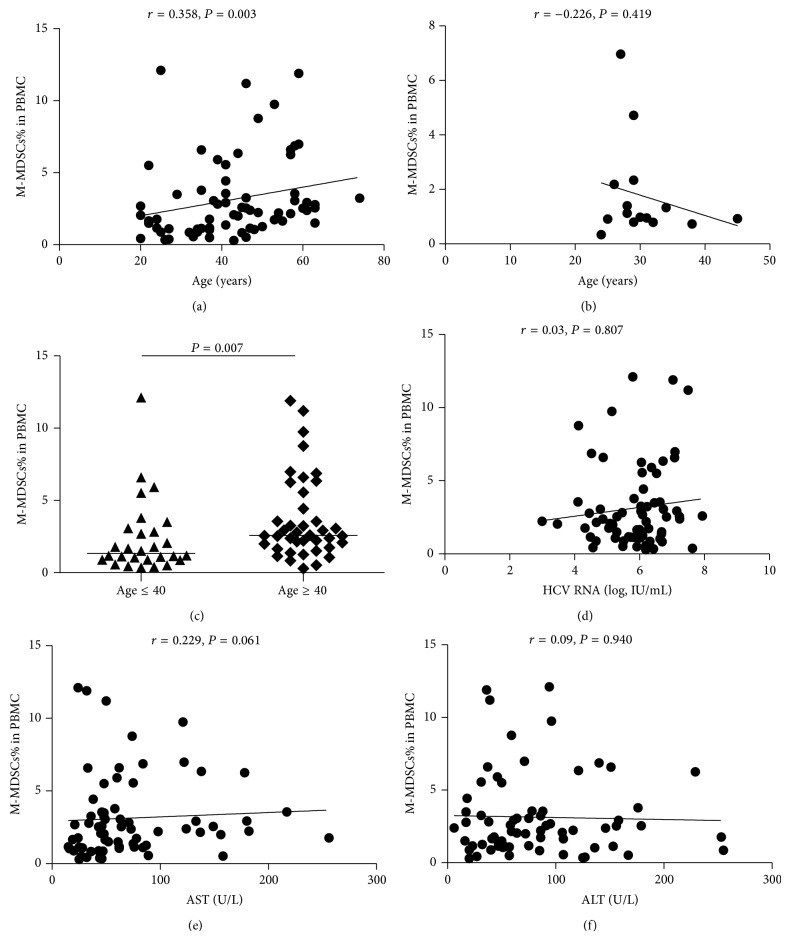
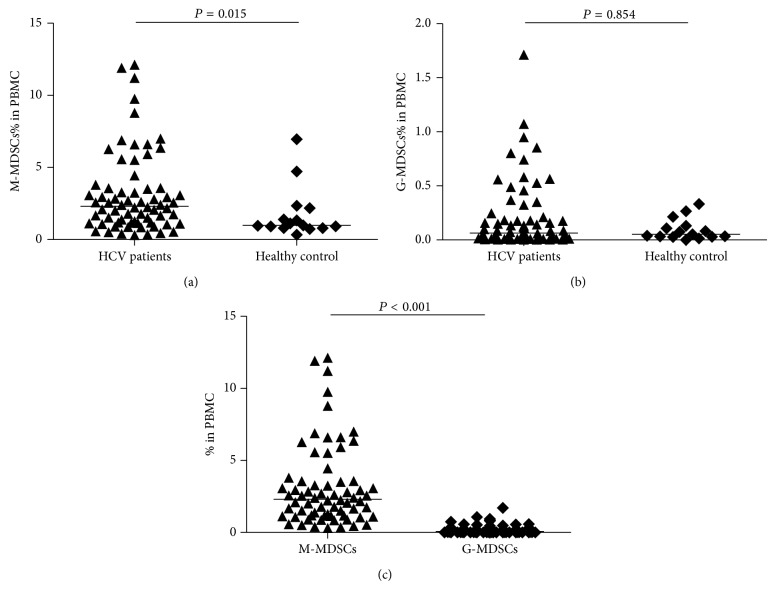
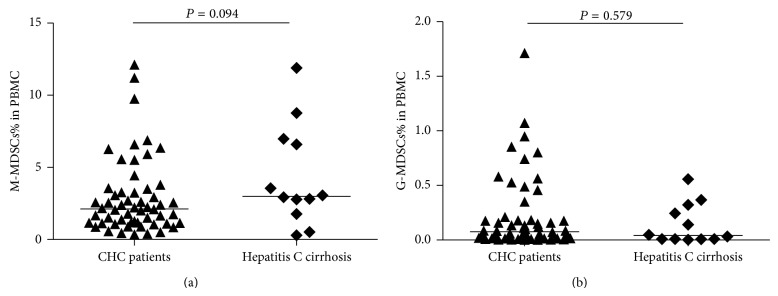
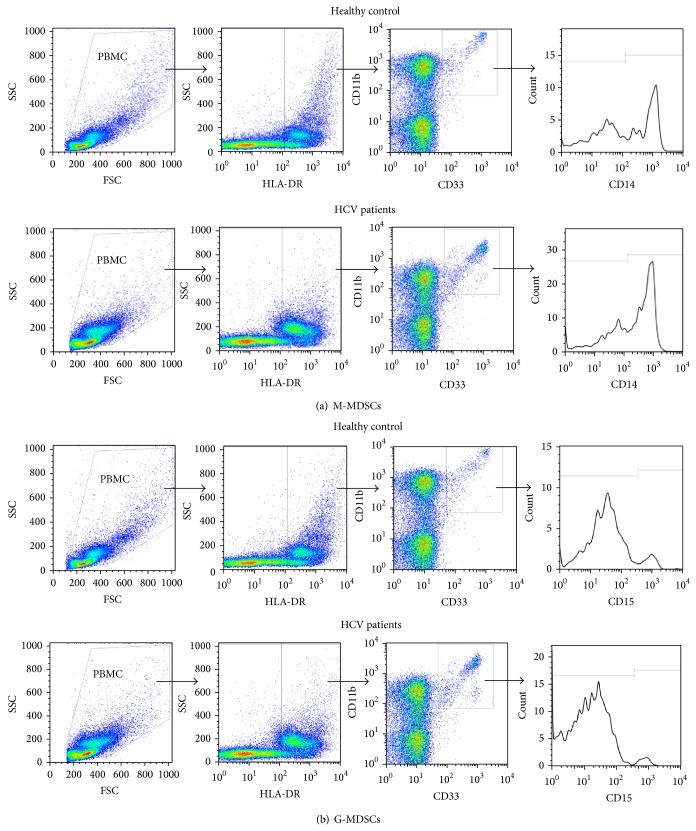
Myeloid-derived suppressor cells (MDSCs) have been shown to inhibit T-cell responses in many diseases, but, in hepatitis C virus (HCV) infected patients, MDSCs are still poorly studied. In this assay, we investigated the phenotype and frequency of two new populations of MDSCs denoted as monocytic and granulocytic MDSCs (M-MDSCs and G-MDSCs) in HCV infected patients and analyzed their clinical significance in these patients respectively. We found that the frequency of CD14(+)HLA-DR(-/low) cells (M-MDSCs) from HCV infected patients (mean ± SE, 3.134% ± 0.340%) was significantly increased when compared to healthy controls (mean ± SE, 1.764% ± 0.461%) (Z = -2.438, P = 0.015), while there was no statistical difference between the frequency of HLA-DR(-/low)CD33(+)CD11b(+)CD15(+) (G-MDSCs) of HCV infected patients and healthy donors (0.201% ± 0.038% versus 0.096% ± 0.026%, P > 0.05), which suggested that HCV infection could cause the proliferation of M-MDSCs instead of G-MDSCs. Besides, we found that the frequency of M-MDSCs in HCV infected patients had certain relevance with age (r = 0.358, P = 0.003); patients older than 40 years old group (mean ± SE, 3.673% ± 0.456%) had a significantly higher frequency of M-MDSCs than that of age less than 40 years old group (mean ± SE, 2.363% ± 0.482%) (Z = -2.685, P = 0.007). The frequency of M-MDSCs, however, had no correlation with HCV RNA loads, aspartate aminotransferase (AST), alanine aminotransferase (ALT), and the level of liver inflammation degree.

摘要

髓系来源的抑制细胞(MDSCs)已被证明在许多疾病中会抑制T细胞反应,但在丙型肝炎病毒(HCV)感染患者中,对MDSCs的研究仍很少。在本试验中,我们调查了HCV感染患者中两种新的MDSCs群体,即单核细胞样和粒细胞样MDSCs(M-MDSCs和G-MDSCs)的表型和频率,并分别分析了它们在这些患者中的临床意义。我们发现,与健康对照(均值±标准误,1.764%±0.461%)相比,HCV感染患者中CD14(+)HLA-DR(-/低)细胞(M-MDSCs)的频率显著增加(均值±标准误,3.134%±0.340%)(Z=-2.438,P=0.015),而HCV感染患者与健康供体中HLA-DR(-/低)CD33(+)CDllb(+)CD15(+)(G-MDSCs)的频率无统计学差异(0.201%±0.038%对0.096%±0.026%,P>0.05),这表明HCV感染可导致M-MDSCs而非G-MDSCs增殖。此外,我们发现HCV感染患者中M-MDSCs的频率与年龄有一定相关性(r=0.358,P=0.003);年龄大于40岁组(均值±标准误,3.673%±0.456%)的M-MDSCs频率显著高于年龄小于40岁组(均值±标准误,2.363%±0.482%)(Z=-2.685,P=0.007)。然而,M-MDSCs的频率与HCV RNA载量、天冬氨酸转氨酶(AST)、丙氨酸转氨酶(ALT)及肝脏炎症程度均无相关性。
https://cdn.ncbi.nlm.nih.gov/pmc/blobs/ea35/4359884/69947b44dd27/BMRI2015-385378.004.jpg
https://cdn.ncbi.nlm.nih.gov/pmc/blobs/ea35/4359884/d7c253bcd604/BMRI2015-385378.001.jpg
https://cdn.ncbi.nlm.nih.gov/pmc/blobs/ea35/4359884/7ab3eb9edb3c/BMRI2015-385378.002.jpg
https://cdn.ncbi.nlm.nih.gov/pmc/blobs/ea35/4359884/391e99468c18/BMRI2015-385378.003.jpg
https://cdn.ncbi.nlm.nih.gov/pmc/blobs/ea35/4359884/69947b44dd27/BMRI2015-385378.004.jpg
https://cdn.ncbi.nlm.nih.gov/pmc/blobs/ea35/4359884/d7c253bcd604/BMRI2015-385378.001.jpg
https://cdn.ncbi.nlm.nih.gov/pmc/blobs/ea35/4359884/7ab3eb9edb3c/BMRI2015-385378.002.jpg
https://cdn.ncbi.nlm.nih.gov/pmc/blobs/ea35/4359884/391e99468c18/BMRI2015-385378.003.jpg
https://cdn.ncbi.nlm.nih.gov/pmc/blobs/ea35/4359884/69947b44dd27/BMRI2015-385378.004.jpg

相似文献

1
Analysis of monocytic and granulocytic myeloid-derived suppressor cells subsets in patients with hepatitis C virus infection and their clinical significance.丙型肝炎病毒感染患者单核细胞和粒细胞来源的髓系抑制细胞亚群分析及其临床意义。
Biomed Res Int. 2015;2015:385378. doi: 10.1155/2015/385378. Epub 2015 Mar 1.
2
Frequency and Implications of myeloid-derived suppressor cells and lymphocyte subsets in Egyptian patients with hepatitis C virus-related hepatocellular carcinoma.埃及丙型肝炎病毒相关肝细胞癌患者骨髓源性抑制细胞和淋巴细胞亚群的频率及其意义。
J Med Virol. 2019 Jul;91(7):1319-1328. doi: 10.1002/jmv.25428. Epub 2019 Feb 25.
3
Hepatitis C virus-induced myeloid-derived suppressor cells regulate T-cell differentiation and function via the signal transducer and activator of transcription 3 pathway.丙型肝炎病毒诱导的髓源性抑制细胞通过信号转导和转录激活因子3途径调节T细胞分化和功能。
Immunology. 2016 Aug;148(4):377-86. doi: 10.1111/imm.12616. Epub 2016 Jun 22.
4
A circulating subpopulation of monocytic myeloid-derived suppressor cells as an independent prognostic/predictive factor in untreated non-small lung cancer patients.循环的单核细胞来源的髓系抑制细胞亚群作为未经治疗的非小细胞肺癌患者的独立预后/预测因素。
J Immunol Res. 2014;2014:659294. doi: 10.1155/2014/659294. Epub 2014 Nov 11.
5
IFN-α-based treatment of patients with chronic HCV show increased levels of cells with myeloid-derived suppressor cell phenotype and of IDO and NOS.基于干扰素-α治疗慢性丙型肝炎病毒感染患者显示,具有髓源性抑制细胞表型的细胞以及吲哚胺2,3-双加氧酶(IDO)和一氧化氮合酶(NOS)的水平升高。
Immunopharmacol Immunotoxicol. 2017 Aug;39(4):188-198. doi: 10.1080/08923973.2017.1320670. Epub 2017 May 4.
6
Polarization of granulocytic myeloid-derived suppressor cells by hepatitis C core protein is mediated via IL-10/STAT3 signalling.丙型肝炎核心蛋白通过 IL-10/STAT3 信号通路诱导粒系髓源性抑制细胞的极化。
J Viral Hepat. 2019 Feb;26(2):246-257. doi: 10.1111/jvh.13024. Epub 2018 Nov 19.
7
MYELOID-DERIVED SUPPRESSOR CELLS TWO YEARS AFTER HEPATITIS C VIRUS ERADICATION USING DIRECTLY ACTING ANTIVIRALS.直接作用抗病毒药物清除丙型肝炎病毒 2 年后的髓源性抑制细胞。
Arq Gastroenterol. 2024 Jul 19;61:e24004. doi: 10.1590/S0004-2803.24612024-004. eCollection 2024.
8
Characterization of monocytic and granulocytic subsets of myeloid-derived suppressor cells in blood donors with occult hepatitis B virus infection.隐匿性乙型肝炎病毒感染献血者中髓源抑制性细胞的单核细胞和粒细胞亚群的特征。
J Med Virol. 2019 Feb;91(2):330-335. doi: 10.1002/jmv.25242. Epub 2018 Oct 31.
9
Clinical Significance of Myeloid-Derived Suppressor Cells in Human Immunodeficiency Virus-1/ Hepatitis C Virus-coinfected Patients.髓源性抑制细胞在人类免疫缺陷病毒1型/丙型肝炎病毒合并感染患者中的临床意义
Scand J Immunol. 2016 Jun;83(6):438-44. doi: 10.1111/sji.12429.
10
Hepatitis C Virus Induces MDSCs-Like Monocytes through TLR2/PI3K/AKT/STAT3 Signaling.丙型肝炎病毒通过TLR2/PI3K/AKT/STAT3信号通路诱导产生类似髓源性抑制细胞的单核细胞。
PLoS One. 2017 Jan 23;12(1):e0170516. doi: 10.1371/journal.pone.0170516. eCollection 2017.

引用本文的文献

1
The causal relationship between immune cells and diabetic retinopathy: a Mendelian randomization study.免疫细胞与糖尿病视网膜病变的因果关系:一项孟德尔随机化研究。
Front Immunol. 2024 Sep 2;15:1381002. doi: 10.3389/fimmu.2024.1381002. eCollection 2024.
2
Deciphering the roles of myeloid derived suppressor cells in viral oncogenesis.解析髓系来源的抑制细胞在病毒致癌中的作用。
Front Immunol. 2023 Mar 23;14:1161848. doi: 10.3389/fimmu.2023.1161848. eCollection 2023.
3
Neutrophil Functional Heterogeneity and Implications for Viral Infections and Treatments.

本文引用的文献

1
Expansion of myeloid-derived suppressor cells from peripheral blood decreases after 4-week antiviral treatment in patients with chronic hepatitis C.慢性丙型肝炎患者接受4周抗病毒治疗后,外周血中髓源性抑制细胞的扩增减少。
Int J Clin Exp Med. 2014 Apr 15;7(4):998-1004. eCollection 2014.
2
Expression and clinical significance of myeloid derived suppressor cells in chronic hepatitis B patients.慢性乙型肝炎患者骨髓来源抑制细胞的表达及临床意义
Asian Pac J Cancer Prev. 2014;15(10):4367-72. doi: 10.7314/apjcp.2014.15.10.4367.
3
γδT17 cells promote the accumulation and expansion of myeloid-derived suppressor cells in human colorectal cancer.
中性粒细胞功能异质性及其对病毒感染和治疗的影响。
Cells. 2022 Apr 13;11(8):1322. doi: 10.3390/cells11081322.
4
Elevated frequencies of CD14HLA-DR MDSCs in COVID-19 patients.新冠病毒肺炎患者中CD14+HLA-DR髓系来源抑制细胞频率升高。
Aging (Albany NY). 2021 Feb 26;13(5):6236-6246. doi: 10.18632/aging.202571.
5
Immunological Mechanisms for Hepatocellular Carcinoma Risk after Direct-Acting Antiviral Treatment of Hepatitis C Virus Infection.丙型肝炎病毒感染直接抗病毒治疗后肝细胞癌风险的免疫机制
J Clin Med. 2021 Jan 10;10(2):221. doi: 10.3390/jcm10020221.
6
In Chronic Hepatitis C Infection, Myeloid-Derived Suppressor Cell Accumulation and T Cell Dysfunctions Revert Partially and Late After Successful Direct-Acting Antiviral Treatment.在慢性丙型肝炎感染中,髓源性抑制细胞的积累和 T 细胞功能障碍在成功的直接抗病毒治疗后部分和晚期恢复。
Front Cell Infect Microbiol. 2019 Jun 14;9:190. doi: 10.3389/fcimb.2019.00190. eCollection 2019.
7
CD33 HLA-DR Myeloid-Derived Suppressor Cells Are Increased in Frequency in the Peripheral Blood of Type1 Diabetes Patients with Predominance of CD14 Subset.在以CD14亚群为主的1型糖尿病患者外周血中,CD33 HLA-DR髓源性抑制细胞的频率增加。
Open Access Maced J Med Sci. 2018 Feb 9;6(2):303-309. doi: 10.3889/oamjms.2018.080. eCollection 2018 Feb 15.
8
Myeloid-derived suppressor cells in ovarian cancer: friend or foe?卵巢癌中的髓源性抑制细胞:是友还是敌?
Cent Eur J Immunol. 2017;42(4):383-389. doi: 10.5114/ceji.2017.72823. Epub 2017 Dec 30.
9
Monocytic Myeloid-Derived Suppressor Cells in Chronic Infections.慢性感染中的单核细胞来源的髓系抑制细胞
Front Immunol. 2018 Jan 4;8:1895. doi: 10.3389/fimmu.2017.01895. eCollection 2017.
10
The regulation of pre-metastatic niche formation by neutrophils.中性粒细胞对转移前生态位形成的调控。
Oncotarget. 2017 Nov 30;8(67):112132-112144. doi: 10.18632/oncotarget.22792. eCollection 2017 Dec 19.
γδT17 细胞促进人结直肠癌中髓系来源抑制细胞的积累和扩增。
Immunity. 2014 May 15;40(5):785-800. doi: 10.1016/j.immuni.2014.03.013. Epub 2014 May 8.
4
Circulating hematopoietic stem and progenitor cells are myeloid-biased in cancer patients.循环造血干/祖细胞在癌症患者中偏向髓系。
Proc Natl Acad Sci U S A. 2014 Mar 18;111(11):4221-6. doi: 10.1073/pnas.1320753111. Epub 2014 Mar 3.
5
Myeloid-derived suppressor cells are associated with viral persistence and downregulation of TCR ζ chain expression on CD8(+) T cells in chronic hepatitis C patients.髓源性抑制细胞与慢性丙型肝炎患者病毒持续存在和 TCR ζ 链表达下调有关。
Mol Cells. 2014 Jan;37(1):66-73. doi: 10.14348/molcells.2014.2282. Epub 2014 Jan 27.
6
Immune suppression by neutrophils and granulocytic myeloid-derived suppressor cells: similarities and differences.中性粒细胞和粒细胞髓系来源的抑制细胞的免疫抑制作用:相似性和差异性。
Cell Mol Life Sci. 2013 Oct;70(20):3813-27. doi: 10.1007/s00018-013-1286-4. Epub 2013 Feb 20.
7
Clinical significance and functional studies of myeloid-derived suppressor cells in chronic hepatitis C patients.慢性丙型肝炎患者骨髓来源抑制性细胞的临床意义及功能研究。
J Clin Immunol. 2013 May;33(4):798-808. doi: 10.1007/s10875-012-9861-2. Epub 2013 Jan 26.
8
Myeloid-derived suppressor cell measurements in fresh and cryopreserved blood samples.新鲜和冷冻血液样本中髓源性抑制细胞的测量。
J Immunol Methods. 2012 Jul 31;381(1-2):14-22. doi: 10.1016/j.jim.2012.04.004. Epub 2012 Apr 13.
9
Coordinated regulation of myeloid cells by tumours.肿瘤对髓系细胞的协调调控。
Nat Rev Immunol. 2012 Mar 22;12(4):253-68. doi: 10.1038/nri3175.
10
Broadly directed virus-specific CD4+ T cell responses are primed during acute hepatitis C infection, but rapidly disappear from human blood with viral persistence.急性丙型肝炎感染期间,广泛靶向病毒的特异性 CD4+ T 细胞反应被激活,但随着病毒持续存在,它们迅速从人血液中消失。
J Exp Med. 2012 Jan 16;209(1):61-75. doi: 10.1084/jem.20100388. Epub 2012 Jan 2.