Li Xiang Hong, Ha Cam T, Fu Dadin, Landauer Michael R, Ghosh Sanchita P, Xiao Mang
Radiation Countermeasures Program, Armed Forces Radiobiology Research Institute, Uniformed Services University of the Health Sciences, Bethesda, MD, United States of America.
PLoS One. 2015 Mar 27;10(3):e0122258. doi: 10.1371/journal.pone.0122258. eCollection 2015.
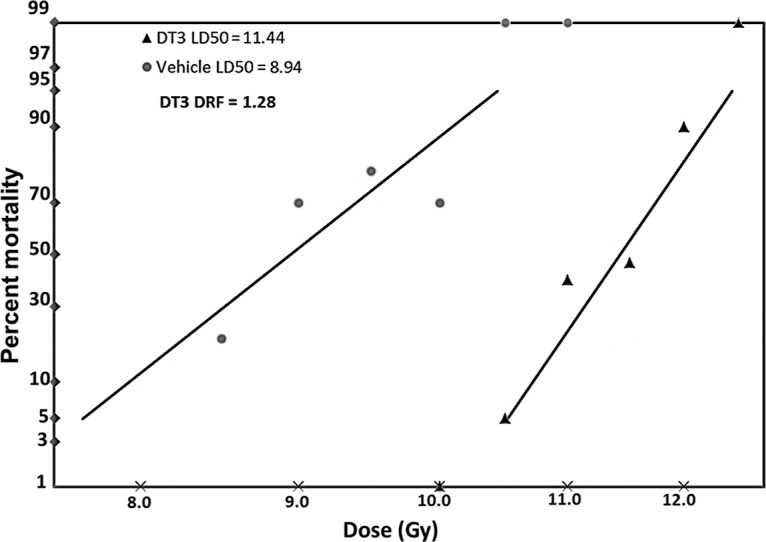
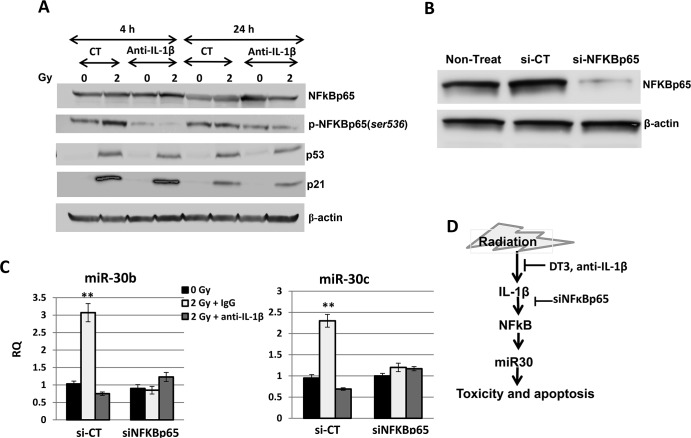
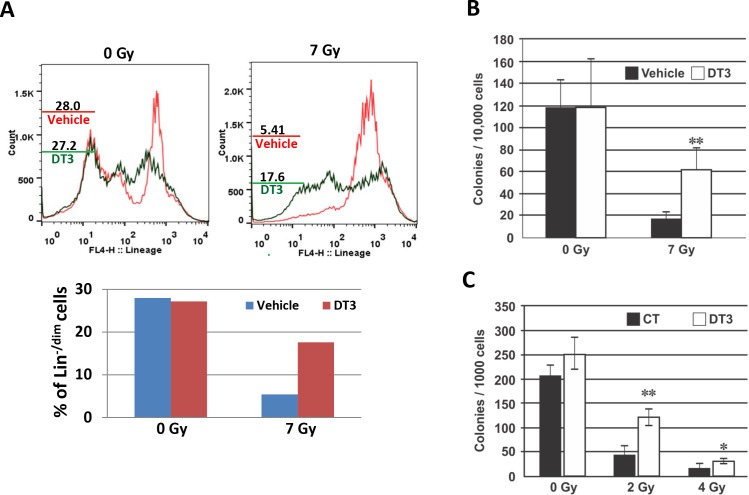
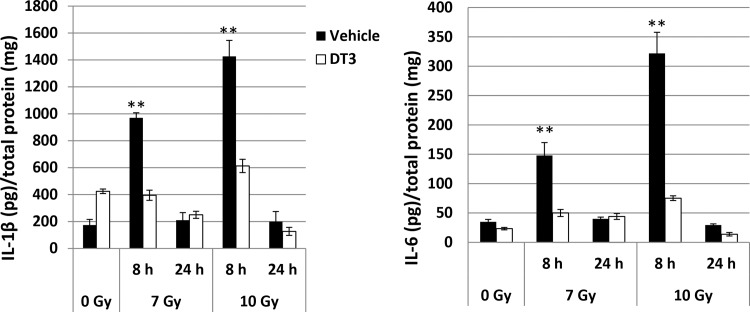
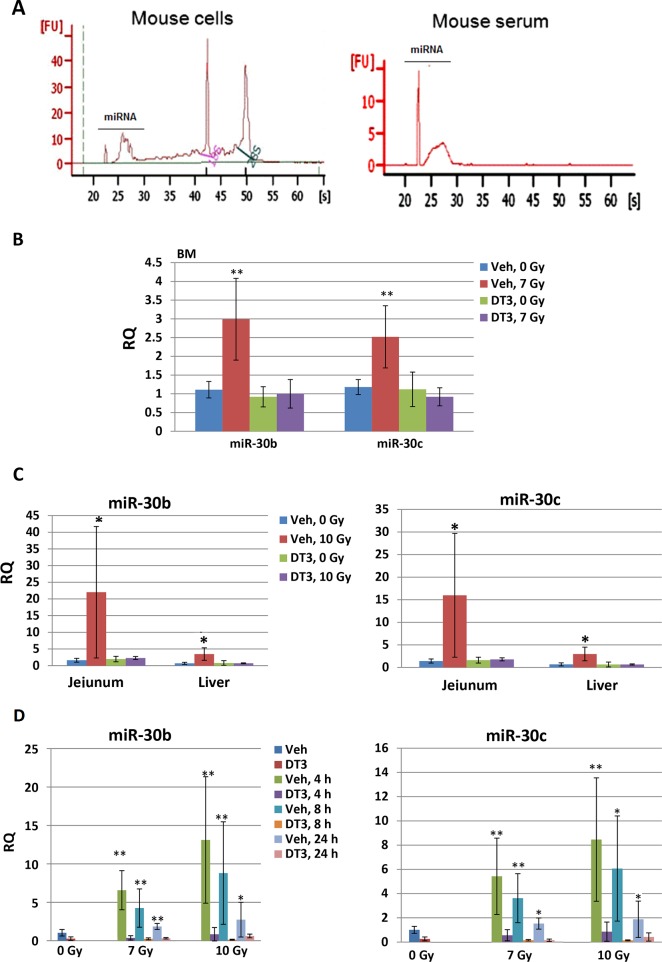
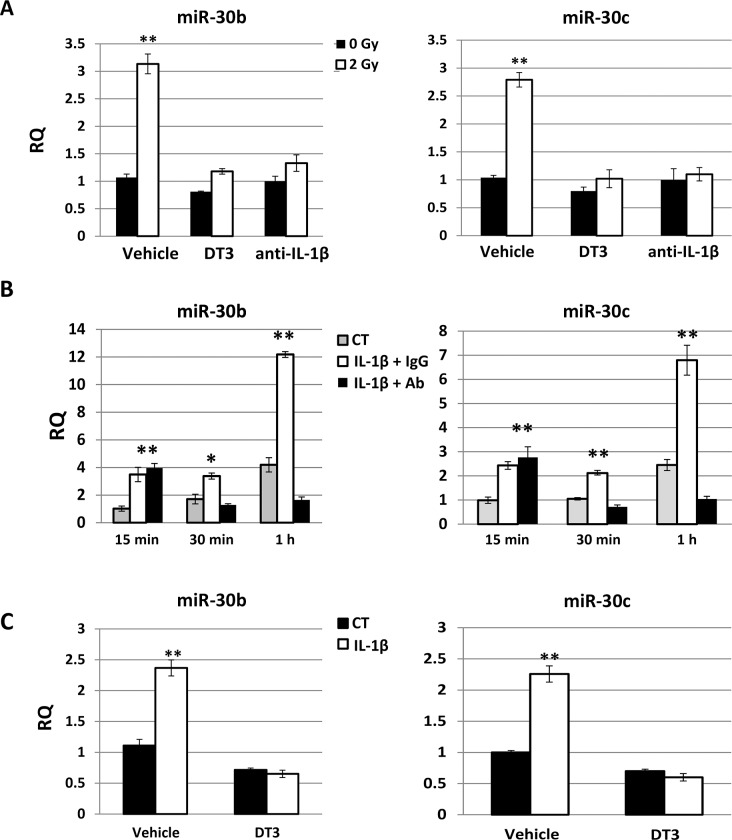
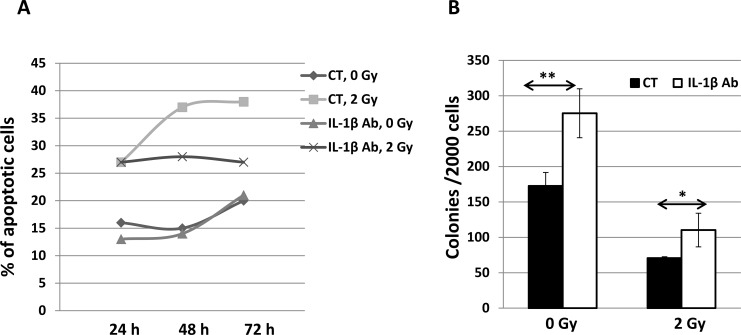
We reported that microRNA-30c (miR-30c) plays a key role in radiation-induced human cell damage through an apoptotic pathway. Herein we further evaluated radiation-induced miR-30 expression and mechanisms of delta-tocotrienol (DT3), a radiation countermeasure candidate, for regulating miR-30 in a mouse model and human hematopoietic CD34+ cells. CD2F1 mice were exposed to 0 (control) or 7-12.5 Gy total-body gamma-radiation, and CD34+ cells were irradiated with 0, 2 or 4 Gy of radiation. Single doses of DT3 (75 mg/kg, subcutaneous injection for mice or 2 μM for CD34+ cell culture) were administrated 24 h before irradiation and animal survival was monitored for 30 days. Mouse bone marrow (BM), jejunum, kidney, liver and serum as well as CD34+ cells were collected at 1, 4, 8, 24, 48 or 72 h after irradiation to determine apoptotic markers, pro-inflammatory cytokines interleukin (IL)-1β and IL-6, miR-30, and stress response protein expression. Our results showed that radiation-induced IL-1β release and cell damage are pathological states that lead to an early expression and secretion of miR-30b and miR-30c in mouse tissues and serum and in human CD34+ cells. DT3 suppressed IL-1β and miR-30 expression, protected against radiation-induced apoptosis in mouse and human cells, and increased survival of irradiated mice. Furthermore, an anti-IL-1β antibody downregulated radiation-induced NFκBp65 phosphorylation, inhibited miR-30 expression and protected CD34+ cells from radiation exposure. Knockdown of NFκBp65 by small interfering RNA (siRNA) significantly suppressed radiation-induced miR-30 expression in CD34+ cells. Our data suggest that DT3 protects human and mouse cells from radiation damage may through suppression of IL-1β-induced NFκB/miR-30 signaling.
我们曾报道,微小RNA-30c(miR-30c)通过凋亡途径在辐射诱导的人类细胞损伤中起关键作用。在此,我们进一步评估了辐射诱导的miR-30表达以及δ-生育三烯酚(DT3,一种辐射防护候选物)在小鼠模型和人类造血CD34+细胞中调控miR-30的机制。将CD2F1小鼠暴露于0(对照)或7 - 12.5 Gy全身γ辐射,并用0、2或4 Gy辐射照射CD34+细胞。在照射前24小时给予单剂量DT3(75 mg/kg,小鼠皮下注射或2 μM用于CD34+细胞培养),并监测动物存活30天。在照射后1、4、8、24、48或72小时收集小鼠骨髓(BM)、空肠、肾脏、肝脏和血清以及CD34+细胞,以测定凋亡标志物、促炎细胞因子白细胞介素(IL)-1β和IL-6、miR-30以及应激反应蛋白表达。我们的结果表明,辐射诱导的IL-1β释放和细胞损伤是导致小鼠组织和血清以及人类CD34+细胞中miR-30b和miR-30c早期表达和分泌的病理状态。DT3抑制IL-1β和miR-30表达,保护小鼠和人类细胞免受辐射诱导的凋亡,并提高受照射小鼠的存活率。此外,抗IL-1β抗体下调辐射诱导的NFκBp65磷酸化,抑制miR-30表达,并保护CD34+细胞免受辐射暴露。通过小干扰RNA(siRNA)敲低NFκBp65可显著抑制CD34+细胞中辐射诱导的miR-30表达。我们的数据表明,DT3保护人类和小鼠细胞免受辐射损伤可能是通过抑制IL-