van den Brom René, Roest Hendrik-Jan, de Bruin Arnout, Dercksen Daan, Santman-Berends Inge, van der Hoek Wim, Dinkla Annemiek, Vellema Jelmer, Vellema Piet
Department of Small Ruminant Health, GD Animal Health, Deventer, The Netherlands.
Department of Bacteriology and TSE's, Central Veterinary Institute, part of Wageningen UR, Lelystad, The Netherlands.
PLoS One. 2015 Mar 27;10(3):e0121355. doi: 10.1371/journal.pone.0121355. eCollection 2015.
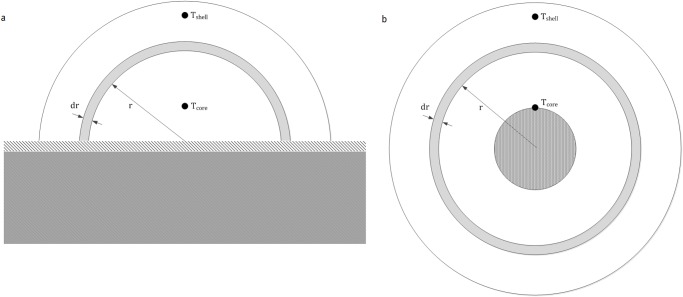
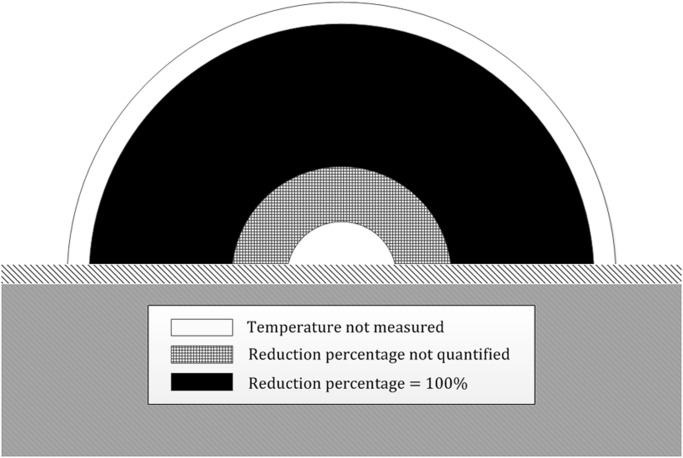
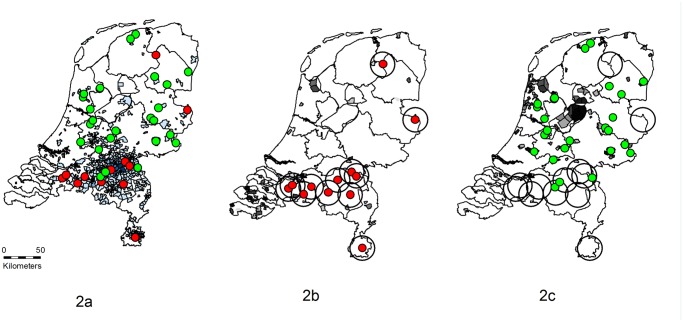
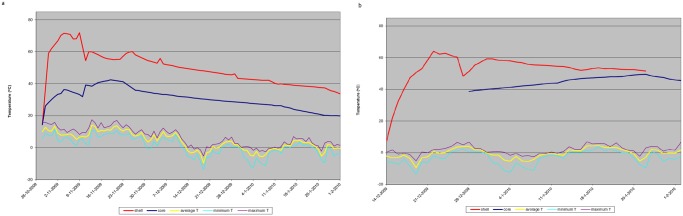
In 2007, Q fever started to become a major public health problem in the Netherlands, with small ruminants as most probable source. In order to reduce environmental contamination, control measures for manure were implemented because of the assumption that manure was highly contaminated with Coxiella burnetii. The aims of this study were 1) to clarify the role of C. burnetii contaminated manure from dairy goat farms in the transmission of C. burnetii to humans, 2) to assess the impact of manure storage on temperature profiles in dunghills, and 3) to calculate the decimal reduction time of the Nine Mile RSA 493 reference strain of C. burnetii under experimental conditions in different matrices. For these purposes, records on distribution of manure from case and control herds were mapped and a potential relation to incidences of human Q fever was investigated. Additionally, temperatures in two dunghills were measured and related to heat resistance of C. burnetii. Results of negative binomial regression showed no significant association between the incidence of human Q fever cases and the source of manure. Temperature measurements in the core and shell of dunghills on two farms were above 40°C for at least ten consecutive days which would result in a strong reduction of C. burnetii over time. Our findings indicate that there is no relationship between incidence of human Q fever and land applied manure from dairy goat farms with an abortion wave caused by C. burnetii. Temperature measurements in dunghills on two farms with C. burnetii shedding dairy goat herds further support the very limited role of goat manure as a transmission route during the Dutch human Q fever outbreak. It is very likely that the composting process within a dunghill will result in a clear reduction in the number of viable C. burnetii.
2007年,Q热开始在荷兰成为一个主要的公共卫生问题,小反刍动物被认为是最可能的传染源。为了减少环境污染,由于假定粪便被伯氏考克斯体高度污染,因此实施了粪便控制措施。本研究的目的是:1)阐明来自奶山羊场的被伯氏考克斯体污染的粪便在该病原体传播给人类过程中的作用;2)评估粪便储存对粪堆温度分布的影响;3)计算在不同基质的实验条件下,伯氏考克斯体九英里RSA 493参考菌株的十进制减少时间。为实现这些目的,绘制了病例和对照畜群粪便分布记录图,并研究了其与人类Q热发病率的潜在关系。此外,还测量了两个粪堆的温度,并将其与伯氏考克斯体的耐热性相关联。负二项回归结果显示,人类Q热病例的发病率与粪便来源之间无显著关联。两个农场粪堆核心和外层的温度连续至少十天高于40°C,这将导致伯氏考克斯体数量随时间大幅减少。我们的研究结果表明,人类Q热发病率与来自奶山羊场且因伯氏考克斯体导致流产潮的施用粪肥之间没有关系。对两个有伯氏考克斯体排出的奶山羊群所在农场的粪堆温度测量结果进一步支持了在荷兰人类Q热疫情期间,山羊粪便作为传播途径的作用非常有限这一观点。粪堆内的堆肥过程很可能会使存活的伯氏考克斯体数量明显减少。