Mueller Sarah N, Tian Shaomin, DeSimone Joseph M
#Department of Chemical and Biomolecular Engineering, North Carolina State University, Raleigh, North Carolina 27695, United States.
⊥Sloan-Kettering Institute for Cancer Research, Memorial Sloan-Kettering Cancer Center, New York, New York 10021, United States.
Mol Pharm. 2015 May 4;12(5):1356-65. doi: 10.1021/mp500589c. Epub 2015 Apr 8.
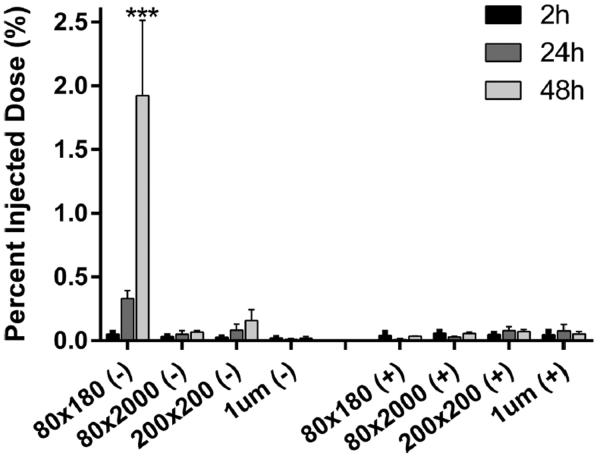
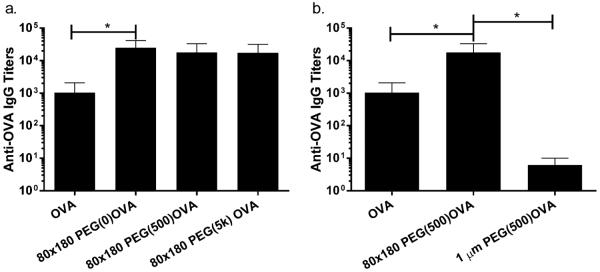
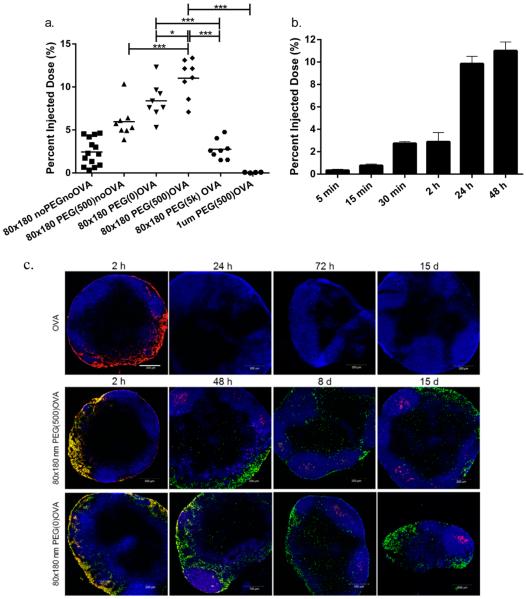
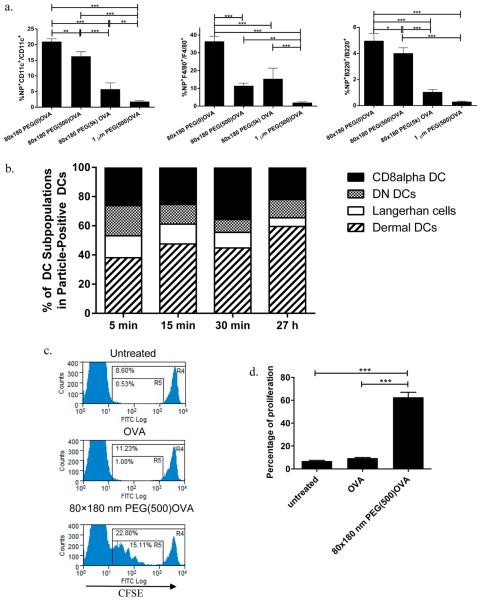
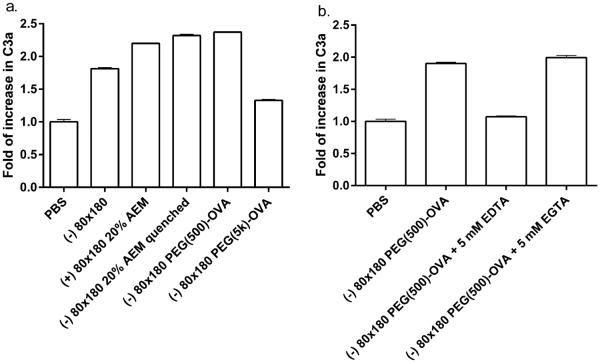
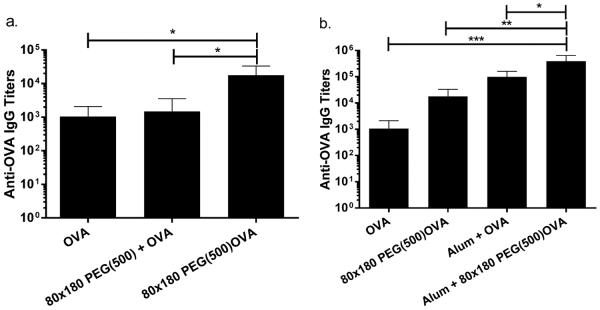
Nanoparticle delivery of subunit vaccines may increase vaccine efficacy, leading to a wide variety of safe and effective vaccines beyond those available through dosing inactivated or live, attenuated whole pathogens. Here we present a versatile vaccine delivery platform based on PRINT hydrogels made of biocompatible hydroxy-poly(ethylene glycol) (PEG) that is able to activate the complement system by the alternative pathway. These lymph node targeting nanoparticles (NPs) promote the immunogenicity of a model antigen, ovalbumin, showing comparable adjuvant effect to alum. We demonstrate that an antigen-specific humoral response is correlated with antigen delivery to the draining lymph nodes, in particular, B cell rich regions of the lymph nodes. 80 × 180 nm cylindrical NPs were able to sustain prolonged antigen presentation to antigen presenting cells (APCs) and elicit a stronger immune response than nondraining 1 × 1 μm NPs or rapidly clearing soluble antigen. The 80 × 180 nm NPs also show high levels of uptake by key APCs and efficiently stimulate CD4(+) helper T cell proliferation in vivo, further promoting antibody production. These features together produce a significant humoral immune response, superior to that produced by free antigen alone. The simplicity of the chemistries used in antigen conjugation to PRINT NPs confers versatility to this antigen delivery platform, allowing for potential application to many infectious diseases.
纳米颗粒递送亚单位疫苗可能会提高疫苗效力,从而产生多种安全有效的疫苗,这些疫苗超出了通过接种灭活或减毒全病原体所能获得的疫苗。在此,我们展示了一种基于由生物相容性羟基聚乙二醇(PEG)制成的PRINT水凝胶的通用疫苗递送平台,该平台能够通过替代途径激活补体系统。这些靶向淋巴结的纳米颗粒(NPs)可促进模型抗原卵清蛋白的免疫原性,显示出与明矾相当的佐剂效果。我们证明,抗原特异性体液反应与抗原递送至引流淋巴结,特别是淋巴结中富含B细胞的区域相关。80×180 nm的圆柱形纳米颗粒能够持续长时间向抗原呈递细胞(APC)呈递抗原,并引发比非引流的1×1μm纳米颗粒或快速清除的可溶性抗原更强的免疫反应。80×180 nm的纳米颗粒还显示出关键APC的高摄取水平,并在体内有效刺激CD4(+)辅助性T细胞增殖,进一步促进抗体产生。这些特性共同产生显著的体液免疫反应,优于单独使用游离抗原所产生的反应。抗原与PRINT纳米颗粒偶联所使用化学方法的简单性赋予了该抗原递送平台通用性,使其有可能应用于多种传染病。