Aboelenain Mansour, Kawahara Manabu, Balboula Ahmed Zaky, Montasser Abd El-Monem, Zaabel Samy Mowaed, Okuda Kiyoshi, Takahashi Masashi
Laboratory of Animal Breeding and Reproduction, Department of Animal Science, Graduate School of Agriculture, Hokkaido University, Hokkaido 060-8589, Japan.
J Reprod Dev. 2015;61(3):229-36. doi: 10.1262/jrd.2014-135. Epub 2015 Mar 28.
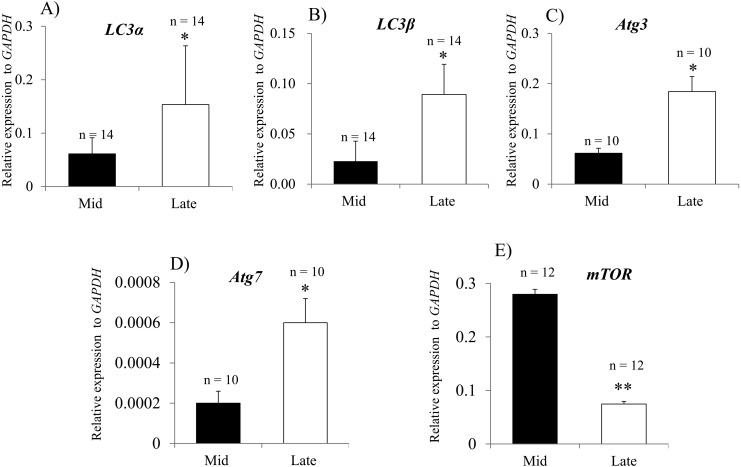
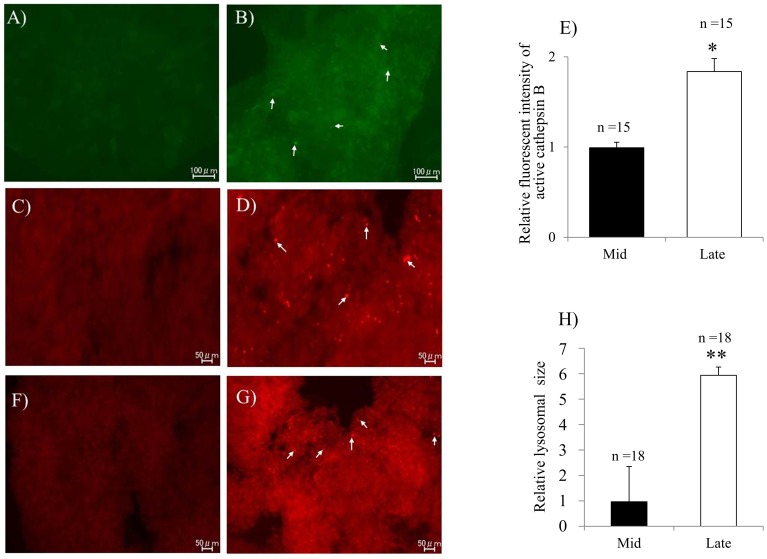
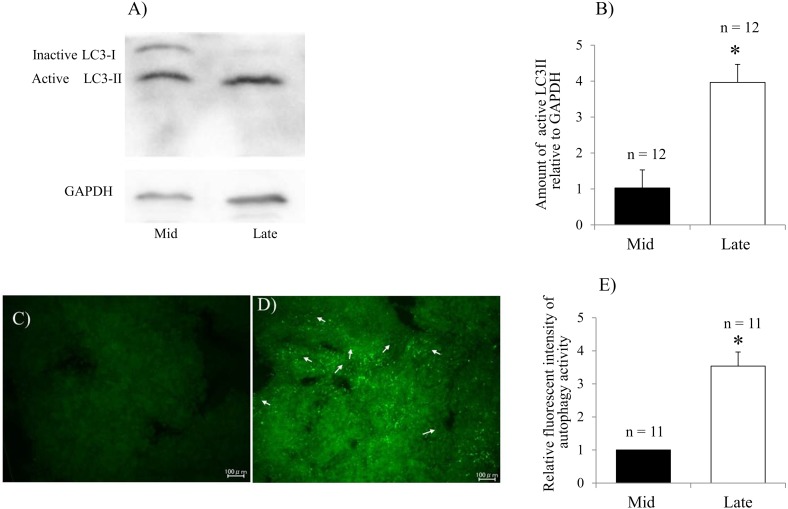
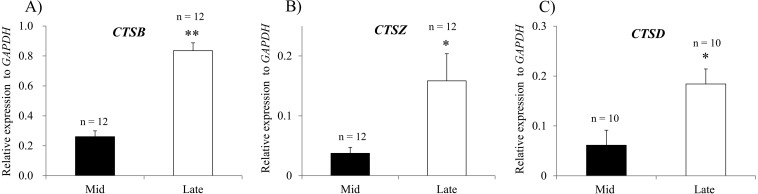
Corpus luteum (CL) regression is required during the estrous cycle. During CL regression, luteal cells stop producing progesterone and are degraded by apoptosis. However, the detailed mechanism of CL regression in cattle has not been fully elucidated. The aim of this study was to evaluate autophagy, lysosome activity, and apoptosis during CL regression in cattle. The expression of autophagy-related genes (LC3α, LC3β, Atg3, and Atg7) and the protein LC3-II was significantly higher in the late CL than in the mid CL. In addition, autophagy activity was significantly increased in the late CL. Moreover, gene expression of the autophagy inhibitor mammalian target of rapamycin (mTOR) was significantly lower in the late CL than in the mid CL. Lysosome activation and expression of cathepsin-related genes (CTSB, CTSD, and CTSZ) showed significant increases in the late CL and were associated with an increase in cathepsin B protein. In addition, mRNA expression and activity of caspase 3 (CASP3), an apoptotic enzyme, were significantly higher in the late CL than in the mid CL. These results suggest simultaneous upregulation of autophagy-related factors, lysosomal enzymes and apoptotic mediators, which are involved in regression of the bovine CL.
黄体(CL)退化是发情周期所必需的。在CL退化过程中,黄体细胞停止产生孕酮并通过凋亡被降解。然而,牛CL退化的详细机制尚未完全阐明。本研究的目的是评估牛CL退化过程中的自噬、溶酶体活性和凋亡。自噬相关基因(LC3α、LC3β、Atg3和Atg7)以及蛋白质LC3-II的表达在CL后期显著高于CL中期。此外,CL后期自噬活性显著增加。而且,自噬抑制剂雷帕霉素靶蛋白(mTOR)的基因表达在CL后期显著低于CL中期。溶酶体激活以及组织蛋白酶相关基因(CTSB、CTSD和CTSZ)的表达在CL后期显著增加,并与组织蛋白酶B蛋白的增加相关。此外,凋亡酶半胱天冬酶3(CASP3)的mRNA表达和活性在CL后期显著高于CL中期。这些结果表明,参与牛CL退化的自噬相关因子、溶酶体酶和凋亡介质同时上调。