Zhang Yanqiong, Bai Ming, Zhang Bo, Liu Chunfang, Guo Qiuyan, Sun Yanqun, Wang Danhua, Wang Chao, Jiang Yini, Lin Na, Li Shao
Institute of Chinese Materia Medica, China Academy of Chinese Medical Sciences, Beijing 100700, China.
MOE Key Laboratory of Bioinformatics and Bioinformatics Division, TNLIST, Department of Automation, Tsinghua University, Beijing 100084, China.
Sci Rep. 2015 Mar 30;5:9463. doi: 10.1038/srep09463.
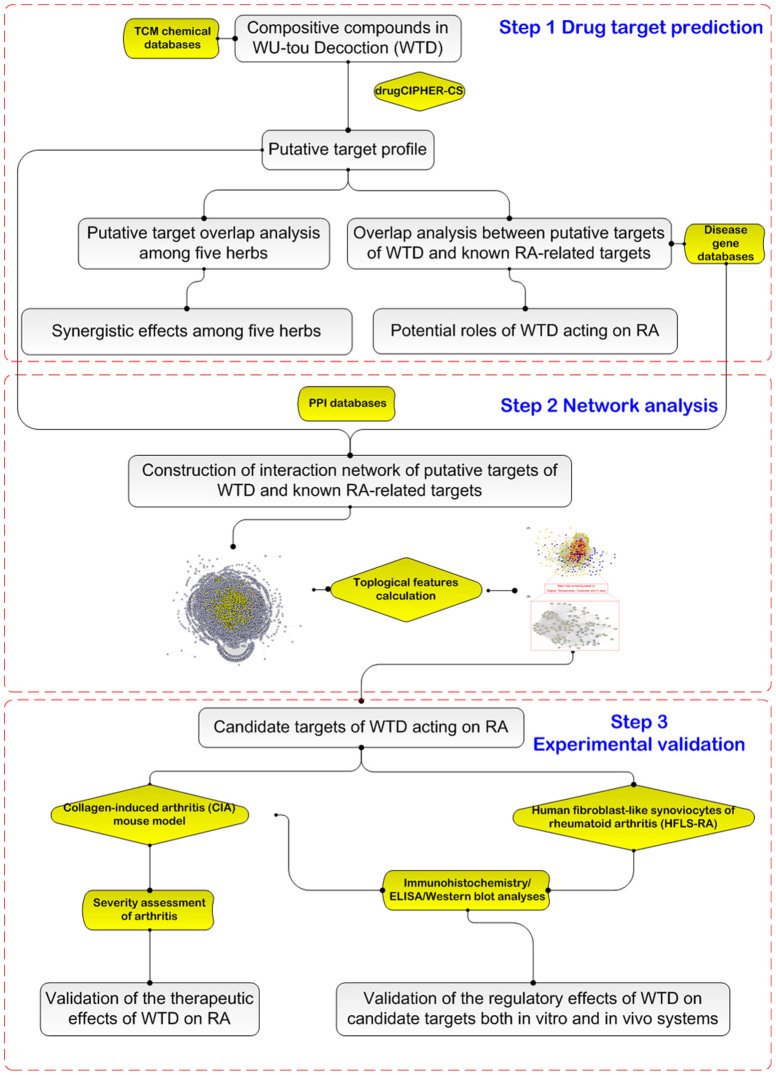
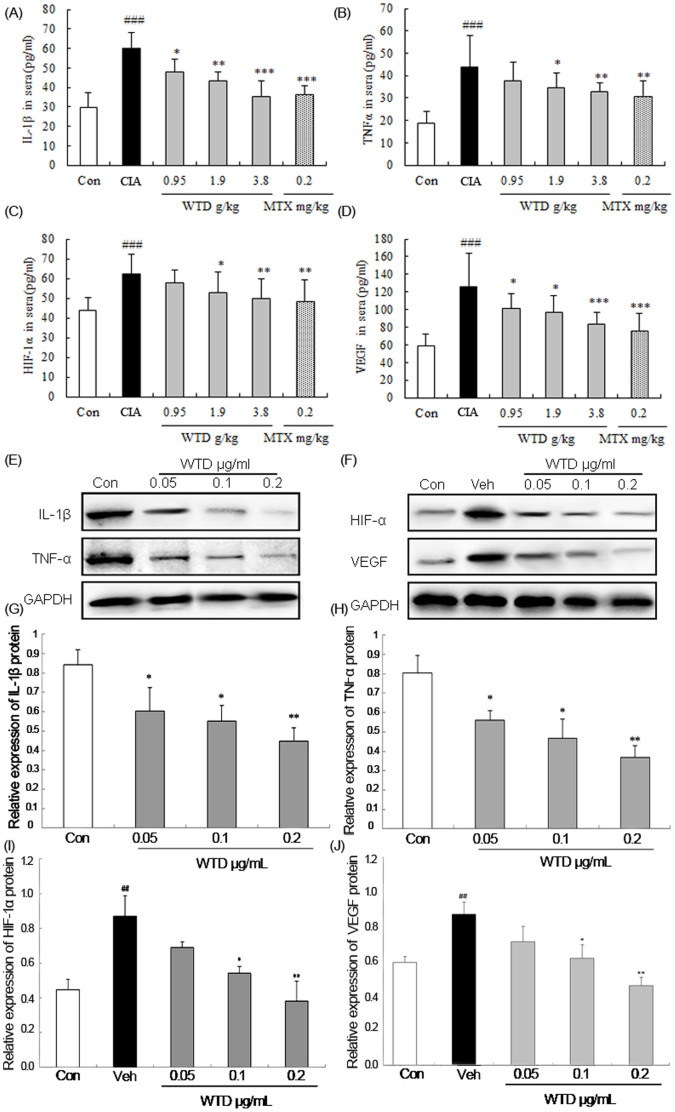
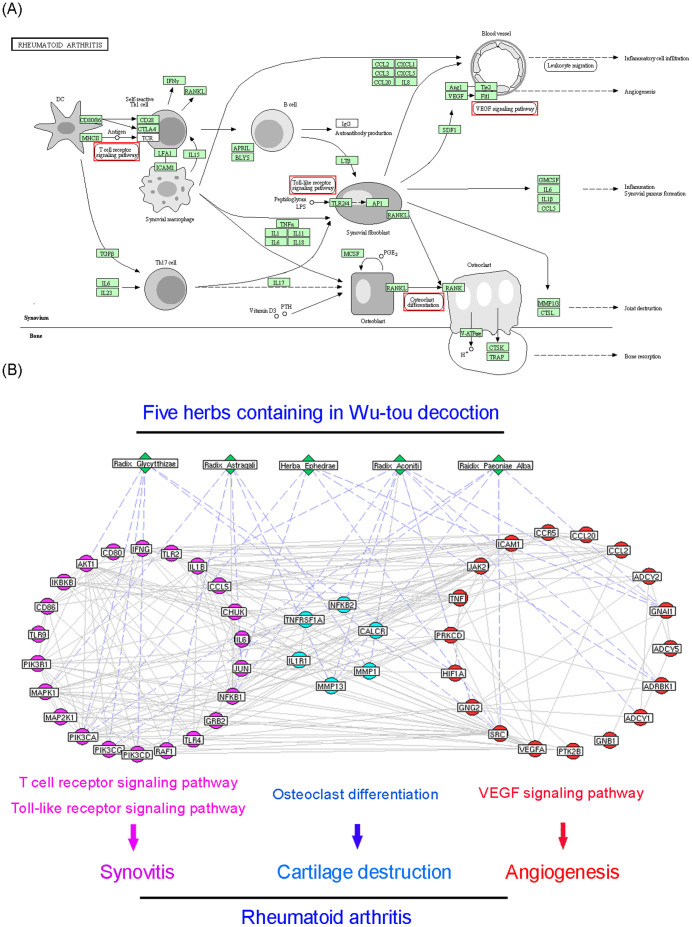
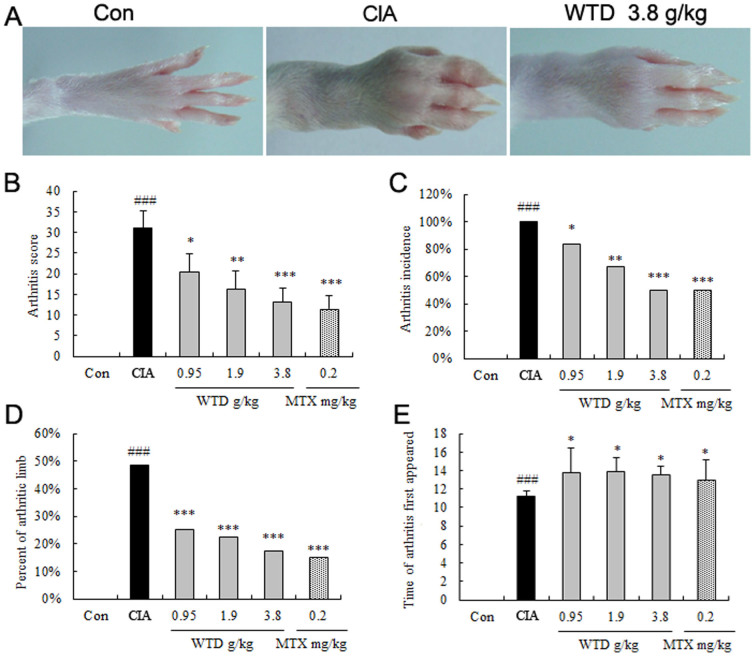
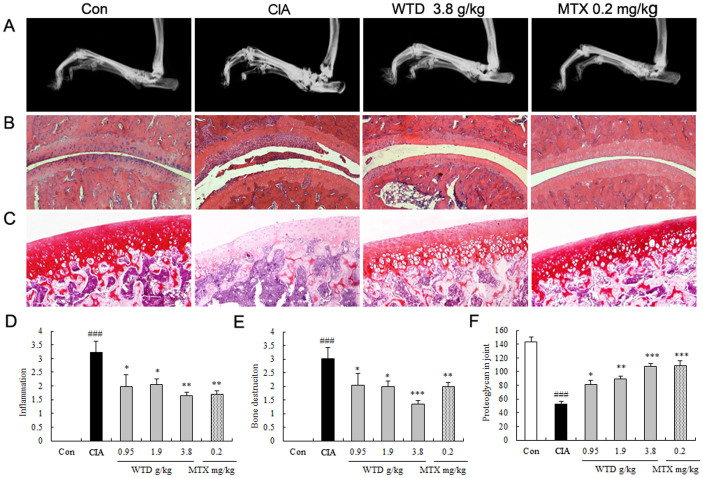
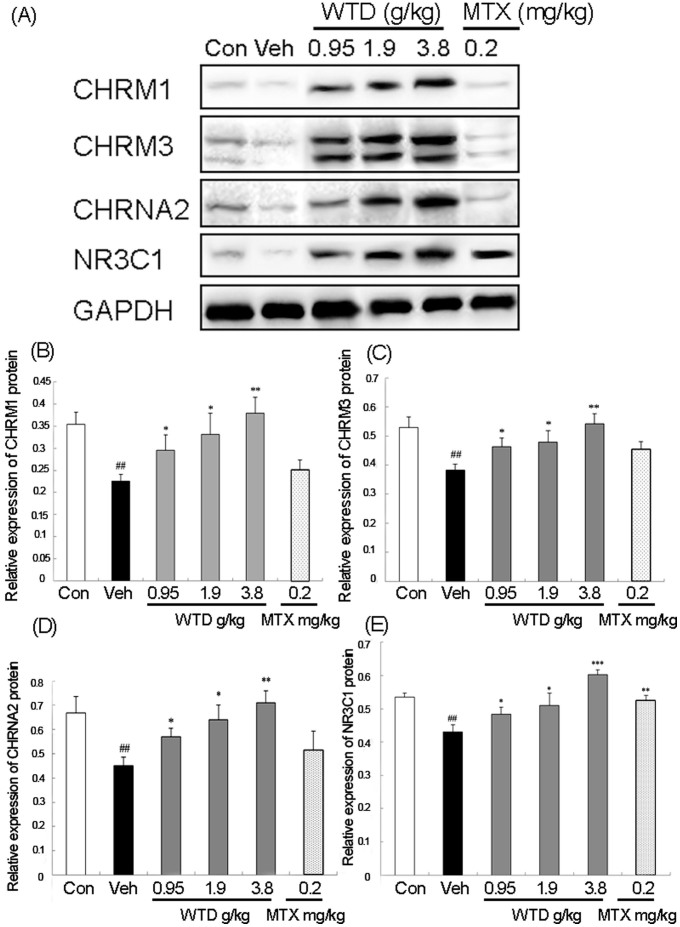
Wu-tou decoction (WTD) has been extensively used for the treatment of rheumatoid arthritis (RA). Due to lack of appropriate methods, pharmacological mechanisms of WTD acting on RA have not been fully elucidated. In this study, a list of putative targets for compositive compounds containing in WTD were predicted by drugCIPHER-CS. Then, the interaction network of the putative targets of WTD and known RA-related targets was constructed and hub nodes were identified. After constructing the interaction network of hubs, four topological features of each hub, including degree, node betweenness, closeness and k-coreness, were calculated and 79 major hubs were identified as candidate targets of WTD, which were implicated into the imbalance of the nervous, endocrine and immune (NEI) systems, leading to the main pathological changes during the RA progression. Further experimental validation also demonstrated the preventive effects of WTD on inflammation and joint destruction in collagen-induced arthritis (CIA) rats and its regulatory effects on candidate targets both in vitro and in vivo systems. In conclusion, we performed an integrative analysis to offer the convincing evidence that WTD may attenuate RA partially by restoring the balance of NEI system and subsequently reversing the pathological events during RA progression.
乌头汤(WTD)已被广泛用于治疗类风湿性关节炎(RA)。由于缺乏合适的方法,WTD作用于RA的药理机制尚未完全阐明。在本研究中,通过drugCIPHER-CS预测了WTD中所含复合化合物的一系列假定靶点。然后,构建了WTD假定靶点与已知RA相关靶点的相互作用网络,并确定了枢纽节点。在构建枢纽相互作用网络后,计算了每个枢纽的四个拓扑特征,包括度、节点介数、紧密性和k-核,并确定了79个主要枢纽作为WTD的候选靶点,这些靶点与神经、内分泌和免疫(NEI)系统的失衡有关,导致RA进展过程中的主要病理变化。进一步的实验验证也证明了WTD对胶原诱导性关节炎(CIA)大鼠炎症和关节破坏的预防作用及其在体外和体内系统中对候选靶点的调节作用。总之,我们进行了综合分析,以提供令人信服的证据,表明WTD可能通过恢复NEI系统的平衡并随后逆转RA进展过程中的病理事件来部分减轻RA。