Valasatava Yana, Andreini Claudia, Rosato Antonio
Magnetic Resonance Center (CERM) - University of Florence, Via L. Sacconi 6, 50019 Sesto Fiorentino, Italy.
Department of Chemistry - University of Florence, Via della Lastruccia 3, 50019 Sesto Fiorentino, Italy.
Sci Rep. 2015 Mar 30;5:9486. doi: 10.1038/srep09486.
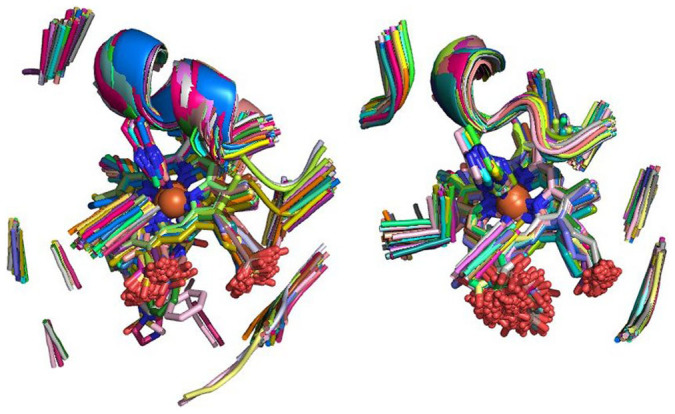
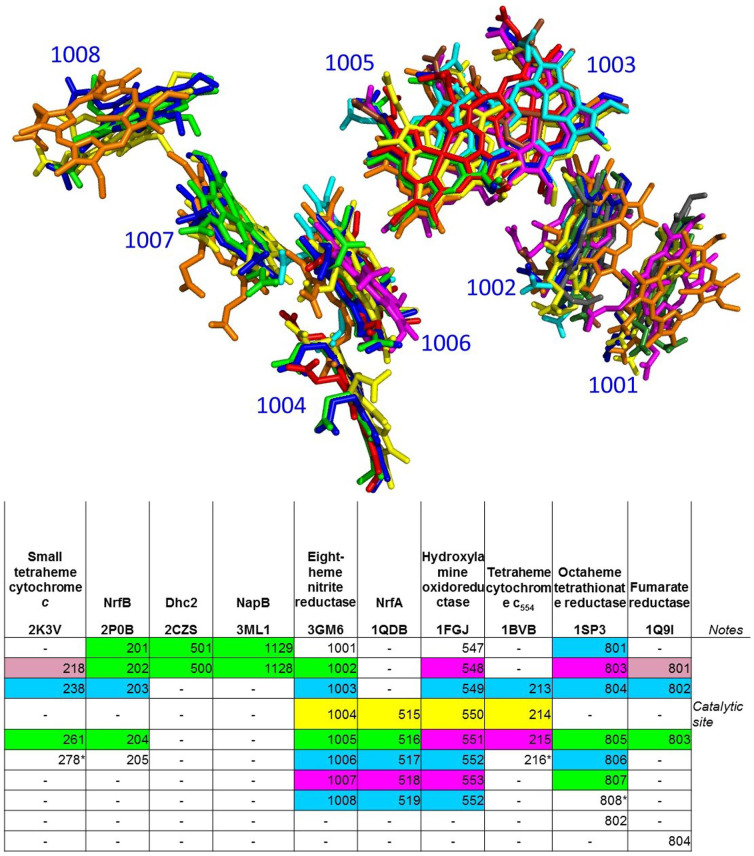
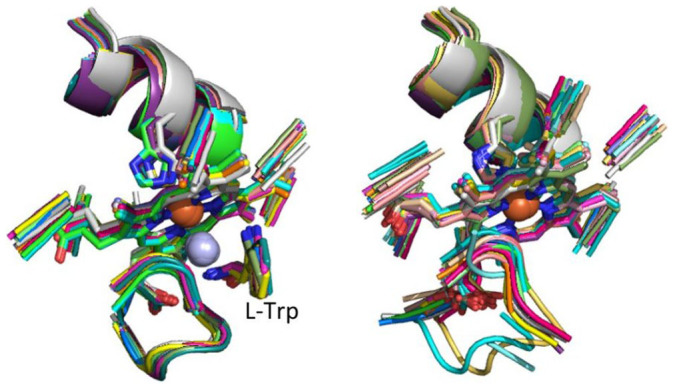
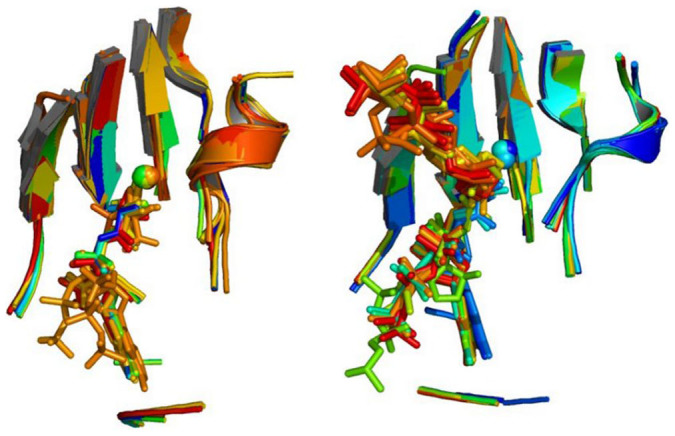
Metalloproteins account for a substantial fraction of all proteins. They incorporate metal atoms, which are required for their structure and/or function. Here we describe a new computational protocol to systematically compare and classify metal-binding sites on the basis of their structural similarity. These sites are extracted from the MetalPDB database of minimal functional sites (MFSs) in metal-binding biological macromolecules. Structural similarity is measured by the scoring function of the available MetalS2 program. Hierarchical clustering was used to organize MFSs into clusters, for each of which a representative MFS was identified. The comparison of all representative MFSs provided a thorough structure-based classification of the sites analyzed. As examples, the application of the proposed computational protocol to all heme-binding proteins and zinc-binding proteins of known structure highlighted the existence of structural subtypes, validated known evolutionary links and shed new light on the occurrence of similar sites in systems at different evolutionary distances. The present approach thus makes available an innovative viewpoint on metalloproteins, where the functionally crucial metal sites effectively lead the discovery of structural and functional relationships in a largely protein-independent manner.
金属蛋白在所有蛋白质中占相当大的比例。它们结合金属原子,这些金属原子是其结构和/或功能所必需的。在此,我们描述了一种新的计算方法,用于根据金属结合位点的结构相似性对其进行系统比较和分类。这些位点是从金属结合生物大分子中最小功能位点(MFS)的MetalPDB数据库中提取的。结构相似性通过可用的MetalS2程序的评分函数来衡量。使用层次聚类将MFS组织成簇,并为每个簇确定一个代表性的MFS。对所有代表性MFS的比较提供了基于结构的对所分析位点的全面分类。例如,将所提出的计算方法应用于所有已知结构的血红素结合蛋白和锌结合蛋白,突出了结构亚型的存在,验证了已知的进化联系,并为不同进化距离系统中相似位点的出现提供了新的线索。因此,本方法为金属蛋白提供了一个创新的视角,其中功能关键的金属位点有效地以很大程度上独立于蛋白质的方式引领对结构和功能关系的发现。