• 文献检索
  • 文档翻译
  • 深度研究
  • 学术资讯
  • Suppr Zotero 插件Zotero 插件
  • 邀请有礼
  • 套餐&价格
  • 历史记录
应用&插件
Suppr Zotero 插件Zotero 插件浏览器插件Mac 客户端Windows 客户端微信小程序
定价
高级版会员购买积分包购买API积分包
服务
文献检索文档翻译深度研究API 文档MCP 服务
关于我们
关于 Suppr公司介绍联系我们用户协议隐私条款
关注我们

Suppr 超能文献

核心技术专利:CN118964589B侵权必究
粤ICP备2023148730 号-1Suppr @ 2026

文献检索

告别复杂PubMed语法,用中文像聊天一样搜索,搜遍4000万医学文献。AI智能推荐,让科研检索更轻松。

立即免费搜索

文件翻译

保留排版,准确专业,支持PDF/Word/PPT等文件格式,支持 12+语言互译。

免费翻译文档

深度研究

AI帮你快速写综述,25分钟生成高质量综述,智能提取关键信息,辅助科研写作。

立即免费体验

用于基于细胞的化学筛选中鉴定出的化合物的靶点分析的大规模化学相似性网络。

Large-scale chemical similarity networks for target profiling of compounds identified in cell-based chemical screens.

作者信息

Lo Yu-Chen, Senese Silvia, Li Chien-Ming, Hu Qiyang, Huang Yong, Damoiseaux Robert, Torres Jorge Z

机构信息

Department of Chemistry and Biochemistry, University of California, Los Angeles, Los Angeles, California, United States of America; Program in Bioengineering, University of California, Los Angeles, Los Angeles, California, United States of America.

Department of Chemistry and Biochemistry, University of California, Los Angeles, Los Angeles, California, United States of America.

出版信息

PLoS Comput Biol. 2015 Mar 31;11(3):e1004153. doi: 10.1371/journal.pcbi.1004153. eCollection 2015 Mar.

DOI:10.1371/journal.pcbi.1004153
PMID:25826798
原文链接:https://pmc.ncbi.nlm.nih.gov/articles/PMC4380459/
Abstract

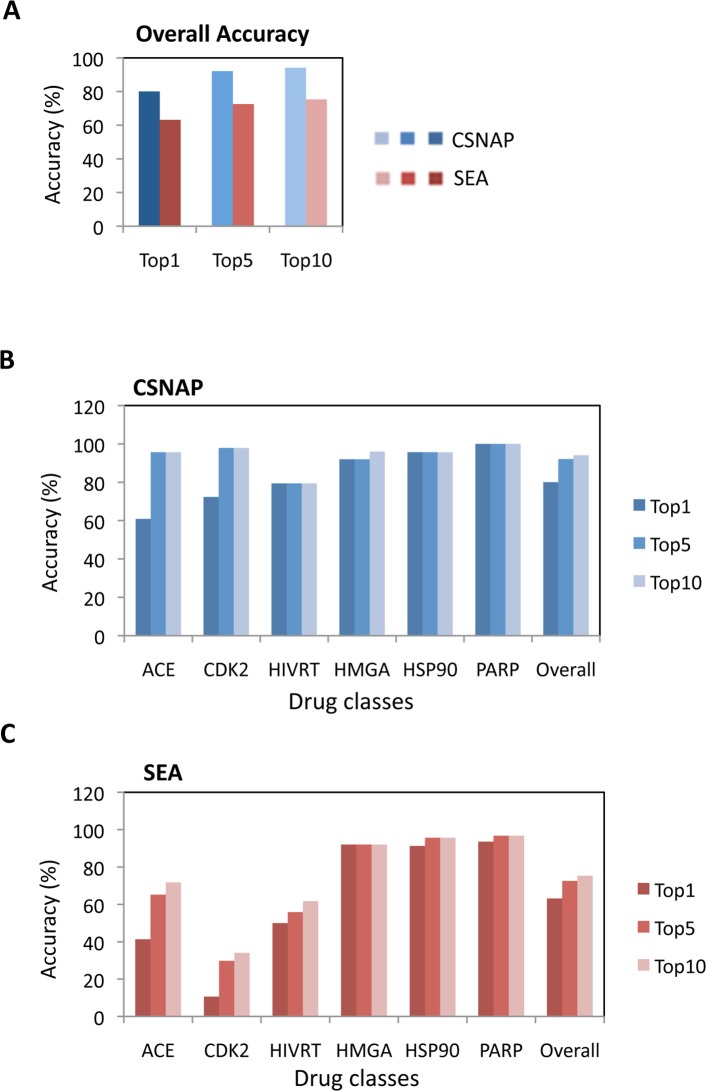
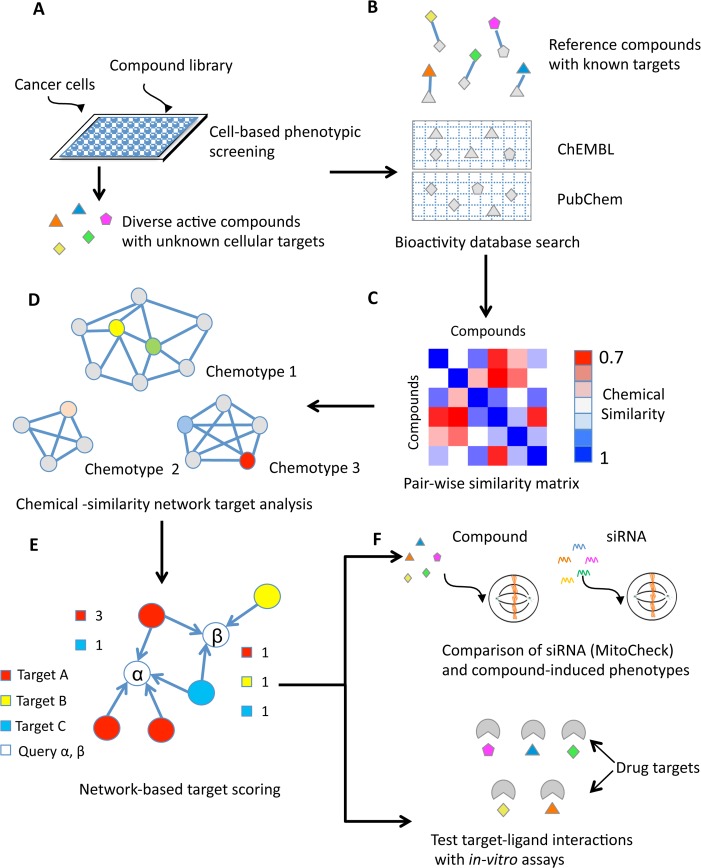
Target identification is one of the most critical steps following cell-based phenotypic chemical screens aimed at identifying compounds with potential uses in cell biology and for developing novel disease therapies. Current in silico target identification methods, including chemical similarity database searches, are limited to single or sequential ligand analysis that have limited capabilities for accurate deconvolution of a large number of compounds with diverse chemical structures. Here, we present CSNAP (Chemical Similarity Network Analysis Pulldown), a new computational target identification method that utilizes chemical similarity networks for large-scale chemotype (consensus chemical pattern) recognition and drug target profiling. Our benchmark study showed that CSNAP can achieve an overall higher accuracy (>80%) of target prediction with respect to representative chemotypes in large (>200) compound sets, in comparison to the SEA approach (60-70%). Additionally, CSNAP is capable of integrating with biological knowledge-based databases (Uniprot, GO) and high-throughput biology platforms (proteomic, genetic, etc) for system-wise drug target validation. To demonstrate the utility of the CSNAP approach, we combined CSNAP's target prediction with experimental ligand evaluation to identify the major mitotic targets of hit compounds from a cell-based chemical screen and we highlight novel compounds targeting microtubules, an important cancer therapeutic target. The CSNAP method is freely available and can be accessed from the CSNAP web server (http://services.mbi.ucla.edu/CSNAP/).

摘要

靶点识别是基于细胞的表型化学筛选之后最关键的步骤之一,此类筛选旨在识别在细胞生物学中有潜在用途的化合物以及开发新的疾病治疗方法。当前的计算机靶点识别方法,包括化学相似性数据库搜索,仅限于单一或顺序配体分析,对于准确解卷积大量具有不同化学结构的化合物的能力有限。在此,我们提出了CSNAP(化学相似性网络分析下拉法),这是一种新的计算靶点识别方法,它利用化学相似性网络进行大规模化学型(共识化学模式)识别和药物靶点分析。我们的基准研究表明,与SEA方法(60 - 70%)相比,对于大型(>200)化合物集中的代表性化学型,CSNAP在靶点预测方面能够实现总体更高的准确率(>80%)。此外,CSNAP能够与基于生物学知识的数据库(Uniprot、GO)和高通量生物学平台(蛋白质组学、遗传学等)整合,以进行系统层面的药物靶点验证。为了证明CSNAP方法的实用性,我们将CSNAP的靶点预测与实验性配体评估相结合,以识别基于细胞的化学筛选中命中化合物的主要有丝分裂靶点,并且我们重点介绍了靶向微管的新型化合物,微管是一个重要的癌症治疗靶点。CSNAP方法可免费获取,可从CSNAP网络服务器(http://services.mbi.ucla.edu/CSNAP/)访问。
https://cdn.ncbi.nlm.nih.gov/pmc/blobs/0566/4380459/fbf60e04aadf/pcbi.1004153.g005.jpg
https://cdn.ncbi.nlm.nih.gov/pmc/blobs/0566/4380459/6ae61cf1ef8b/pcbi.1004153.g001.jpg
https://cdn.ncbi.nlm.nih.gov/pmc/blobs/0566/4380459/47265cfdea86/pcbi.1004153.g002.jpg
https://cdn.ncbi.nlm.nih.gov/pmc/blobs/0566/4380459/85a0e31fa065/pcbi.1004153.g003.jpg
https://cdn.ncbi.nlm.nih.gov/pmc/blobs/0566/4380459/e05fb10f8921/pcbi.1004153.g004.jpg
https://cdn.ncbi.nlm.nih.gov/pmc/blobs/0566/4380459/fbf60e04aadf/pcbi.1004153.g005.jpg
https://cdn.ncbi.nlm.nih.gov/pmc/blobs/0566/4380459/6ae61cf1ef8b/pcbi.1004153.g001.jpg
https://cdn.ncbi.nlm.nih.gov/pmc/blobs/0566/4380459/47265cfdea86/pcbi.1004153.g002.jpg
https://cdn.ncbi.nlm.nih.gov/pmc/blobs/0566/4380459/85a0e31fa065/pcbi.1004153.g003.jpg
https://cdn.ncbi.nlm.nih.gov/pmc/blobs/0566/4380459/e05fb10f8921/pcbi.1004153.g004.jpg
https://cdn.ncbi.nlm.nih.gov/pmc/blobs/0566/4380459/fbf60e04aadf/pcbi.1004153.g005.jpg

相似文献

1
Large-scale chemical similarity networks for target profiling of compounds identified in cell-based chemical screens.用于基于细胞的化学筛选中鉴定出的化合物的靶点分析的大规模化学相似性网络。
PLoS Comput Biol. 2015 Mar 31;11(3):e1004153. doi: 10.1371/journal.pcbi.1004153. eCollection 2015 Mar.
2
3D Chemical Similarity Networks for Structure-Based Target Prediction and Scaffold Hopping.用于基于结构的靶点预测和骨架跃迁的3D化学相似性网络
ACS Chem Biol. 2016 Aug 19;11(8):2244-53. doi: 10.1021/acschembio.6b00253. Epub 2016 Jun 20.
3
HitPick: a web server for hit identification and target prediction of chemical screenings.HitPick:一个用于化学筛选命中鉴定和靶标预测的网络服务器。
Bioinformatics. 2013 Aug 1;29(15):1910-2. doi: 10.1093/bioinformatics/btt303. Epub 2013 May 28.
4
Rethinking molecular similarity: comparing compounds on the basis of biological activity.重新思考分子相似性:基于生物活性比较化合物。
ACS Chem Biol. 2012 Aug 17;7(8):1399-409. doi: 10.1021/cb3001028. Epub 2012 May 31.
5
Chemometric analysis of ligand receptor complementarity: identifying Complementary Ligands Based on Receptor Information (CoLiBRI).配体-受体互补性的化学计量学分析:基于受体信息识别互补配体(CoLiBRI)。
J Chem Inf Model. 2006 Mar-Apr;46(2):844-51. doi: 10.1021/ci050065r.
6
Large-Scale Off-Target Identification Using Fast and Accurate Dual Regularized One-Class Collaborative Filtering and Its Application to Drug Repurposing.使用快速准确的双正则化一类协同过滤进行大规模脱靶识别及其在药物再利用中的应用
PLoS Comput Biol. 2016 Oct 7;12(10):e1005135. doi: 10.1371/journal.pcbi.1005135. eCollection 2016 Oct.
7
Comparative Analysis of QSAR-based vs. Chemical Similarity Based Predictors of GPCRs Binding Affinity.基于定量构效关系(QSAR)与基于化学相似性的G蛋白偶联受体(GPCRs)结合亲和力预测器的比较分析
Mol Inform. 2016 Jan;35(1):36-41. doi: 10.1002/minf.201500038. Epub 2015 Oct 23.
8
Multi-dimensional computational pipeline for large-scale deep screening of compound effect assessment: an in silico case study on ageing-related compounds.多维计算管道用于大规模深度筛选化合物效应评估:衰老相关化合物的计算案例研究。
NPJ Syst Biol Appl. 2019 Nov 26;5:42. doi: 10.1038/s41540-019-0119-y. eCollection 2019.
9
Toward a benchmarking data set able to evaluate ligand- and structure-based virtual screening using public HTS data.构建一个基准数据集,用于利用公开的高通量筛选数据评估基于配体和结构的虚拟筛选。
J Chem Inf Model. 2015 Feb 23;55(2):343-53. doi: 10.1021/ci5005465. Epub 2015 Jan 28.
10
Chemogenomics in drug discovery: computational methods based on the comparison of binding sites.药物发现中的化学生物组学:基于结合位点比较的计算方法。
Future Med Chem. 2012 Oct;4(15):1971-9. doi: 10.4155/fmc.12.147.

引用本文的文献

1
Artificial Intelligence-Driven Innovations in Oncology Drug Discovery: Transforming Traditional Pipelines and Enhancing Drug Design.人工智能驱动的肿瘤学药物发现创新:变革传统流程并优化药物设计
Drug Des Devel Ther. 2025 Jul 3;19:5685-5707. doi: 10.2147/DDDT.S509769. eCollection 2025.
2
Labels as a feature: Network homophily for systematically annotating human GPCR drug-target interactions.作为一种特征的标签:用于系统注释人类GPCR药物-靶点相互作用的网络同质性
Nat Commun. 2025 May 3;16(1):4121. doi: 10.1038/s41467-025-59418-6.
3
Topological regression as an interpretable and efficient tool for quantitative structure-activity relationship modeling.

本文引用的文献

1
Tools for in silico target fishing.用于计算机虚拟靶点筛选的工具。
Methods. 2015 Jan;71:98-103. doi: 10.1016/j.ymeth.2014.09.006. Epub 2014 Sep 30.
2
DINIES: drug-target interaction network inference engine based on supervised analysis.基于监督分析的药物-靶标相互作用网络推理引擎。
Nucleic Acids Res. 2014 Jul;42(Web Server issue):W39-45. doi: 10.1093/nar/gku337. Epub 2014 May 16.
3
Mapping the cellular response to small molecules using chemogenomic fitness signatures.利用化学生态基因组适合度特征绘制细胞对小分子的反应图谱。
拓扑回归作为一种用于定量构效关系建模的可解释且高效的工具。
Nat Commun. 2024 Jun 13;15(1):5072. doi: 10.1038/s41467-024-49372-0.
4
Whole proteome mapping of compound-protein interactions.化合物-蛋白质相互作用的全蛋白质组图谱绘制。
Curr Res Chem Biol. 2022;2. doi: 10.1016/j.crchbi.2022.100035. Epub 2022 Sep 12.
5
Computational Approaches to the Rational Design of Tubulin-Targeting Agents.计算方法在微管蛋白靶向药物理性设计中的应用。
Biomolecules. 2023 Feb 2;13(2):285. doi: 10.3390/biom13020285.
6
Random-forest model for drug-target interaction prediction via Kullbeck-Leibler divergence.基于库尔贝克-莱布勒散度的药物-靶点相互作用预测随机森林模型。
J Cheminform. 2022 Oct 3;14(1):67. doi: 10.1186/s13321-022-00644-1.
7
De Novo Prediction of Drug Targets and Candidates by Chemical Similarity-Guided Network-Based Inference.基于化学相似性引导的网络推理的从头预测药物靶点和候选物。
Int J Mol Sci. 2022 Aug 26;23(17):9666. doi: 10.3390/ijms23179666.
8
Computational Methods for Drug Repurposing.药物重定位的计算方法。
Adv Exp Med Biol. 2022;1361:119-141. doi: 10.1007/978-3-030-91836-1_7.
9
CytofIn enables integrated analysis of public mass cytometry datasets using generalized anchors.CytofIn 利用广义锚点实现了公共质谱细胞数据集的综合分析。
Nat Commun. 2022 Feb 17;13(1):934. doi: 10.1038/s41467-022-28484-5.
10
Currently Available Strategies for Target Identification of Bioactive Natural Products.生物活性天然产物靶点鉴定的现有策略
Front Chem. 2021 Sep 30;9:761609. doi: 10.3389/fchem.2021.761609. eCollection 2021.
Science. 2014 Apr 11;344(6180):208-11. doi: 10.1126/science.1250217.
4
Molecular similarity in medicinal chemistry.药物化学中的分子相似性。
J Med Chem. 2014 Apr 24;57(8):3186-204. doi: 10.1021/jm401411z. Epub 2013 Nov 11.
5
ChemMapper: a versatile web server for exploring pharmacology and chemical structure association based on molecular 3D similarity method.ChemMapper:一个基于分子 3D 相似性方法的多功能网络服务器,用于探索药理学和化学结构关联。
Bioinformatics. 2013 Jul 15;29(14):1827-9. doi: 10.1093/bioinformatics/btt270. Epub 2013 May 27.
6
Target identification and mechanism of action in chemical biology and drug discovery.化学生物学和药物发现中的靶标鉴定和作用机制。
Nat Chem Biol. 2013 Apr;9(4):232-40. doi: 10.1038/nchembio.1199.
7
Target identification of small molecules based on chemical biology approaches.基于化学生物学方法的小分子靶点鉴定
Mol Biosyst. 2013 May;9(5):897-914. doi: 10.1039/c2mb25468a.
8
TargetHunter: an in silico target identification tool for predicting therapeutic potential of small organic molecules based on chemogenomic database.TargetHunter:一种基于化学生物基因组数据库的计算机辅助药物靶点预测工具,用于预测小分子药物的治疗潜力。
AAPS J. 2013 Apr;15(2):395-406. doi: 10.1208/s12248-012-9449-z. Epub 2013 Jan 5.
9
Virtual affinity fingerprints for target fishing: a new application of Drug Profile Matching.虚拟亲和指纹用于靶标捕捞:药物特征匹配的新应用。
J Chem Inf Model. 2013 Jan 28;53(1):103-13. doi: 10.1021/ci3004489. Epub 2012 Dec 18.
10
Development of antibiotic activity profile screening for the classification and discovery of natural product antibiotics.用于天然产物抗生素分类与发现的抗生素活性谱筛选技术的发展
Chem Biol. 2012 Nov 21;19(11):1483-95. doi: 10.1016/j.chembiol.2012.09.014.