Grøneng Gry M, Vatn Synnøve, Kristoffersen Anja Bråthen, Nafstad Ola, Hopp Petter
Vet Res. 2015 Feb 20;46:10. doi: 10.1186/s13567-015-0150-y.
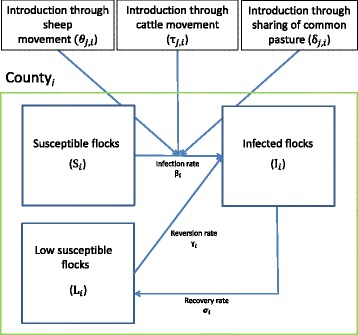
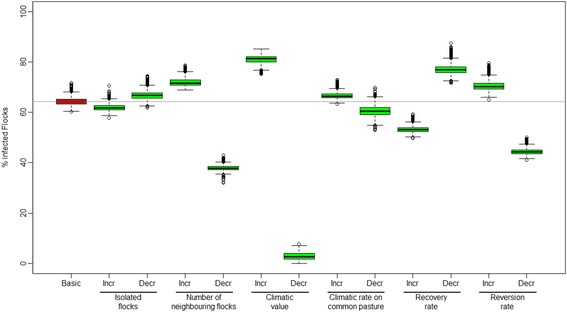
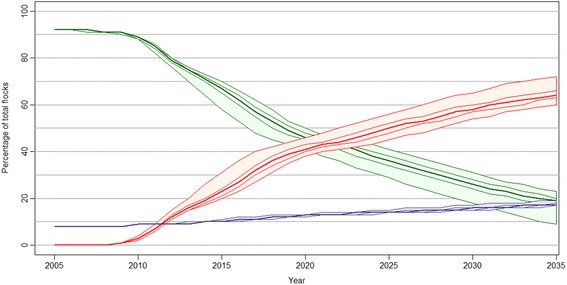
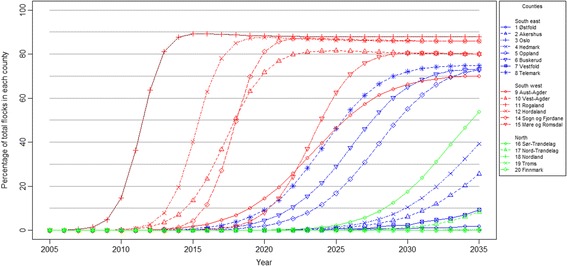
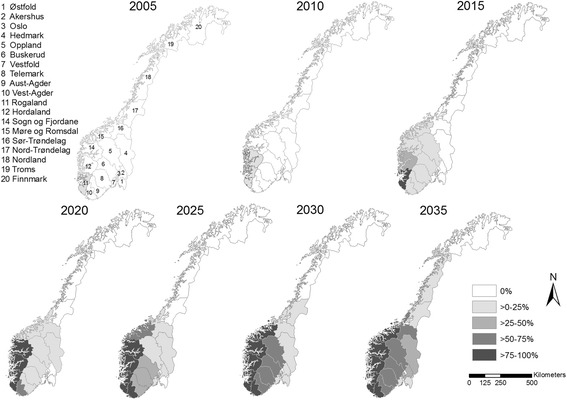
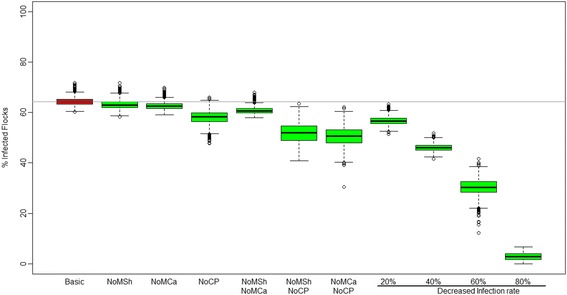
When severe footrot was detected in Norway in 2008, a surveillance programme was initiated and followed by an elimination programme. By 2013 the disease had spread to two of 19 counties and a total of 119 (1%) sheep flocks had been diagnosed with severe footrot. A simulation model was developed to estimate the potential spread of severe footrot in Norway and to estimate the relative importance of the different spreading routes. The model parameters were based on the rate of spread of the first 38 diagnosed cases and the management and climatic factors particular for Norway. The model showed that by 2013, severe footrot would have spread to six counties and infected 16% of the sheep flocks if no elimination programme had been initiated. If this is compared with the 1% of flocks that were diagnosed in Norway by 2013, there seems to be a large effect of the implemented footrot elimination programme. By 2035, it was estimated that severe footrot would have spread to 16 counties and 64% of the sheep flocks. Such an extensive spread would probably impose a large negative impact on the sheep industry and welfare of the sheep. The most effective way to curb the spread of severe footrot was by decreasing the within county infection rate. This could be achieved by decreasing the contact between flocks or by decreasing the environmental load of D. nodosus, for example by footbathing sheep, culling diseased sheep or eliminating severe footrot in the flock.
2008年在挪威检测到严重足腐病后,启动了一项监测计划,随后实施了根除计划。到2013年,该病已蔓延至19个县中的两个,共有119个(1%)羊群被诊断患有严重足腐病。开发了一个模拟模型,以估计严重足腐病在挪威的潜在传播情况,并估计不同传播途径的相对重要性。模型参数基于最初38例确诊病例的传播速度以及挪威特有的管理和气候因素。该模型显示,到2013年,如果没有启动根除计划,严重足腐病将蔓延至六个县,并感染16%的羊群。与2013年挪威确诊的1%的羊群相比,实施的足腐病根除计划似乎产生了很大效果。据估计,到2035年,严重足腐病将蔓延至16个县和64%的羊群。如此广泛的传播可能会对养羊业和羊的福利造成巨大负面影响。遏制严重足腐病传播的最有效方法是降低县内感染率。这可以通过减少羊群之间的接触或通过降低结节拟杆菌的环境负荷来实现,例如给羊洗脚、扑杀患病羊或根除羊群中的严重足腐病。