Keshet E, Polakiewicz R D, Itin A, Ornoy A, Rosen H
Department of Virology, Hebrew University of Jerusalem, Hadassah Medical School, Israel.
EMBO J. 1989 Oct;8(10):2917-23. doi: 10.1002/j.1460-2075.1989.tb08441.x.
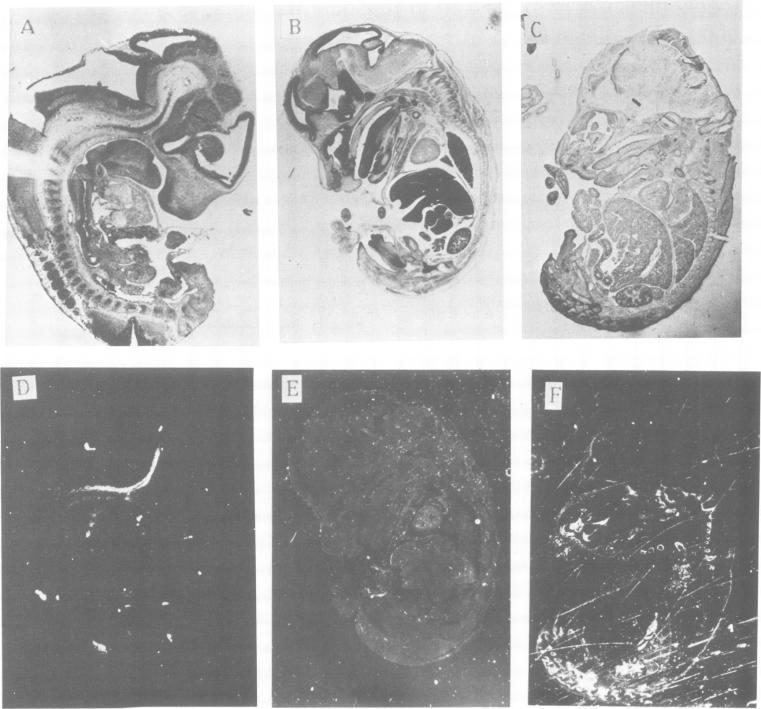
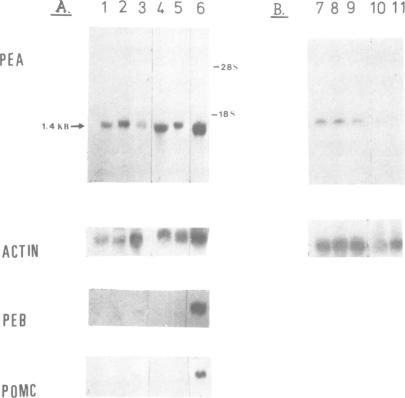
Proenkephalin A (PEA) encodes several neuropeptides with an opioid activity, as well as other peptides with as yet unknown functions. As an initial step toward finding possible roles for PEA gene products in non-neuronal tissues, we have determined sites of PEA expression during mouse embryonic development, employing in situ hybridization. We report here the unexpected observation that in addition to its abundance in brain, PEA RNA is expressed in non-differentiated mesodermal cells of diverse lineages in the process of their development into several adult tissues and organs; it drops to undetectable levels upon terminal differentiation of these tissues. In a particular example of differentiating mesoderm, the developing kidney, the transient expression of PEA mRNA and of its encoded peptide Met-enkephalin was demonstrated by both in situ and Northern blot hybridizations, as well as by a radioimmunoassay. These findings suggest a novel role for PEA-derived peptide(s) in mesoderm growth or differentiation during organogenesis.
前脑啡肽原A(PEA)编码几种具有阿片样活性的神经肽,以及其他功能尚不清楚的肽。作为寻找PEA基因产物在非神经组织中可能作用的第一步,我们利用原位杂交技术确定了小鼠胚胎发育过程中PEA的表达位点。我们在此报告一个意外的发现,即除了在脑中大量存在外,PEA RNA在不同谱系的未分化中胚层细胞发育成几种成体组织和器官的过程中也有表达;这些组织终末分化后,PEA RNA水平降至检测不到。在中胚层分化的一个具体例子——发育中的肾脏中,通过原位杂交、Northern印迹杂交以及放射免疫测定法,证实了PEA mRNA及其编码的肽甲硫氨酸脑啡肽的短暂表达。这些发现提示PEA衍生肽在器官发生过程中的中胚层生长或分化中具有新的作用。