Endocrinology, Diabetes & Metabolism Service, Centre Hospitalier Universitaire Vaudois Lausanne, Switzerland ; Institut universitaire de formation et de recherche en soins, University of Lausanne Lausanne, Switzerland.
Institute of Genetic Medicine and the Royal Victoria Infirmary, University of Newcastle-upon-Tyne Newcastle-upon-Tyne, UK.
Sex Med. 2015 Mar;3(1):32-41. doi: 10.1002/sm2.50.
Congenital hypogonadotropic hypogonadism (CHH) is a rare, genetic, reproductive endocrine disorder characterized by absent puberty and infertility. Limited information is available on the psychosocial impact of CHH and psychosexual development in these patients.
The aim of this study was to determine the impact of CHH on psychosexual development in men on long-term treatment.
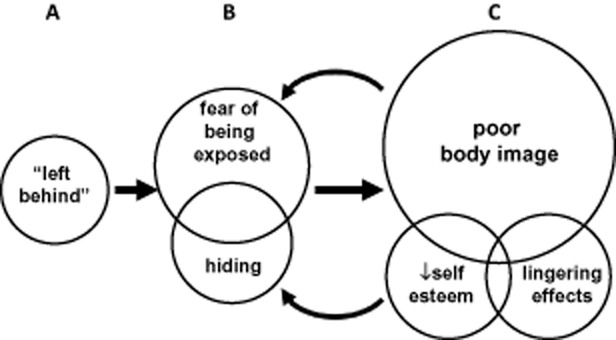
A sequential mixed methods explanatory design was used. First, an online survey (quantitative) was used to quantify the frequency of psychosexual problems among CHH men. Second, patient focus groups (qualitative) were conducted to explore survey findings in detail and develop a working model to guide potential nursing and interdisciplinary interventions.
Patient characteristics, frequency of body shame, difficulty with intimate relationships, and never having been sexually active were assessed. Additionally, we collected subjective patient-reported outcomes regarding the impact of CHH on psychological/emotional well-being, intimate relationships, and sexual activity.
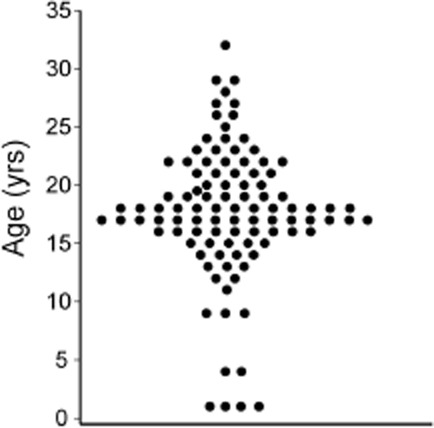
A total of 101 CHH men on long-term treatment (>1 year) were included for the analysis of the online survey (mean age 37 ± 11 years, range 19-66, median 36). Half (52/101, 51%) of the men had been seen at a specialized academic center and 37/101 (37%) reported having had fertility-inducing treatment. A high percentage of CHH men experience psychosexual problems including difficulty with intimate relationships (70%) and body image concerns/body shame (94/101, 93%), and the percentage of men never having been sexually active is five times the rate in a reference group (26% vs. 5.4%, P < 0.001). Focus groups revealed persisting body shame and low self-esteem despite long-term treatment that has lasting impact on psychosexual functioning.
CHH men frequently experience psychosexual problems that pose barriers to intimate relationships and initiating sexual activity. These lingering effects cause significant distress and are not ameliorated by long-term treatment. Psychosexual assessment in CHH men with appropriate psychological support and treatment should be warranted in these patients. Dwyer AA, Quinton R, Pitteloud N, and Morin D. Psychosexual development in men with congenital hypogonadotropic hypogonadism on long-term treatment: A mixed methods study. Sex Med 2015;3:32-41.
先天性低促性腺激素性性腺功能减退症(CHH)是一种罕见的遗传性生殖内分泌疾病,其特征为青春期缺失和不育。目前有关 CHH 对患者心理社会影响和性心理发育的信息有限。
本研究旨在确定长期治疗的 CHH 男性的性心理发育受到的影响。
采用顺序混合方法解释设计。首先,进行在线调查(定量),以量化 CHH 男性的性心理问题发生频率。其次,进行患者焦点小组(定性),以详细探讨调查结果,并制定指导潜在护理和跨学科干预的工作模型。
评估患者特征、身体羞耻感频率、亲密关系困难以及从未有过性行为。此外,我们收集了关于 CHH 对心理/情绪健康、亲密关系和性行为影响的主观患者报告结果。
共纳入 101 例长期(>1 年)接受治疗的 CHH 男性进行在线调查分析(平均年龄 37±11 岁,范围 19-66 岁,中位数 36 岁)。其中 52/101(51%)名男性曾在专门的学术中心就诊,37/101(37%)名男性报告曾接受过诱导生育治疗。相当一部分 CHH 男性存在性心理问题,包括亲密关系困难(70%)和身体形象问题/身体羞耻感(94/101,93%),从未有过性行为的男性比例是参照组的五倍(26%比 5.4%,P<0.001)。焦点小组揭示了尽管长期治疗持续存在的身体羞耻感和低自尊感,但对性心理功能仍有持久影响。
CHH 男性经常出现性心理问题,这对亲密关系和开始性行为构成障碍。这些挥之不去的影响会导致严重的困扰,且长期治疗并不能改善这些问题。应在这些患者中对 CHH 男性进行性心理评估,并提供适当的心理支持和治疗。