Dwyer Andrew A, Quinton Richard, Morin Diane, Pitteloud Nelly
University of Lausanne, Institut universitaire de formation et de recherche en soins and the Endocrinology, Diabetes & Metabolism Service of the Centre Hospitalier Universitaire Vaudois, 46 Rue du Bugnon, BH19,317, Lausanne CH-1011, Switzerland.
Orphanet J Rare Dis. 2014 Jun 11;9:83. doi: 10.1186/1750-1172-9-83.
Patients with rare diseases such as congenital hypogonadotropic hypogonadism (CHH) are dispersed, often challenged to find specialized care and face other health disparities. The internet has the potential to reach a wide audience of rare disease patients and can help connect patients and specialists. Therefore, this study aimed to: (i) determine if web-based platforms could be effectively used to conduct an online needs assessment of dispersed CHH patients; (ii) identify the unmet health and informational needs of CHH patients and (iii) assess patient acceptability regarding patient-centered, web-based interventions to bridge shortfalls in care.
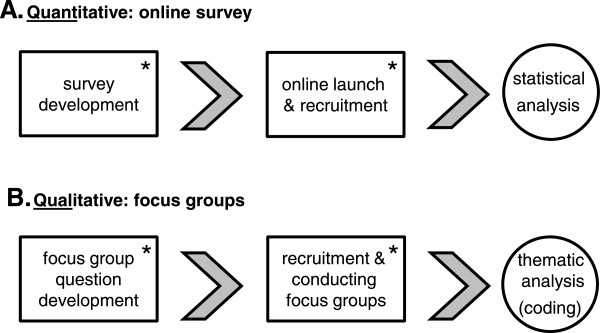
A sequential mixed-methods design was used: first, an online survey was conducted to evaluate health promoting behavior and identify unmet health and informational needs of CHH men. Subsequently, patient focus groups were held to explore specific patient-identified targets for care and to examine the acceptability of possible online interventions. Descriptive statistics and thematic qualitative analyses were used.
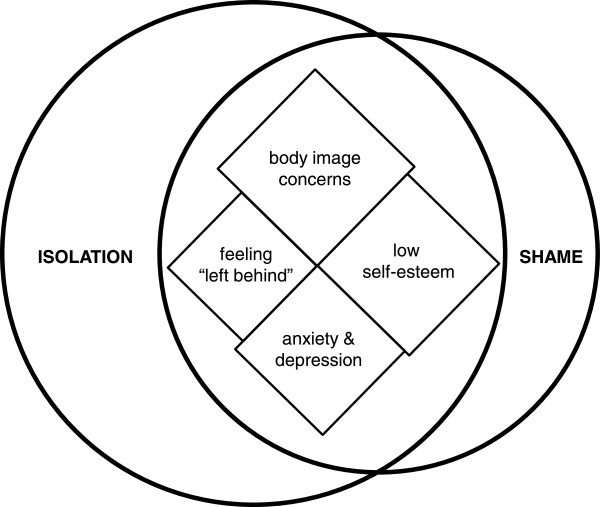
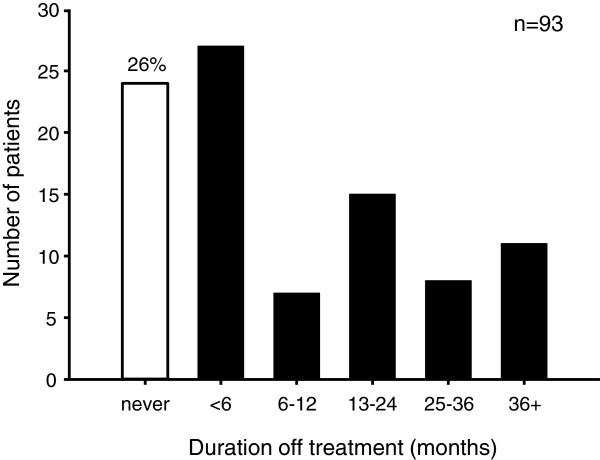
105 male participants completed the online survey (mean age 37 ± 11, range 19-66 years) representing a spectrum of patients across a broad socioeconomic range and all but one subject had adequate healthcare literacy. The survey revealed periods of non-adherence to treatment (34/93, 37%) and gaps in healthcare (36/87, 41%) exceeding one year. Patient focus groups identified lasting psychological effects related to feelings of isolation, shame and body-image concerns. Survey respondents were active internet users, nearly all had sought CHH information online (101/105, 96%), and they rated the internet, healthcare providers, and online community as equally important CHH information sources. Focus group participants were overwhelmingly positive regarding online interventions/support with links to reach expert healthcare providers and for peer-to-peer support.
The web-based needs assessment was an effective way to reach dispersed CHH patients. These individuals often have long gaps in care and struggle with the psychosocial sequelae of CHH. They are highly motivated internet users seeking information and tapping into online communities and are receptive to novel web-based interventions addressing their unmet needs.
患有先天性低促性腺激素性性腺功能减退(CHH)等罕见疾病的患者分布分散,往往难以获得专科护理,并面临其他健康差异。互联网有潜力覆盖广大的罕见病患者群体,并有助于连接患者和专家。因此,本研究旨在:(i)确定基于网络的平台是否可有效用于对分散的CHH患者进行在线需求评估;(ii)识别CHH患者未满足的健康和信息需求;以及(iii)评估患者对以患者为中心的基于网络的干预措施以弥补护理不足的接受度。
采用序贯混合方法设计:首先,进行在线调查以评估健康促进行为,并识别CHH男性未满足的健康和信息需求。随后,召开患者焦点小组会议,以探索患者确定的具体护理目标,并检查可能的在线干预措施的可接受性。使用描述性统计和主题定性分析。
105名男性参与者完成了在线调查(平均年龄37±11岁,范围19 - 66岁),代表了广泛社会经济范围内的一系列患者,除一名受试者外,所有受试者都具备足够的健康素养。调查显示存在治疗不依从期(34/93,37%)和超过一年的医疗保健缺口(36/87,41%)。患者焦点小组确定了与孤独感、羞耻感和身体形象问题相关的持久心理影响。调查受访者是活跃的互联网用户,几乎所有人都在网上寻求过CHH信息(101/105,96%),他们将互联网、医疗保健提供者和在线社区评为同等重要的CHH信息来源。焦点小组参与者对带有指向专家医疗保健提供者链接的在线干预/支持以及 peer-to-peer 支持普遍持积极态度。
基于网络的需求评估是联系分散的CHH患者的有效方式。这些个体往往存在长期的护理缺口,并与CHH的心理社会后遗症作斗争。他们是积极的互联网用户,寻求信息并融入在线社区,并且愿意接受解决其未满足需求的新型基于网络的干预措施。