dos Santos Ana Claudia Mendonça, Akkari Alessandra Cristina Santos, Ferreira Iasmin Rosanne Silva, Maruyama Cintia Rodrigues, Pascoli Monica, Guilherme Viviane Aparecida, de Paula Eneida, Fraceto Leonardo Fernandes, de Lima Renata, Melo Patrícia da Silva, de Araujo Daniele Ribeiro
Centro de Ciências Naturais e Humanas, Universidade Federal do ABC, Santo André, São Paulo, Brazil.
Faculdades Integradas Metropolitanas de Campinas, Campinas, São Paulo, Brazil.
Int J Nanomedicine. 2015 Mar 25;10:2391-401. doi: 10.2147/IJN.S72337. eCollection 2015.
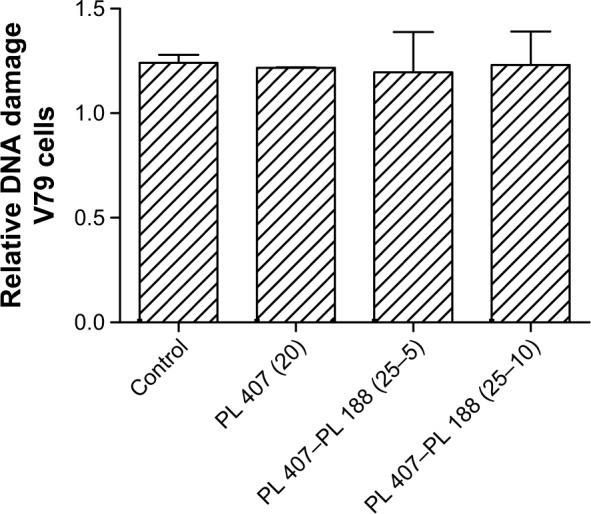
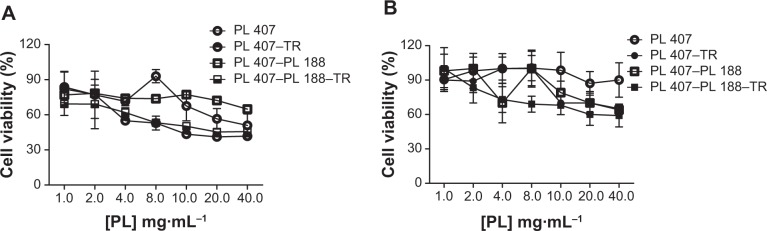
In this work, poloxamer (PL)-based binary hydrogels, composed of PL 407 and PL 188, were studied with regard to the physicochemical aspects of sol-gel transition and pharmaceutical formulation issues such as dissolution-release profiles. In particular, we evaluated the cytotoxicity, genotoxicity, and in vivo pharmacological performance of PL 407 and PL 407-PL 188 hydrogels containing tramadol (TR) to analyze its potential treatment of acute pain. Drug-micelle interaction studies showed the formation of PL 407-PL 188 binary systems and the drug partitioning into the micelles. Characterization of the sol-gel transition phase showed an increase on enthalpy variation values that were induced by the presence of TR hydrochloride within the PL 407 or PL 407-PL 188 systems. Hydrogel dissolution occurred rapidly, with approximately 30%-45% of the gel dissolved, reaching ~80%-90% up to 24 hours. For in vitro release assays, formulations followed the diffusion Higuchi model and lower K(rel) values were observed for PL 407 (20%, K(rel) = 112.9 ± 10.6 μg · h(-1/2)) and its binary systems PL 407-PL 188 (25%-5% and 25%-10%, K(rel) =80.8 ± 6.1 and 103.4 ± 8.3 μg · h(-1/2), respectively) in relation to TR solution (K(rel) =417.9 ± 47.5 μg · h(-1/2), P<0.001). In addition, the reduced cytotoxicity (V79 fibroblasts and hepatocytes) and genotoxicity (V79 fibroblasts), as well as the prolonged analgesic effects (>72 hours) pointed to PL-based hydrogels as a potential treatment, by subcutaneous injection, for acute pain.
在本研究中,对由泊洛沙姆(PL)407和PL 188组成的基于泊洛沙姆(PL)的二元水凝胶进行了研究,涉及溶胶-凝胶转变的物理化学方面以及药物制剂问题,如溶解-释放曲线。特别地,我们评估了含曲马多(TR)的PL 407和PL 407-PL 188水凝胶的细胞毒性、遗传毒性和体内药理性能,以分析其治疗急性疼痛的潜力。药物-胶束相互作用研究表明形成了PL 407-PL 188二元体系以及药物在胶束中的分配。溶胶-凝胶转变相的表征显示,PL 407或PL 407-PL 188体系中盐酸TR的存在导致焓变值增加。水凝胶迅速溶解,约30%-45%的凝胶溶解,在24小时内达到约80%-90%。对于体外释放试验,制剂遵循扩散Higuchi模型,观察到PL 407(20%,K(rel)=112.9±10.6μg·h(-1/2))及其二元体系PL 407-PL 188(25%-5%和25%-10%,K(rel)分别为80.8±6.1和103.4±8.3μg·h(-1/2))相对于TR溶液(K(rel)=417.9±47.5μg·h(-1/2),P<0.001)的较低K(rel)值。此外,细胞毒性降低(V79成纤维细胞和肝细胞)和遗传毒性降低(V79成纤维细胞),以及镇痛作用延长(>72小时)表明基于PL的水凝胶通过皮下注射是治疗急性疼痛的潜在方法。