Chen Chen-Yu, Hwu Yuh-Ming, Chen Chie-Pein, Chang Chia-Chen
Department of Medicine, Mackay Medical College, New Taipei City, Taiwan ; Department of Obstetrics and Gynecology, Mackay Memorial Hospital, Taipei, Taiwan ; Mackay Junior College of Medicine, Nursing, and Management, Taipei, Taiwan.
Department of Obstetrics and Gynecology, Mackay Memorial Hospital, Taipei, Taiwan.
Int J Nanomedicine. 2015 Mar 30;10:2475-83. doi: 10.2147/IJN.S81201. eCollection 2015.
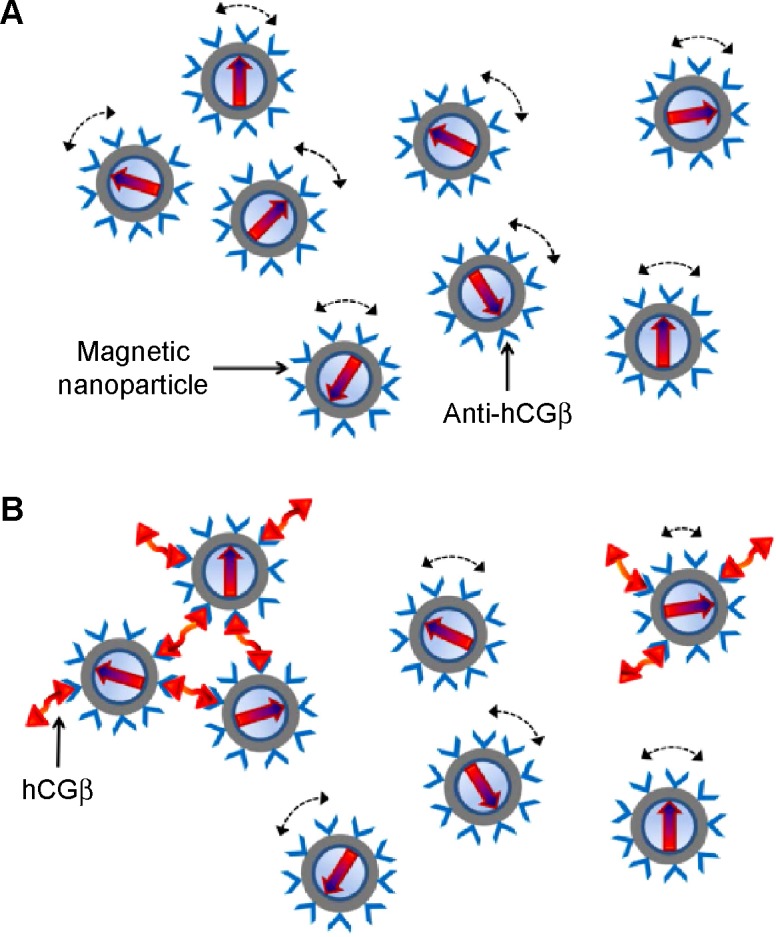
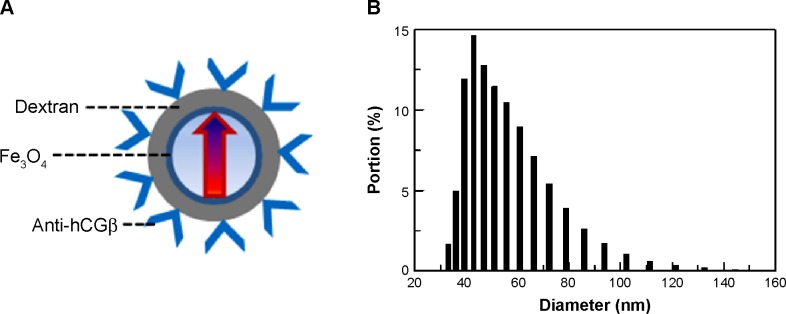
The initial diagnosis of ectopic pregnancy depends on physical examination, ultrasound, and serial measurements of total β-subunit of human chorionic gonadotropin (hCGβ) concentrations in serum. The aim of this study was to explore the possibility of using quantitative analysis of total hCGβ in urine rather than in serum by immunomagnetic reduction (IMR) assay as an alternative method to diagnose an ectopic pregnancy.
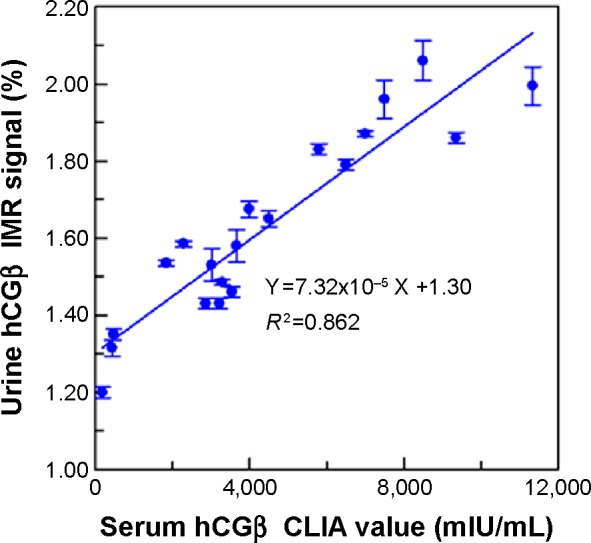
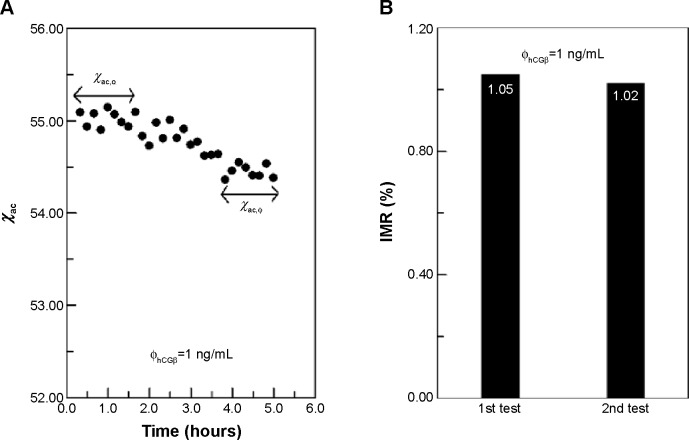
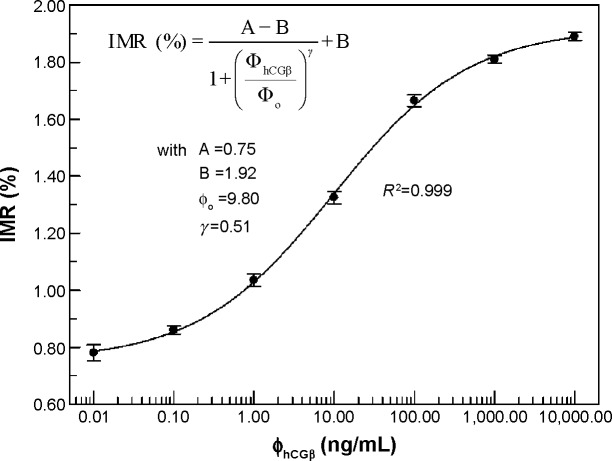
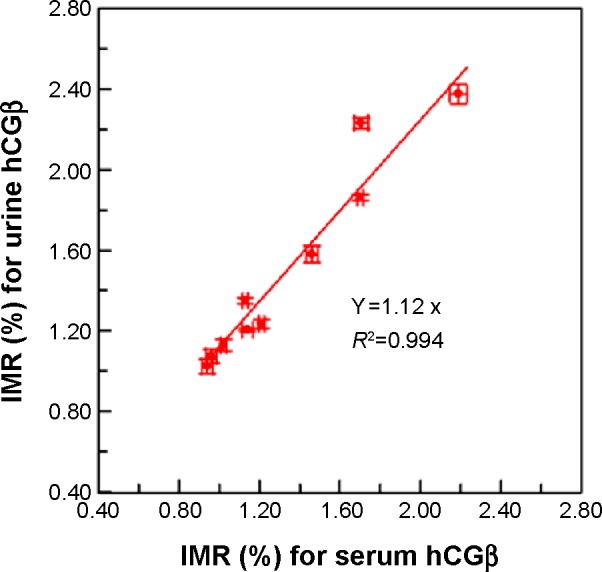
We established a standard calibration curve of IMR intensity against total hCGβ concentration based on standard hCGβ samples, and used an IMR assay to detect total hCGβ concentrations in the urine of pregnant women with lower abdominal pain and/or vaginal bleeding. The final diagnosis of ectopic pregnancy was based on ultrasound scans, operative findings, and pathology reports. In this prospective study, ten clinical samples were used to analyze the relationship of total hCGβ IMR signals between urine and serum. Furthermore, 20 clinical samples were used to analyze the relationship between urine IMR signals and serum levels of total hCGβ.
The calibration curve extended from 0.01 ng/mL to 10,000 ng/mL with an excellent correlation (R(2)=0.999). In addition, an excellent correlation of total hCGβ IMR signals between urine and serum was noted (R(2)=0.994). Furthermore, a high correlation between urine IMR signals and serum levels of total hCGβ was noted (R(2)=0.862).
An IMR assay can quantitatively analyze total hCGβ concentrations in urine, and is a potential candidate for point-of-care testing to assist in the diagnosis of ectopic pregnancy.
异位妊娠的初步诊断依赖于体格检查、超声检查以及血清中人绒毛膜促性腺激素β亚基(hCGβ)总量的系列测定。本研究的目的是探索通过免疫磁珠还原(IMR)测定法对尿液而非血清中的hCGβ总量进行定量分析,以此作为诊断异位妊娠的替代方法的可能性。
我们基于标准hCGβ样本建立了IMR强度相对于hCGβ总量浓度的标准校准曲线,并使用IMR测定法检测有下腹疼痛和/或阴道出血的孕妇尿液中的hCGβ总量浓度。异位妊娠的最终诊断基于超声扫描、手术所见及病理报告。在这项前瞻性研究中,使用10份临床样本分析尿液和血清中hCGβ总量的IMR信号之间的关系。此外,使用20份临床样本分析尿液IMR信号与血清中hCGβ总量水平之间的关系。
校准曲线范围从0.01 ng/mL至10,000 ng/mL,具有良好的相关性(R(2)=0.999)。此外,尿液和血清中hCGβ总量的IMR信号具有良好的相关性(R(2)=0.994)。而且,尿液IMR信号与血清中hCGβ总量水平之间具有高度相关性(R(2)=0.862)。
IMR测定法可对尿液中的hCGβ总量进行定量分析,是即时检测辅助诊断异位妊娠的潜在候选方法。